Iran, US hold talks in Geneva in push to avert war


 2
2
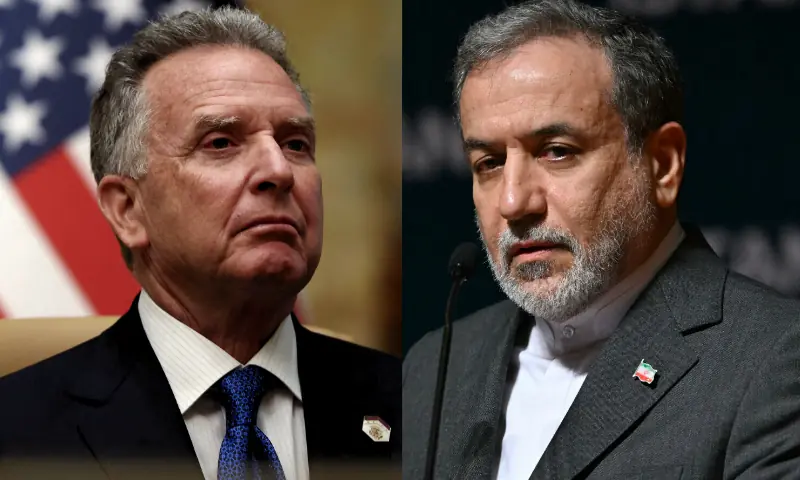

Iran and the United States held talks in Switzerland on Thursday, in a last-ditch bid to avert war under the shadow of the biggest American military build-up in the Middle East in decades.
The Oman-mediated discussions follow repeated threats from Donald Trump to strike Iran, with the US president last Thursday giving Tehran 15 days to reach a deal.
The US and Iranian delegations arrived at the venue at the Omani ambassador’s residence amid tight security, following a protest by Iranian exiles at their talks last week who threw objects at the Iranian motorcade.
Oman’s Foreign Minister Badr Albusaidi confirmed that discussions had begun, saying the two sides expressed “unprecedented openness to new and creative ideas and solutions”.
He later said the talks had been paused but would resume later in the day.
Iran’s president insisted ahead of the talks that the Islamic republic was not “at all” seeking a nuclear weapon.
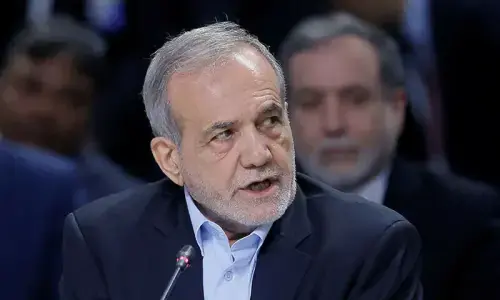
“Our Supreme Leader has already stated that we will not have nuclear weapons at all,” President Masoud Pezeshkian said, in a reference to Ayatollah Ali Khamenei.
United Nations nuclear chief Rafael Grossi would likely also attend the discussions in Geneva, Iran’s foreign ministry spokesman said.
While Iran has insisted the talks focus solely on its nuclear programme, the US wants Tehran’s missile programme and its alleged support for militant groups in the region curtailed.
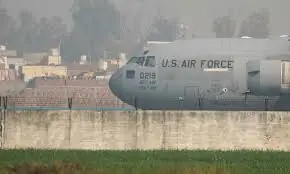
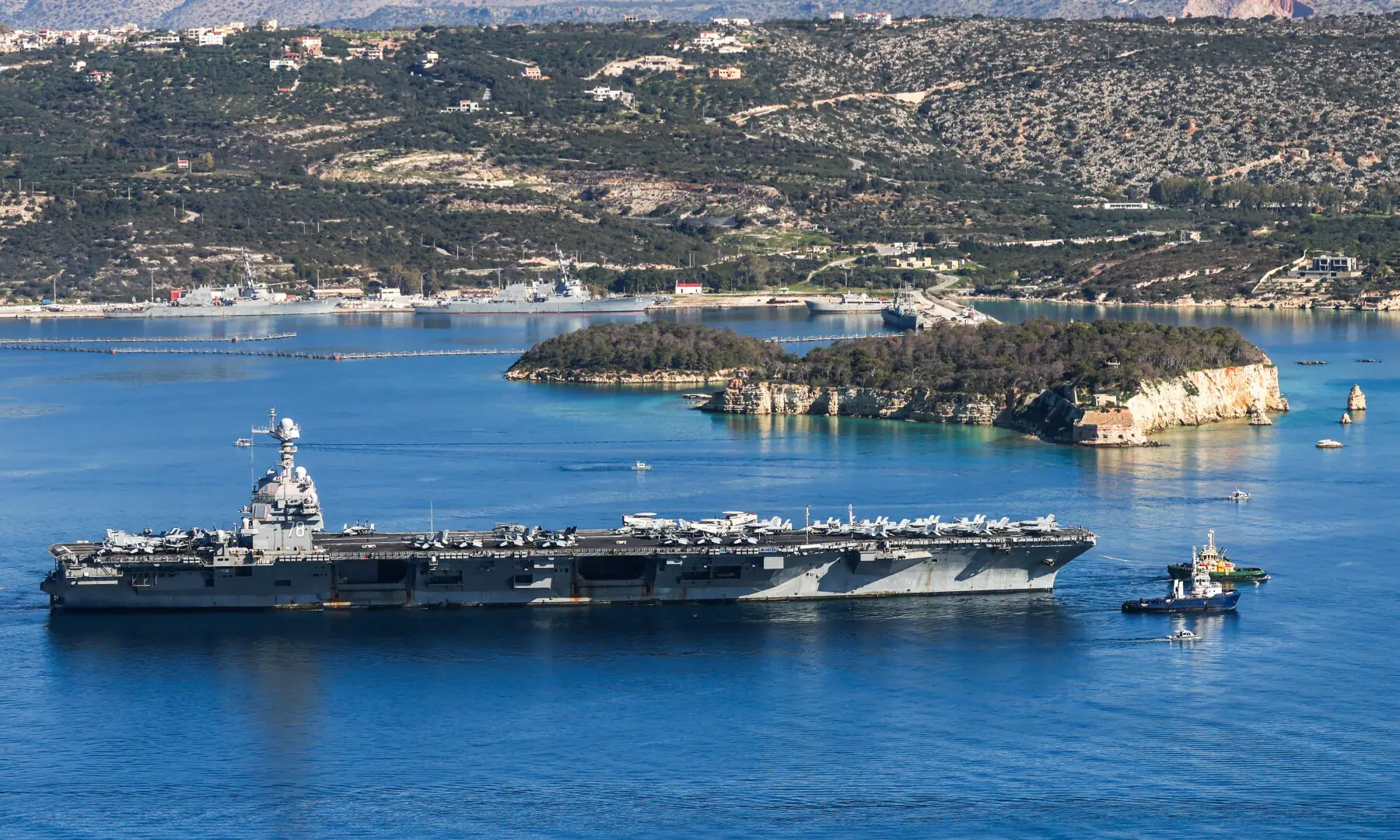
As part of the dramatic US build-up, the USS Gerald R. Ford, the world’s largest aircraft carrier, sent to the Mediterranean this week, left a naval base in Crete Thursday, an AFP photographer said.
The developments follow massive protests in Iran that rights groups say saw thousands of demonstrators killed after the movement called for the end of the Islamic republic.
Trump makes case for invasion of Iran
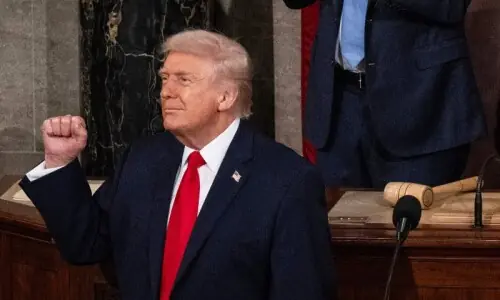
In his State of the Union address on Tuesday, Trump accused Iran of “pursuing sinister nuclear ambitions”, though Tehran has always insisted its programme is for civilian purposes.
Trump also claimed Tehran had “already developed missiles that can threaten Europe and our bases overseas, and they’re working to build missiles that will soon reach the United States of America”.
The Iranian foreign ministry called these claims “big lies”.
The maximum range of Iran’s missiles is 2,000 kilometres, according to what Tehran has publicly disclosed.
However, the US Congressional Research Service estimates they top out at about 3,000km — less than a third of the distance to the continental United States.
Trump’s State of the Union accusations in Congress were delivered in the same forum in which then-president George W. Bush laid out the case for the invasion of Iraq in 2003.
Ahead of Thursday’s talks, US Secretary of State Marco Rubio warned that Iran must also negotiate on its missile programme, calling Tehran’s refusal to discuss ballistic weapons “a big, big problem”.
He followed up by saying that the “president wants diplomatic solutions”.
But US Vice President JD Vance told Iran to take Trump’s threats “seriously”, saying the US president had a “right” to use military action.
“You can’t let the craziest and worst regime in the world have nuclear weapons,” Vance told ‘America’s Newsroom’ on Fox News.
‘People would suffer’
Foreign Minister Abbas Araghchi, who is leading the Iranian delegation at the talks, had called them “a historic opportunity”, adding that a deal was “within reach”.
The US will be represented by envoy Steve Witkoff and Jared Kushner, who is married to Trump’s daughter Ivanka.
The two countries held talks earlier this month in Oman, then gathered for a second round in Geneva last week.
A previous attempt at negotiations collapsed when Israel launched surprise strikes on Iran last June, beginning a 12-day war that Washington briefly joined to bomb Iranian nuclear sites.
In January, Tehran launched a crackdown on nationwide protests that have posed one of the greatest challenges to the Islamic republic since its inception.
Protests have since resumed around Iranian universities.
Tehran residents who spoke to AFP were divided as to whether there would be renewed conflict.
“There would be famine and people would suffer a lot. People are suffering now, but at least with war, our fate might be clear,” 60-year-old homemaker Tayebeh said.