Sri Lanka arrests ex-spy chief over 2019 Easter bombings


 0
0
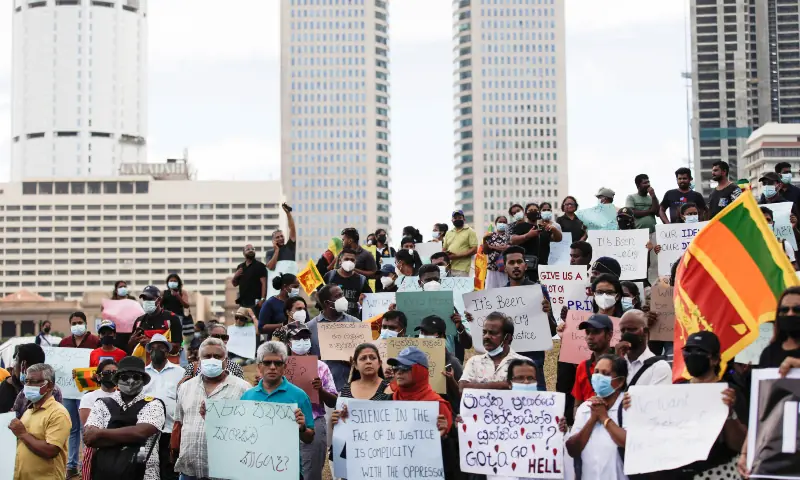

COLOMBO: Sri Lankan investigators arrested a former intelligence chief on Wednesday, the most high-profile official netted in the long-running investigation into the 2019 Easter Sunday bombings.
Police said retired Major General Suresh Sallay was taken into custody at dawn in a suburb of the capital, Colombo.
“He was arrested for conspiracy and aiding and abetting the Easter Sunday attacks,” an investigating officer told AFP. “He has been in touch with people involved in the attacks, even recently.”
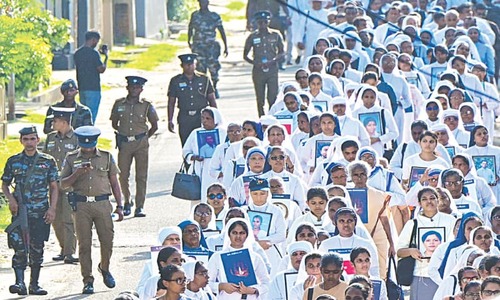
The coordinated bombings targeted three upmarket hotels in the capital, two Roman Catholic churches and an evangelical Protestant church outside Colombo.
The attacks killed 279 people, including 45 foreigners, and were blamed on a homegrown jihadist group.
Police, in a statement, said that Sallay was arrested under the Prevention of Terrorism Act and would be detained for at least three days for questioning.
His arrest was welcomed by the Catholic church, and criticised by his still powerful supporters.
“What we need is the truth behind the Easter attacks,” church spokesman Father Cyril Gamini Fernando told AFP.
‘We want to see justice for all the victims.”
The church has accused successive governments of failing to identify the masterminds.
The April 21, 2019 attacks were the worst to target civilians in the country, where at least 100,000 people were killed in nearly four decades of civil war.
Sallay, who was promoted to State Intelligence Service (SIS) chief in 2019 after Gotabaya Rajapaksa became president, is accused of involvement in organising the suicide bombings, a charge he denies.
His long-expected arrest came ahead of the seventh anniversary of the bombings.
British broadcaster Channel 4 reported in 2023 that Sallay was linked to the bombers and had met them prior to the attack. A whistleblower told the network that Sallay had permitted the attack to proceed with the intention of influencing that year’s presidential election in favour of Rajapaksa.
Two days after the bombings, Rajapaksa declared his candidacy and went on to win the November vote in a landslide after promising to stamp out extremism.
Published in Dawn, February 26th, 2026