Rising mercury to heighten melting, Glof risk up north
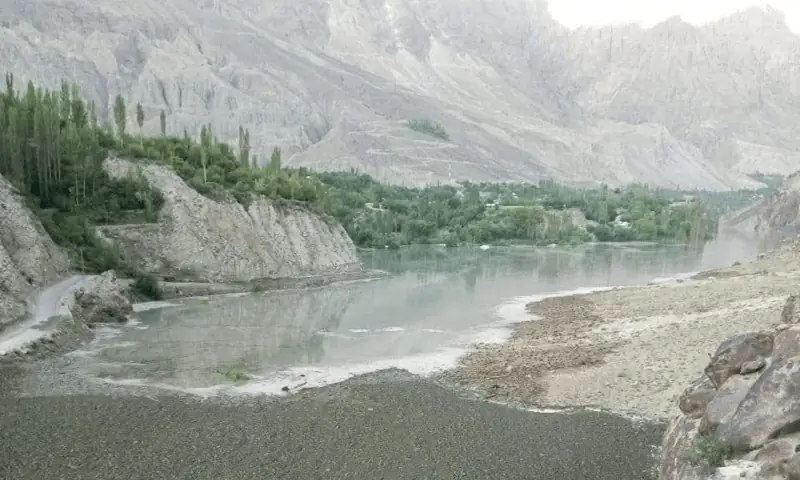
• Met Office predicts above-normal temperatures in GB, Kashmir from February to April
• Highest warming observed in Gilgit and Bunji
• Expert says GB getting less and less snow over past three years
RAWALPINDI / GILGIT: The Pakistan Meteorological Department (PMD) on Monday warned that rising temperatures might accelerate glacier melt and increase the risk of glacial lake outburst floods (Glofs) in northern areas of the country.
According to the Met Office, rainfall and snowfall in northern Pakistan remained below normal during the winter season, consistent with the seasonal forecast issued by the PMD.
“Reduced precipitation and persistent clear-sky conditions have resulted in stable atmospheric patterns and significantly elevated temperatures across Gilgit-Baltistan during the first two decades (Feb 1-22) of February 2026,” it stated.
Daytime (maximum) temperatures were recorded 3-5°C above normal, while night-time (minimum) temperatures remained 1-3.5°C above the 1981-2010 climatological average.
The highest warming has been observed in Gilgit and Bunji, while Chilas and Bunji have shown notable increases in minimum temperatures, reducing overnight refreezing.
The sustained above-normal temperatures are accelerating snow and glacier melt, particularly at mid to lower altitudes. Reduced night-time cooling further enhances meltwater runoff into glacial lakes. Rapid melting increases water accumulation in both moraine- and glacier-dammed lakes, raising the likelihood of Glof events in downstream valleys.
Feb-April outlook
The PMD’s outlook for February-April 2026 indicates a high probability of above-normal temperatures over northern Pakistan, including GB and Kashmir. If this warming trend persists, the risk of accelerated glacier melt and potential GLOF occurrences may increase in vulnerable areas such as Gilgit, Ghizar, Hunza, Bunji, Chilas and Astore.
The department said it would continue to closely monitor temperature trends, glacier melt conditions and hydrometeorological parameters, and issue timely advisories to relevant authorities and communities.
From Feb 1 to 22, the PMD stated that the average temperature in Astore was recorded at 4.3°C, with a minimum of 1.3°C; Bunji at 4.5°C, with a minimum of 2.6°C; Chilas at 4.1°C, with a minimum of 3.4°C; Gilgit at 4.7°C, with a minimum of 2°C; Gupis at 3.1°C, with a minimum of 1.6°C; and Skardu at 3.1°C, with a minimum of 1.8°C.
‘Changing pattern’
Experts in Gilgit-Baltistan said that over the past three years, snowfall in the region had started later, with many areas receiving less snow and temperatures remaining higher than usual. Snowfall was received in late January this year, raising concerns about flooding in the summer.
According to Gilgit-Baltistan Environmental Protection Agency (GBEPA) Director Khadim Hussain, the region’s fragile ecosystem is being disturbed by climate change and environmental degradation. He said snowfall had increasingly shifted to mid-January and February, reducing the chances of snow compacting and turning into ice on mountains and glaciers.
“Late snowfall does not compact and can melt rapidly when the summer season starts, which increases the risk of floods downstream,” he said.
Rapidly melting glaciers, Glofs and cloudburst incidents severely affected residents of GB last summer. Experts said residents of the region, particularly those living downstream of rivers and glacial lakes, faced serious threats this summer.
Locals said snowfall usually began in late November. They added that temperatures remained unusually high until the end of December.
According to the GBEPA, the average temperature in GB rose by about 0.6°C between 1987 and 2013. The region has faced a rise in flash floods, accelerated glacial melt and other climate-linked hazards in recent years.
Published in Dawn, February 24th, 2026