Repatriation of Afghans from Haripur witnesses 90pc increase

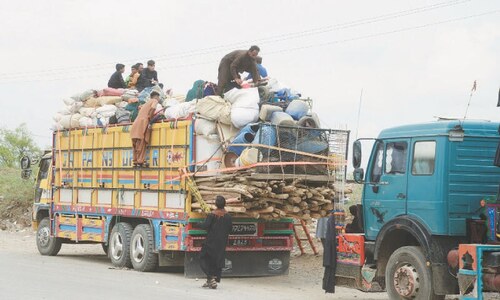
HARIPUR: The voluntary repatriation of Afghan nationals from Haripur district witnessed a sizeable increase of more than 90 per cent during the last six months, official sources told Dawn here on Monday.
Wapda, the owner of a large portion of the land, has deployed its security and other staffers to take charge of the place once used by Afghan refugees for building shanties during the last five decades.
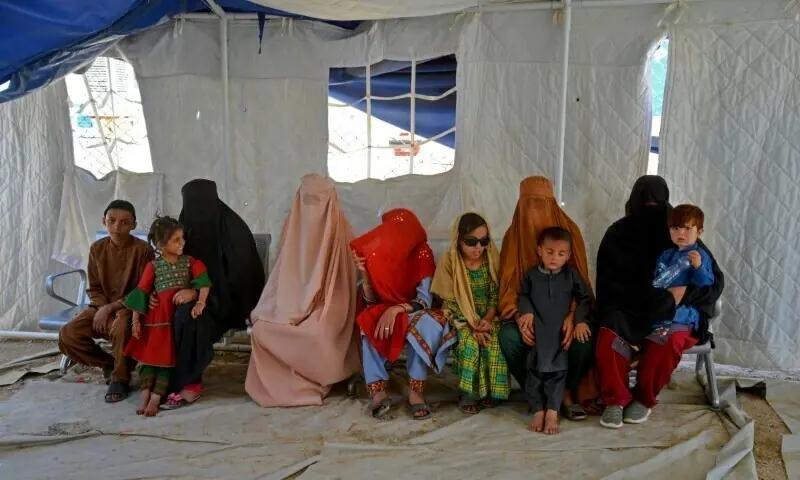
In three camps of Panian, Baso Maira and Pad’hana, the total population of Afghan refugees was 63,547 individuals while 13,000 were used to live in rented houses in different urban and rural localities of the district, according to official statistics.
The government had asked all foreign nationals living in Pakistan without visa to leave the country voluntarily by August 30, 2025. However, according to Daily Repatriation Progress Report, shared with the office of deputy commissioner, a total of 57,366 individuals have been repatriated to their homeland under voluntary repatriation by February 23, 2026, leaving 6,181 individuals at camps.
Over 57,000 have left the district for homeland during last six months
Sources said that those Afghans, who were still staying in camps, were expected to leave Pakistan soon after Eidul Fitr. They said that 315 Afghans returned to Afghanistan voluntarily alone on Sunday evening.
They said that only 4,999 individuals were still living Panian camp, which had once 47,905 refugees. Basu Maira camp has been fully vacated by its total population of 4,952 individuals. At Pad’hana camp, which was once inhabited by 8313 individuals, only 615 PoR and 23 ACC card holders are left.
Deputy Commissioner Waseem Ahmed, when contacted, said that the voluntary repatriation process was being carried out in an organised and dignified manner, ensuring coordination among all relevant departments.
He said that district administration would start mapping of certain localities to ascertain the total number of repatriated and remaining Afghan refugees. About the land of refugee camps, he said that Wapda initiated the process of taking its charge by demolishing houses and structures that were vacated after repatriation of Afghans.
“It is meant to restore the land to its original status after completion of the repatriation phase,” said the deputy commissioner.
He said that basic health units and educational institutions that were functioning at the erstwhile camps were formally taken over by provincial government.
“These facilities will continue to serve local population under the administrative control of relevant provincial departments. The district administration is committed to ensuring that the entire process remains transparent, lawful and humane while safeguarding public assets and facilitating smooth transition arrangements,” he said.
Published in Dawn, February 24th, 2026