Bangladesh in many voices


THE Language Movement of 1952 was not merely a struggle over words; it was the first collective assertion that dignity, democracy, and self-determination in this land would be rooted in language. From that demand for Bangla emerged a political consciousness that eventually gave birth to Bangladesh itself.
On International Mother Language Day 2026, as Bangladesh once again honours the martyrs of 1952, we do so in a country that speaks in many tongues and now thinks increasingly through machines, screens, and codes.
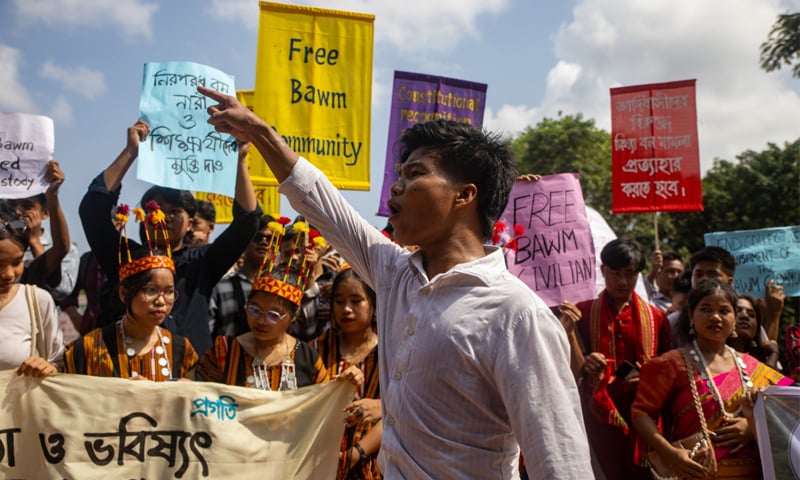
Bangladesh’s linguistic landscape is far richer than its dominant narratives often suggest. Alongside Bangla flourish dozens of indigenous and regional languages, each carrying its own history, worldview, and rhythm of life.
These languages are not cultural ornaments; they are systems of knowledge shaped by rivers, forests, labour, migration, and belief. To celebrate Ekushey is to recognise that protecting linguistic diversity is inseparable from protecting cultural memory, social justice, and the right to be heard.
Bangla must continue to evolve as a language of science, technology, and global exchange.
Yet Ekushey must also speak to the present. Bangladesh stands at the threshold of rapid technological transformation. Artificial intelligence, digital platforms, and data-driven governance are reshaping how citizens communicate, learn, and participate in public life. The danger is clear: languages that are not digitally visible risk being rendered invisible altogether.
The opportunity is equally powerful. Technology can democratise language, enabling preservation, translation, archiving, and everyday use in ways unimaginable before.
This moment calls for conscious choices. Bangla must continue to evolve as a language of science, technology, and global exchange. At the same time, digital futures must be inclusive. It must be ensured that minority languages are documented, encoded, and carried forward into the next generation.
Today, Bangladesh faces a quieter but no less serious crisis — one of cultural confidence and the spirit that once animated the Language Movement. When language becomes reduced to utility alone, stripped of its ethical, political, and cultural force, the legacy of Ekushey risks being hollowed out.
Re-emphasising the values of the Language Movement in this age is not an act of nostalgia; it is a necessity. It reminds us that language is tied to justice, plurality, and participation, and that technological progress without linguistic and cultural consciousness can deepen exclusion rather than overcome it.—ANN
The author is Editor and Publisher of The Daily Star (Bangladesh)
Published in Dawn, February 23rd, 2026