0
0

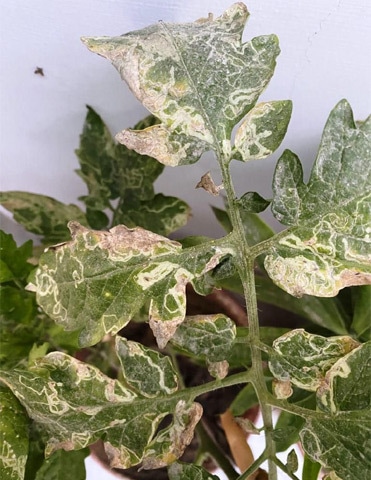
Q. I am attaching a picture that shows the infestation on my tomato plant leaves. This tunnelling destroys the leaves of my vegetable plants every year. I spray my plants with organic concoctions, such as baking soda, vegetable oil and red chilli powder and, at times, crushed garlic mixed with water. But nothing helps. Please guide how to get rid of this infestation and avoid this destruction of my tomato plant leaves.
A. Looking at the photograph, it appears that your tomato plant is under attack from leaf miners. It is a very common pest when it comes to tomato plants. Small adult flies, scientifically known as Liriomyza sativae and Liriomyza trifolii, are generally detrimental in this case. These pests lay eggs on the leaves, from which larvae hatch. The larvae then tunnel through the leaf, consuming it from within. The larvae then fall to the ground and transform into pupas, which then transform into flies. This process occurs after every one to two weeks. Therefore, the pest attack on the plant spreads very quickly.
Leaf miners are not caterpillars or fruit borers. They live and feed inside the leaf tissue, so contact pesticides usually don’t work on them. Only systemic or translaminar insecticides that can penetrate the leaf or move within the leaf tissue are effective. Sprinkling and spraying chemical pesticides are considered among the best options to save the plant from leaf miners.
The best organic option would be to fortnightly spray the plant with an organic neem oil solution mixed in water. You may also cover up the plant from the beginning to deter flies from laying eggs on the leaves. If an attack occurs during the plant’s early growth stages, the affected leaves should be pruned to ensure the safety of the rest of the plant and to limit the pest from spreading.
All your gardening queries answered here
Q. What types of flowers can survive water extracted through borewells in Karachi?
A. A plant’s performance is relatively diminished and compromised when it is being supplied with water extracted through borewells. Flowering plants that tolerate slightly saline water, though with somewhat reduced flowering, are bougainvillea, oleander, vinca (or sadabahar) and portulaca, to name a few.
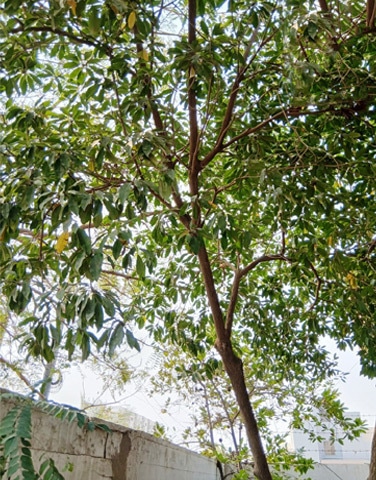
Q. I have a chikoo (sapodilla) tree for the last six years, as shown in the photograph. We are tending to the tree to the best of our abilities, providing it with fertiliser, care and watering. However, it has produced neither fruit nor flower. Please suggest what seems to be the issue here.
A. Looking at the photograph, your tree appears to have been grown from seed rather than grafted. Trees grown from seeds usually start fruiting after at least six years to a decade. Sometimes, they never fruit at all. On the other hand, grafted trees usually begin fruiting within three to four years. This is why I believe the tree was likely grown from seed.
However, if it’s grafted, then the plant needs to be enriched with fertilisers that are rich in potassium, phosphorus and boron. Nitrogen-based fertilisers should be stopped. You mentioned that you are watering the tree regularly, which is a good thing. However, in some cases, creating a water-stress situation can provoke the tree to start producing flowers. In this case, withholding water for two weeks, then watering heavily can improve the chances. So, you can try that out as well.
Sometimes, overcrowding of the leaves can be detrimental. The leaves, branches and stem drain the tree of its energies while hampering the chances of flowering. One of the quick fix solutions would be to graft a healthy and already fruiting branch from another tree. Gardeners prefer this technique as it ensures immediate fruiting. In your case, the tree is likely to fruit within the next one to two years. Best of luck!

Q. I have a desert rose plant at my home in Karachi for the last few years. It has not flowered since I bought it. What needs to be done to change that?
A. Adenium, or the desert rose plant, is a hardy plant that survives harsh weather and difficult conditions. However, it still requires a few care practices, such as frequent pruning of branches, shifting to bigger pots or ground to improve root space, and keeping it safe from dew and overwatering. Do share its progress after applying these solutions. Hopefully, it will start to flower soon. Fingers crossed!
Please send your queries and emails to doctree101@hotmail.com. The writer is a physician and a host for the YouTube channel ‘DocTree Gardening’ promoting organic kitchen gardening
Published in Dawn, EOS, February 22nd, 2026