First polio drive of year witnesses decline in refusal cases in KP


 0
0
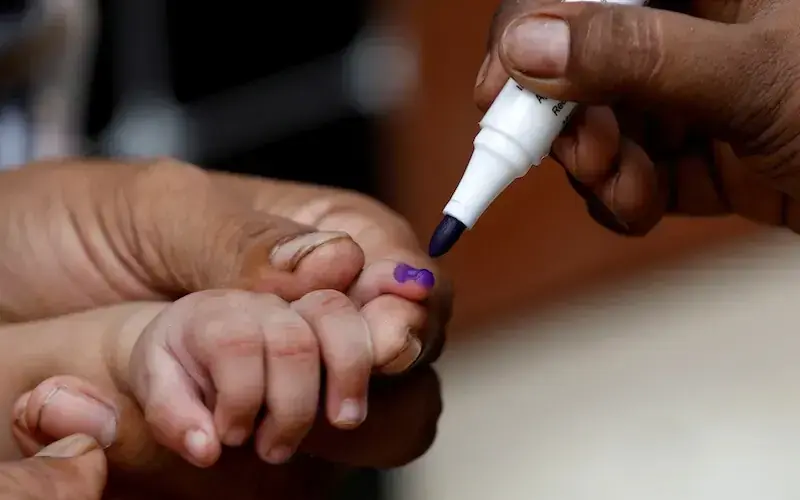

PESHAWAR: Khyber Pakhtunkhwa has recorded reduction in refusal cases as polio workers vaccinated more children, who remained inaccessible in the last campaign against the crippling disease.
Data compiled after conclusion of the first anti-polio campaign of the current year showed that Peshawar was still home to most of the unvaccinated children.
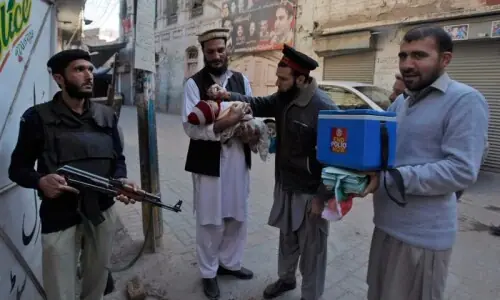
The campaign that ended on February 5 targeted 6.47 million children below five years in 36 districts. Vaccinators reached 96 per cent of the target children during the drive. They missed 80,632 children because they were not available during the door-to-door drive, less from the 82,393 recorded in December.
Also, the number of refusals against oral polio vaccine by parents dipped from 18,349, recorded in the previous campaign, to 17,390 in the recently-concluded effort, according to statistics compiled by Emergency Operation Centre (EOC) Khyber Pakhtunkhwa. Officials associated with polio immunisation in the province attributed decline in number of refusal cases and missed children to good quality of the campaign due to coordination among district administration, health and other government departments.
Peshawar still home to most of unvaccinated children
Khyber Pakhtunkhwa recorded 20 polio cases of the total infections diagnosed in 2025, mainly due to refusals by parents and law and order situation in southern districts. Peshawar, the provincial capital, recorded 5,796 refusal cases while 8,867 children were missed by vaccinators, the highest number of unvaccinated kids in the province. Peshawar had reported 6,017 refusals and 9,192 missed children in the December campaign.
North Waziristan, which reported five cases, recorded 353 refusal cases while 592 children remained unvaccinated due to their non-availability at homes contrary to 321 and 655, recorded in the last drive.
Officials said that the start of the new year was satisfactory as accessibility was enhanced and vaccinators covered more children than that of last campaign. At the same time, more than 1,000 children, whose parents were previously reluctant to allow administration of vaccine to their children, opted to inoculate them.
Bannu recorded 5,851 refusals and 3567 missed children, Lakki Marwat 1,597 refusals and 1,596 missed children, Dera Ismail Khan 1,566 refusals and 4,897 missed children and Mardan reported 1,158 refusals and 3,692 missed children.
Officials said that the number of missed children was still a big issue as vaccinators didn’t reach out to children in most of the districts because they weren’t available in their homes during the campaign.
According to vaccinators, they don’t have any arrangements to force people to bring out their children for vacation because in most of the security-compromised districts, there is an acute shortage of female health workers to go inside houses and administer vaccine to children.
Male vaccinators get lukewarm response from houses as men remained out of homes in connection with their work and women don’t cooperate with male vaccinators, according to health workers.
According to them, the district administrations have been playing active role to ensure immunisation of children, who have been inaccessible in the earlier campaigns, but still bulk of the parents, who have been defying vaccination from years, continue to do the same and thwart the government’s resolve to make the province polio-free.
“Reluctance of parents to vaccinate their wards, however, declines slowly due to social mobilisation campaigns as well as enlisting religious scholars by government to woo people towards vaccination,” they said. They added that parents were under the misconception that polio vaccines were disallowed in Islam, arguing that those were designed to render recipients impotent and infertile and reduce population of Muslims.
They said that the second argument advanced by defiant parents was that medicines shouldn’t be taken before the occurrence of a disease due to which they declined vaccine, which was given to prevent poliomyelitis that caused permanent disabilities. However, it was a good omen that both refusals and missed children declined in the recent campaign, they said. “If this trend continues, we can make progress, towards eradication of the vaccine-preventable childhood ailment,” they added.
Published in Dawn, February 16th, 2026