0
0

The Sixth Sense. Fight Club. Every Christopher Nolan movie. The twist is the lifeblood of Hollywood.
Even major big-budget releases ensure that audiences are left reeling at least a couple of times. Think the Snap in Infinity War, or “I’m your father” in The Empire Strikes Back, or that infamous revealer in James Bond: Spectre, which turned four films of the franchise into a… Craigverse, for lack of a better term?
Pakistani dramas have traditionally trod lightly on twists, focusing on being comfort viewing rather than puzzles. Twists, surprises and shocking moments have been reserved for genre dramas rather than the mainstream ones.
Most have done without twists, and the few that have had them were made blindingly obvious to the audience beforehand and the entire suspense was when and how the protagonists would discover them. Think of the villainous Saad Salman in Tanhaiyaan or the convoluted property dispute tying the lead couple in Dhoop Kinaaray.
Cast an eye over some of the memorable recent twists, surprises and reveals that caught us all off-guard in recent Pakistani dramas
However, in recent years, that has shown signs of changing. Let’s take a look at some of the memorable recent drama twists, surprises and reveals that caught us all off guard. Please note that not all twists are in the story itself. You will see what I mean!
GENTLEMAN
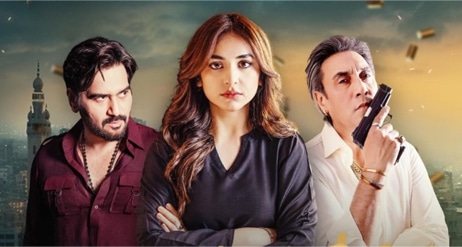
What better place to start than the famously twisted Khalil-ur-Rehman Qamar (KRQ) and his wannabe magnum opus — launched with much fanfare but fizzling out into a vapid imitation of ’80s Indian cinema, mixed with KUQ’s idea of what a Western would look like in a Pakistani setting.
This drama launched with a bombastic claim: showcasing the inner workings of Karachi’s gangs in the Korangi area. All the ingredients were present and correct. KRQ’s self-insert in the form of a protagonist, played by Humayun Saeed, ie a gangster with a — sigh! — heart of gold. His cabal of sidekicks who constantly tell themselves, the audience and their boss what a saint he is. A mentor that morphs into a rival — a very interesting character study by Adnan Siddiqui, which had real potential before being swept away in a sea of generic story beats. And a female lead played by Yumna Zaidi, a journalist who becomes the love interest of both rivals.
The gang warfare? Just a backdrop to the awkward love story, with ladies left, right and centre falling head over heels for Khalil… Humayun’s character, the latter making cosmic pronouncements about society and love. Meanwhile, the heroine’s father is perfectly okay with his daughter hanging out with a killer and, in later episodes, egging him on to avenge murders…
The first twist was that the promising set-up devolved into a pathetic, sloppy soap opera, with gang warfare, politics and social commentary used to lend it street cred. The second twist, which is by no means a twist by now knowing KRQ, is Humayun Saeed apparently dying in the end — before we learn in a flash-forward that he lives on.
Sadly, this “twist” is now being repeated to the point of being a trope. Looking at you, Behroopia.
DUNYA PUR
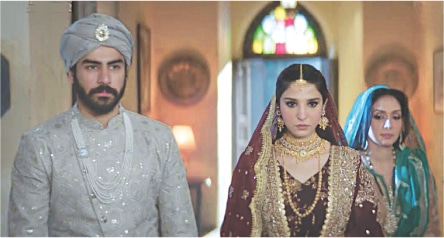
Brilliant from start to finish, Dunya Pur was an epic production, in every sense of the word. The story showcased rivalry between two tribes, with the overlords and their family members stopping at nothing to assert their dominance.
Filmed on location in rural Punjab, the story’s grandeur and scope are perfectly captured by its fast pace, diverse and rich cast, and expert action photography.
So, what was the twist? Oh, where to begin, with at least one major character getting killed in every episode, and the loyalties of hapless and oppressed tribals being traded like currency.
The two protagonists, played to perfection by Khushhal Khan and Ramsha Khan, hailing from opposing tribes in perfect Romeo-and-Juliet fashion, were shown to be ruthless, cruel characters with their own definition of the “greater good.” Let’s just say that they think nothing of taking lives, as long as they deem it right.
There is a helpless police officer caught in the middle, who finally decides that it takes a monster to undermine monsters, and whose final ploy to rid the land of the bloodthirsty tribespeople from both sides results in a bloodbath for the ages, with apparently everyone riddled with bullets.
The final scene, though, reveals that the police vehicles carrying the bodies of the supposedly murdered hero and heroine have “disappeared” with the camera zooming in on the poker face of the police officer, who breaks the fourth wall with his eyes — in resignation, or triumph?
It really needs to be seen to be believed.
DIL WALI GALI MEIN
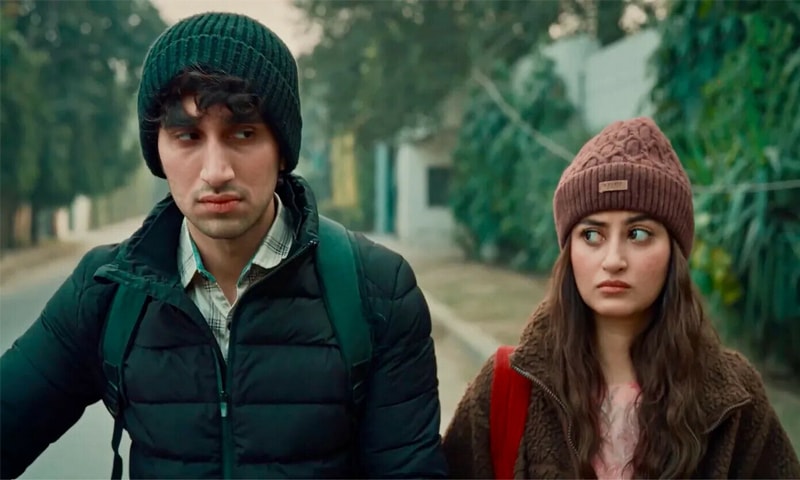
Let’s leave blood-soaked streets behind for something a bit more familiar: the Ramazan romcom.
The genre has been, for years, a hotbed of bubble-headed romance, flowery dialogue, predictable humour and familiar ‘twists’, consisting of misunderstandings that completely ignore the existence of cell phones, or the fact that, 90 percent of the time, the romantic leads live only a few feet from each other.
Amidst all this, Dil Wali Gali Mein arrived like a completely inexplicable surprise. Kicking off with the romantic leads sitting in court, attempting to get married, the story unfolds within the twisty streets of Lahore’s Walled City, perfectly encapsulating the multi-layered complexity of its geographical backdrop.
The story shows a couple’s search for privacy amid the tightly knit, overbearing presence of Pakistani joint families, their ancient disputes, wars of ego and prying eyes, with the added ‘fun’ of the house actually hosting a full-fledged school. The story explores everything from marital discontent and rising joblessness to gang warfare and house-ownership fraud, and everything in between.
The biggest twist in the story, however, comes when both the bride and the groom decide to leave their households behind to preserve their marriage (and sanity). Further twists: every scene is on location, the hero and heroine retain their squarely middle-class dialects, the dialogue is stunningly realistic and, above all, the quality and the surprises never let up till the very last scene. A must-watch!
TANN MANN NEELO NEEL
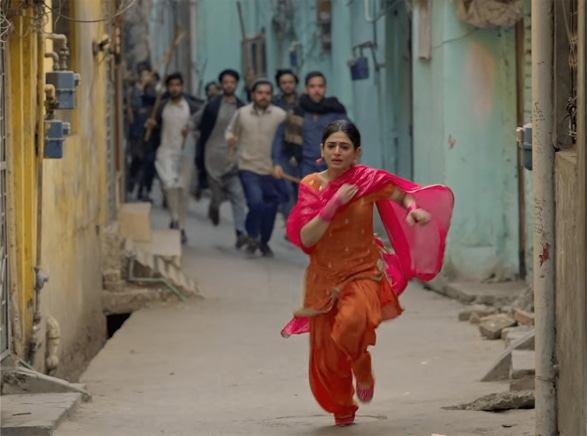
This drama has one of the biggest, most heart-wrenching twists of all. What makes it even more depressing is that the abrupt ending of the serial is completely different in tone from the earlier, lighter countenance of the serial.
The story revolves around a couple who are planning their future together as event managers/caterers. There is a villain who, of course, has romantic feelings for the heroine. The story moves along, imparting subtle social messages, but it is the final nine minutes that actually turn the whole thing on its head.
While the couple are managing an event, the villain plays a video of the protagonist dancing in a temple, claiming the dance was filmed in a mosque. The whole crowd turns into a mob and starts chasing the couple. Within minutes, most of the leading cast is dead; their mutilation is conveyed by glimpsed blood, a stray chappal, the heroine’s sash suspended from a power line.
This has to be one of the more harrowing endings ever in Pakistani dramas, none of it foreshadowed in the slightest. A masterstroke, and one of the most effective depictions of religious mob violence that inflicts our society.
PARWARISH
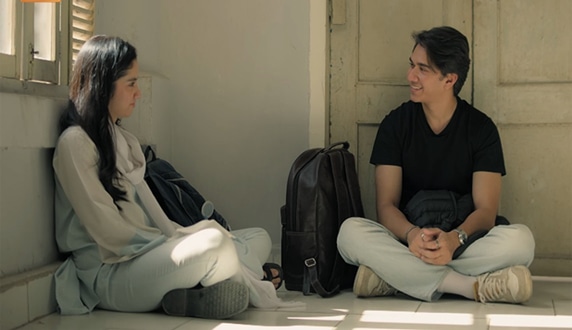
One would think that an ensemble cast spearheaded by Naumaan Ijaz would get centre stage in a drama serial about generational divides. That there would be long lectures about how Gen Z is taking everything too easy. That there would be penance for past sins, swift Divine rebuttal of defiance towards elders, and very public repentances by youth admitting the error of their ways.
Furthermore, that there would be submissive, hysterical wives clutching their daughters to their chests and waiting for lightning to strike their abusers. And that when that lightning would strike, the evil father/husband would be lying on a bed, paralysed, begging forgiveness.
None of that happened. And somehow, that is the biggest twist of all in Parwarish.
Quickly becoming a sensation, with a reputation so powerful that, after decades, Gen X, Y and Z gathered before the television to watch something together, Parwarish managed to subvert expectations at every turn.
A family returns from the USA to the patriarch’s brother’s household, trying to blend in. Between them, they have several kids of school- and college-age. The kids from the US are not abrasive or lacking in manners, the kids who grew up in Pakistan are not models of decency. The parents are complicated characters with their own demons. Mental health is highlighted as an important issue for today’s youth.
The story is quite multi-layered to fully cover here; suffice it to say that, by the time the story draws to its somewhat cookie-cutter conclusion, it has given its multi-generational audience plenty of surprises, delights and shocks along the way.
JAMA TAQSEEM
An educated girl, progeny of liberal-minded parents, marries into a hyper-conservative joint family. Since this is a love marriage, both sets of parents are united in their scepticism about the union, though for different reasons.
The boy’s family is none too pleased about the girl’s outgoing (for them) nature, her willingness to work at an office, and their son’s affection for her. The girl’s family, in turn, fears for their daughter’s sanity and life aspirations, since they know that her in-laws’ mindset would never allow her to fulfil her professional dreams.
Within this mix, the extensive susraal [in-laws’ household] features two elder brothers, their wives and children. The patriarch runs the family business while his wife rules like a benevolent queen — polite, cultured yet firm. The two elder bahus [daughters-in-law] hail from differing social backgrounds, with the eldest one victimising the younger one, based on financial status.
This dynamic, compounded by the elder bahu’s husband’s dominance over his father’s business, enables their son’s perverse tendencies, as he spends much of his adolescence secretly harassing the daughter of his younger uncle.
The first twist comes when, after the son is caught red-handed harassing his cousin, he is expelled from the household by his grandfather and father, despite his mom’s platitudes. This decisive and unanimous action is a breath of fresh air — with no talk of redemption or forgiveness.
Sent to a hostel, the boy is subjected to sexual abuse by fellow residents that, while subtly but unmistakably conveyed, gives him a taste of his own medicine. His ultimate return to the household is also fraught with mental health issues and lingering discomfort; nobody rushes to forgive him.
MERI ZINDAGI HAI TU
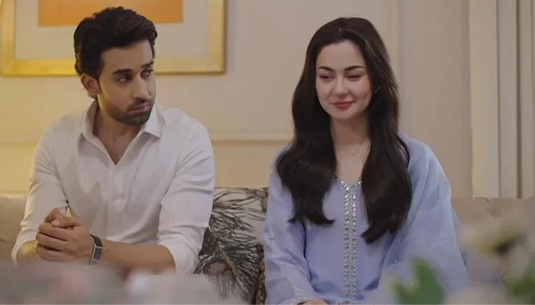
Bilal Abbas does the privileged, insufferable antihero perfectly. An ostensibly middle-class girl, nevertheless living in a house that suffers only slightly in comparison to the mansion inhabited by Abbas, becomes the object of his affections.
The “hero” is an alcoholic, a misogynist, a child of a broken home, the heart of the “party scene”, and indulges in every social ill imaginable.
He first encounters the girl and her brother in his Cybertruck, where a roadside spat ensues. The sparring continues at various venues because, of course, they keep running into each other. This culminates in the girl scratching the Cybertruck and the boy burning her “humble” Suzuki Alto to the ground. Yet, when he falls for the girl with “middle-class” values, he vows to change himself and does too, to the utter shock of everyone around him. They are engaged, and the wedding date is announced.
Like in every drama like this, there is an “upper-class” girl who will stop at nothing to make the hero love her instead. A few days before his wedding, she invites him to a party, drugs him and then films him with another girl in some inappropriate situations. The upper-class girl then dumps him at the doorstep of his father-in-law to be, who then proceeds to drop the hero to his home, staring in horror as he rants and raves under the influence.
Twist number one: the father-in-law-to-be keeps mum. Twist two: the very second of the wedding, the graphic video is received on everyone’s cell phones. The wedding is called off. Twist three: In a few episodes’ time, it is proven that everything that happened was a trap for the hero. But now, the hero is not interested in the wedding.
So, what does our brave heroine do? Throw herself at his feet, insisting that she can only redeem herself by marrying him, against the wishes of everyone involved!
The writer of the drama has recently revealed that this stunning story is meant solely to entertain, not to impart any moral lessons. Oh, we didn’t see that coming, did we!
HONOURABLE MENTIONS
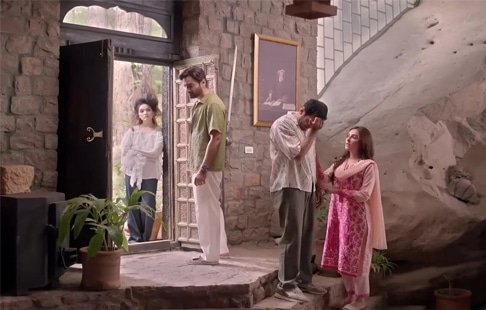
Jinn Ki Shadi Unn Ki Shadi provided a neat twist by being a well-paced, well-filmed horror-comedy broadcast in prime time, offering a refreshing change of pace. Biryani, meanwhile, provided a deep social study of the culture of the Urdu-speaking Karachiite populace, in comparison with that of interior Sindh, with the love of the titular dish being one of the common threads. While the drama was unique, it ultimately lost steam and fell prey to the usual love triangle/quadrangle tropes, thus providing an anti-twist.
After decades of predictability and wholesomeness as its hallmarks, the Pakistani drama industry is finally beginning to reflect the variety and diversity of storytelling elsewhere on the planet. The palette is beginning to expand, and there is a drive to capture the younger audience as well.
It is great to see that, as the world and audience expectations evolve, our dramas remain the hallmark of our industry, going from strength to strength and gaining even more popularity outside the country.
The writer is an accountant by profession, a reader, writer, public speaker, poet, trainer and geek by passion.
He can be reached at talhamid@gmail.com
Published in Dawn, ICON, February 15th, 2026