Govt mulls ‘debt restructuring’ to reduce power tariffs


 0
0

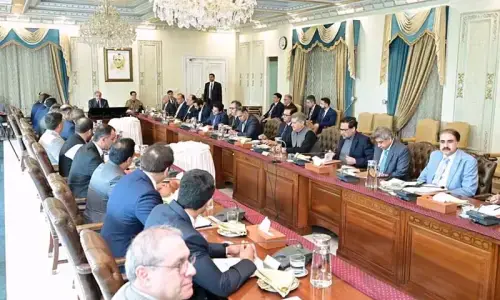
ISLAMABAD: While launching a subsidised scheme for households to replace old fans with efficient ones, Power Minister Sardar Awais Leghari said on Thursday the government was considering ‘debt restructuring’ of the energy sector to bring down consumer-end tariffs for improved grid consumption and lower circular debt.
The minister acknowledged that the high electricity tariffs had been pushing the consumers away from the grid and solar penetration had created a serious challenge to the grid. Therefore, the government was considering restructuring of the power sector debt, besides taking measures for curtailing peak demand.
Over the past few months, the government has taken up the restructuring of power sector debt with multilateral lenders, including the World Bank and the Asian Development Bank, including a $30bn Chinese debt for longer duration. A circular debt of Rs1.6 trillion and a Rs1.225tr recent financing with local commercial banks are also on the agenda.
Pakistan’s repeated direct requests to Chinese institutions for extension in debt repayment period have remained fruitless for well over five years. The authorities have therefore been looking at refinancing of even the Chinese debt and domestic commercial debts with the banking sector to longer terms — 15-20 year concessional multilateral debt.
Power minister says rapid switchover to solar power has created ‘serious challenge’ for national grid
They estimated such a large-scale refinancing of power sector debt could bring down overall tariffs, particularly for industry, to 8-9 cents per unit from 11.5 cents per unit at present.
Mr Leghari said clean energy contribution to the national generation basket had reached 55pc in FY2025 and was estimated to cross 90pc by 2035. He said solar penetration had created a challenge for the national grid where daytime demand dipped to around 8,000MW, but went beyond 26,000MW during peak hours as the government policy encouraged households to invest their incomes and belongings in rooftop solar systems.
In such a situation, power plants are required to be kept on standby to meet peak demand. He said this “people-led solar revolution” had earned global accolades for Pakistan in leading a clean energy transition. He, however, noted that unfair pricing transfer was converting solarisation into a burden for other consumers and this “needs to be rationalised”.
The power minister said electricity prices had come down by 20pc over the last 18-20 months and despite imposition of fixed charges on households, residential tariff was still 35-40pc subsidised. In addition, the industrial power tariff had been cut by 35pc and brought down to around 11.5 cents per unit, which required to be brought down further to be internationally competitive.
The managing director of the National Energy Efficiency and Conservation Authority said the government had given a target for launching the fan replacement scheme within 90 days and his agency had been able to complete all preparation for formal operationalisation in 81 days.
The project involves the State Bank and commercial banks through a tripartite agreement for the launch of the Prime Minister’s Fan Replacement Programme with a government rolling guarantee of Rs2bn to insure first installment default.
Minister for Climate Change Musadik Malik said the scheme would help reduce carbon footprint, reduce energy costs to consumers and reduce peak summer demand and contribute to climate resilience. He said replacement of an old fan with new efficient plant could help reduce energy bill by Rs12,000 per year.
Published in Dawn, February 13th, 2026