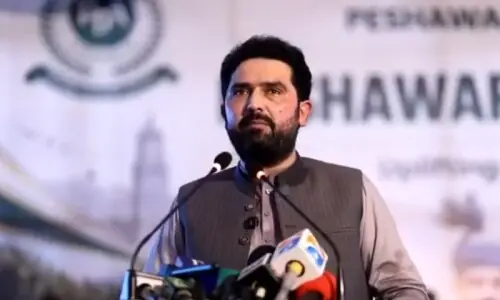
PESHAWAR: Pashto Literary Society (PLS) observed the 16th death anniversary of renowned revolutionary poet, writer and intellectual Ajmal Khattak (1925-2010) by organising an event at a local college here the other day.
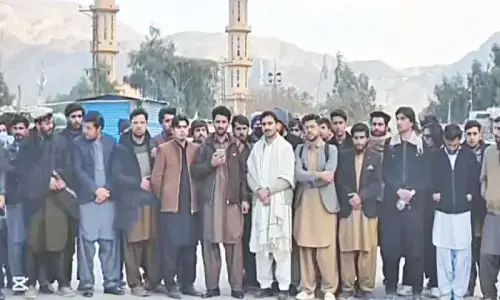
Students, faculty members and bibliophiles attended the event.
Speakers shed light on literary contribution and political struggle of the late poet. They said he was a revered Pakhtun poet, nationalist politician, writer and intellectual whose life embodied resistance, progressive thought, and cultural pride.
Presenting biography of Ajmal Khattak, Hasamuddin Khan Khilji, chief of PLS, said born on September 15, 1925, in Akora Khattak – the birthplace of legendary Khushal Khan Khattak -- Ajmal grew up immersed in Pakhtun heritage. Influenced early by Bacha Khan, he joined the non-violent Khudai Khidmatgar movement as a teenager, participating in anti-colonial protests during the Quit India Movement.
He added that his commitment led to lifelong activism: he faced imprisonment, 16 years exile in Afghanistan during the 1980s, and political setbacks, yet he remained steadfast in advocating Pashtun rights, democracy, and social justice.
Speakers say his life embodied resistance, progressive thought, and cultural pride
Prof Khalid Khan Khalil, patron of PLS, said politically, Ajmal Khattak served as secretary general of National Awami Party (1969-1973) and later as president of Awami National Party. A committed Marxist-Leninist; he critiqued authoritarianism and championed progressive reforms, aligning closely with figures like Khan Abdul Wali Khan, Mr Khalil added.
Sheraz Khan Orakzai, general secretary of PLS, stated that Khattak’s greater legacy reflected in literature. A prolific Pashto poet, he authored more than a dozen books in Pashto and Urdu, blending revolutionary fervour with lyrical depth.
Ajmal Khattak’s popular collections include Da Ghirat Chagha (The Cry of Honour), evoking Pashtun pride; Gul auo Perhar (flower and ember), exploring love and revolution; Batoor, on identity and exile; Guloona auo Takaloona (flowers and thorns); Jalawatan ki Shairee (poetry of exile), written during displacement; and Da Wakht Chagha (The Cry of Time).
Prof Asad Jan pointed out that Ajmal Khattak also produced scholarly works like history of Pashto Literature (in Urdu) and Pakistan Qaumi Jamhoori Tahrikain (national democratic movements in Pakistan).
Prof Riaz Azam and student poet, Roshan Ali paid poetic tribute to the late poet.
Meanwhile, ANP provincial president Mian Iftikhar Hussain on Saturday paid rich tribute to former ANP president and renowned revolutionary poet, writer and intellectual Ajmal Khattak on his 16th death anniversary, describing him as a symbol of intellectual courage and an enduring struggle for the rights of oppressed peoples.
In a statement, Mr Hussain said Ajmal Khattak had devoted his entire life to the rights and political consciousness of oppressed nations, particularly the Pakhtun people. He termed him the voice and representative of resistance for marginalised communities, saying that Khattak was not merely a poet but an entire intellectual era in himself.
“He turned words into weapons and thought into a torch, waging an unrelenting struggle against oppression, exploitation and dictatorship,” he said, adding that Khattak’s pen struck fear in the halls of tyranny while giving courage and hope to the oppressed. Despite imprisonment, torture, exile and state repression, he said, Ajmal Khattak never retreated from his ideological principles.
Published in Dawn, February 9th, 2026