Tarar vows greater scrutiny on issue of missing persons


 0
0


• Law minister sees fourfold drop in cases of enforced disappearances
• Says recent reforms must to ‘end judicial overreach’
• Claims military courts hand down ‘lenient sentences’, compared to civil courts
• Legal experts warn against 28th Amendment; question govt’s legitimacy
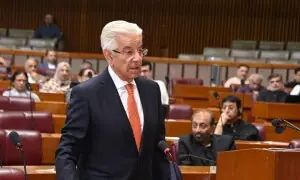
LAHORE: Federal Law Minister Azam Nazeer Tarar on Saturday announced that the government is forming a new high-level committee to investigate the issue of ‘missing persons’ with greater scrutiny, reaffirming the government’s commitment to reaching a target of zero missing person.
Addressing the 6th Asma Jahangir Conference in Lahore, Mr Tarar admitted that while the reported number of enforced disappearances dropped significantly in recent years from nearly 10,000 to around 2,600, even the current figure was “unacceptable” from a human rights standpoint.
He detailed an interim relief package designed to support the families of missing persons. This policy mechanism, developed over 18 months, provides not only financial assistance but also legal avenues to address practical complications such as inheritance disputes and the operation of bank accounts held in the names of the missing.
However, the minister highlighted the complexities involved in tracking these individuals, noting that investigation revealed some persons listed as missing had voluntarily joined banned militant organisations and found dead after police encounters with terrorists.
26th, 27th Amendments
Referring to the recent legislation, Mr Tarar used the platform to forcefully defend the 26th and 27th Amendments, labelling them the ‘need of the time’ to correct historical judicial overreach.
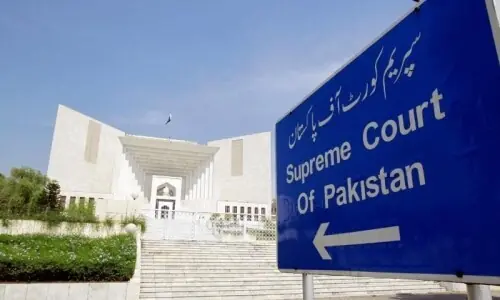
He argued that the changes were designed to curb judicial overreach, noting that for years, the Supreme Court had frequently overstepped its constitutional boundaries, at times rewriting the law and ousting democratically elected prime ministers.
Mr Tarar acknowledged facing significant public and professional criticism over the amendments, but insisted the establishment of federal constitutional benches was a longstanding democratic demand and the goal was central to the Charter of Democracy.
The minister expressed concern over the historical trend where a few judges from a single province could dictate the political fate of the country. He explained that the newly restructured Judicial Commission of Pakistan now includes representatives from civil society and minorities, ensuring a broader perspective in the appointment and transfer of judges.
He questioned whether the residents of smaller provinces, like Sindh and Balochistan, did not have the right to high-quality judicial oversight, defending the commission’s new authority to transfer judges rather than leaving the decision solely to the chief justices of high courts.
Mr Tarar said civilians could be tried by military courts under national laws if they cross the ‘red line’, including in cases involving attacks on military installations. He explained the Army Act provides with the international guarantees for fair trial, which restrict trials in absentia, ensure access to record and counsel of choice, and the right to appeal in the shape of judicial review.
He said the work on the provision of right to appeal was in process and the parliament would announce a decision soon. He claimed military courts handed down comparatively ‘lenient sentences’, compared to those by ordinary civilian courts operating under the Anti-Terrorism Act 1997.
‘Democracy?’
In contrast to the minister’s opinion, several legal experts at the conference raised concerns over the democratic norms in the country.
Senior lawyer Akhter Hussain challenged the democratic credentials of the current administration, questioning how a government can be called democratic when its own ministers describe it as a “hybrid regime” or a “partnership” with the military establishment.
He argued judicial independence and freedom of expression had been severely compromised by the new amendments and the Prevention of Electronic Crimes Act (Peca).
Former Senate chairman Raza Rabbani, speaking via video link, issued a warning against further changes, stating that a potential 28th Amendment would ‘permanently’ alter the fundamental framework of the 1973 Constitution. He lamented that bar associations, once independent advocates for constitutional supremacy, were being used by politicians to advance their party agendas.
Published in Dawn, February 8th, 2026