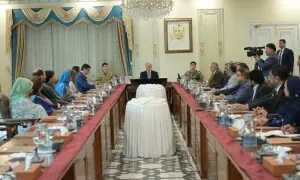
SOUTH WAZIRISTAN: Mehsud tribal elders, jirga members and notables from Shaktoi tehsil called on Upper South Waziristan deputy commissioner Asmatullah Wazir in his office here on Tuesday.
They apprised the DC of the residents’ issues and sought their early yet effective resolution.
The visitors highlighted the lack of basic facilities, bad roads, inadequate health and educational facilities, irregular water and electricity supply, law and order concerns and limited employment opportunities.
They said Shaktoi was a remote, underdeveloped area, with residents having poor access to essential services.
The elders said the lack of facilities had significantly affected the quality of life, especially that of women, children and the elderly.
They emphasised that poor road conditions hindered access to markets, schools and health centres, while healthcare and educational institutions were also in limited numbers to the misery of residents.
DC Wazir promised the resolution of those issues in a “phased and sustainable manner”.
He said that he would issue directives to relevant departments to ensure timely action on the issues discussed in the meeting.
The DC added that development initiatives would be prioritised in accordance with available resources, while efforts would be made to ensure transparency and accountability during their implementation.
Highlighting the importance of the traditional jirga system, he said that mutual consultation and dialogue remained the most effective tools to resolve issues in tribal areas.
Mr Wazir noted that jirgas not only provided a platform for peaceful discussion but also helped strengthen trust and cooperation between the people and the administration.
“Our district administration considers public welfare its top priority,” he said.
The DC said the development projects aimed at improving infrastructure, education, healthcare and livelihoods would be pursued to uplift the socio-economic conditions of the region.
The tribal elders expressed satisfaction with the deputy commissioner’s response to their complaints and assured the administration of full cooperation. They hoped that the longstanding public issues would be addressed without delay and that, too, effectively.
The visitors also emphasised the importance of continued engagement and coordination between the district administration and local communities, saying that sustained dialogue will pave the way for development, stability and prosperity in the area.
They insisted that such meetings played a vital role in bridging the gap between the people and government institutions, contributing to improved governance, lasting peace and overall progress in the district.
Published in Dawn, February 4th, 2026