Super tax threatens businesses, warns Quetta chamber


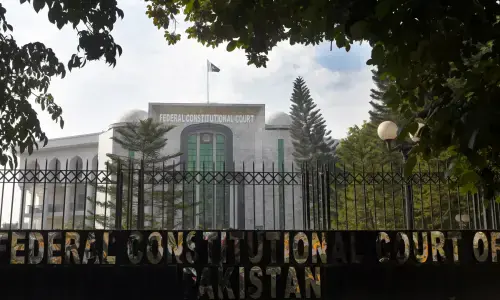
QUETTA: The Quetta Chamber of Commerce and Industry (QCCI), Balochistan, has expressed serious concern over the government’s move to recover the super tax following the Federal Constitutional Court’s recent decision upholding its legal status.
While acknowledging the verdict and government revenue requirements, QCCI President Haji Muhammad Ayub Maryani, along with Senior Vice President Haji Akhtar Kakar, Vice President Mir Wais Khan Kakar and other office-bearers pointed out that the method and timing of tax collection were critical, particularly when the business community was already grappling with high energy tariffs, elevated interest rates, excessive taxation, and rising production costs.
They warned demanding hundreds of billions of rupees in super tax at once would drain working capital, disrupt cash flows, and make it difficult for businesses to meet routine obligations such as salaries, utility bills, raw material imports, and bank repayments. Forcing companies to pay the tax in a single installment, they said, was neither practical nor sustainable.
The chamber urged the government to immediately allow adjustment of super tax liabilities against long-pending income and sales tax refunds, which have deprived exporters and industrialists of vital liquidity for years. It also called for a clear, structured, and business-friendly installment plan to ensure tax compliance without paralysing commercial operations.
The office-bearers cautioned that without relief measures, the country could face reduced production, layoffs, and the closure of small and medium-sized enterprises, particularly in export-oriented sectors such as textiles, engineering goods, pharmaceuticals, and value-added manufacturing. Such developments, they noted, would shrink rather than expand the tax base.
They highlighted that the cost of doing business in Pakistan had reached an unsustainable level due to soaring electricity and gas prices, multiple taxes, and stringent regulatory requirements. Recovering the super tax without flexibility at this critical juncture could push many viable businesses toward bankruptcy, increasing unemployment and social instability.
The QCCI leaders urged the government to adopt a consultative approach with chambers of commerce and trade bodies before enforcing strict measures, warning that failure to provide refund adjustments or installment facilities could result in widespread industrial shutdowns, eroding investor confidence and dampening economic activity. They called on policymakers to make prudent decisions in the national interest by aligning sustainable revenue collection with business survival.
Published in Dawn, February 1st, 2026