GB winter adventure tourism hit by soaring permit fee, visa delays


 0
0
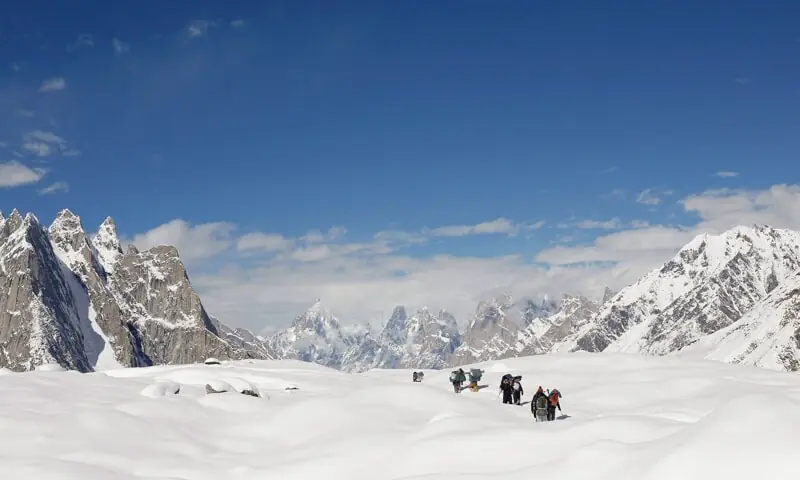

• No permit issued to foreign trekking, expedition group in winters since 2023
• Officials count climate-related disasters among factors affecting tourism industry
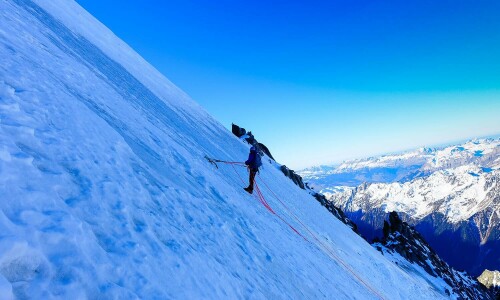
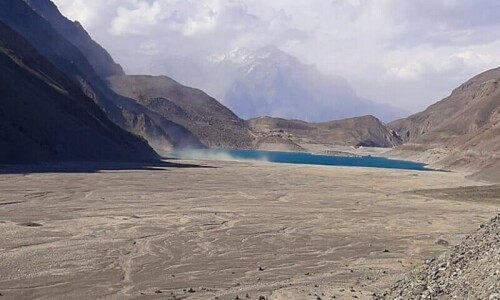
GILGIT: Adventure tourism in Gilgit-Baltistan (GB) has declined over the past three years, with no foreign climber or trekker visiting the region during the winter season. The arrival of climbers, trekkers, and both foreign and domestic tourists during the summer season also fell by 90 per cent last year, severely affecting the local economy.
Tour operators blamed the sharp increase in permit fees, delays in the issuance of visas to foreigners, and other factors for the decline in foreign visitors. According to the GB tourism department, no foreign climber or trekker visited GB this winter. No foreign expedition or trekking group was issued a permit during the winter expedition season, which usually lasts from November to February.
Five of the world’s 14 eight-thousanders — mountains rising above 8,000 metres above sea level — are located in Pakistan. These include the world’s second-highest peak, K2 (8,611m), followed by Nanga Parbat (ninth at 8,126m), Gasherbrum-I (11th at 8,080m), Broad Peak (12th at 8,051m) and Gasherbrum-II (13th at 8,035m).
Until 2023, hundreds of foreign climbers and trekkers used to visit the region each winter to attempt ascents of K2, Nanga Parbat and other peaks. However, data obtained from the GB tourism department shows that not a single foreign climber or trekker has visited the region during the winter season since 2023.
Director of the GB tourism department Iqbal Hussain said multiple factors had contributed to the decline in winter tourism. He said international conflicts and global uncertainty had led to a reduction in the number of foreign climbers and trekkers visiting Pakistan.
Meanwhile, arrivals of both foreign and domestic tourists during the summer season also declined last year, badly affecting the local economy. Liver Khan, a prominent tour operator and a member of the Pakistan Association of Tour Operators (PATO), told Dawn that government’s anti-tourism policies had contributed to the decline in both foreign and domestic tourism in GB.
He said around 90 per cent of the local population — including labourers, transporters, hotel and shop owners, travel agents, tour operators and porters in remote areas — depended on tourism as a source of income. He added that the sharp increase in permit fees for mountaineering and trekking, coupled with difficulties in obtaining visas, had discouraged foreign visitors.
Mr Khan said foreign tourists usually plan their trips to Pakistan at least three years in advance, based on their budgets. He explained that Pakistan issues three types of visas to foreign tourists: tourist, mountaineering and trekking visas. Mountaineering and trekking visas are issued only after permits are obtained through Pakistani tour operators. Delays in issuing these permits, he said, often result in visa delays and ultimately lead to the cancellation of trips.
Mr Khan said PATO had demanded that the government introduce a single visa category for foreign tourists and simplify the process for mountaineering and trekking visas. He said the increasing permit fees had forced foreign climbers and trekkers to cancel their trips to Pakistan and opt for Nepal or other countries, where permits are cheaper. Nepal, he noted, had reduced permit fees for more than 50 peaks.
Another tour operator, Mohammad Ali Nagri, told Dawn that the increase in permit fees for foreigners had virtually crippled adventure tourism in GB.
According to the GB tourism department, only 270 international climbers visited the region during the summer season last year to attempt peaks including K2, Broad Peak, Gasherbrum-I, Gasherbrum-II and Nanga Parbat, compared to more than 2,000 foreign climbers and trekkers in previous years.
Officials attributed the downturn to unprecedented climate-related disasters in GB, as well as regional tensions and conflicts involving Pakistan and India.
Published in Dawn, February 1st, 2026