Different varieties of leafy green vegetables (locally known as saag) are commonly grown in the Subcontinent due to the favourable growing conditions here. These green vegetables are prepared in traditional meals that contain the signature South Asian touch. However, Swiss chard remains relatively unknown to many.
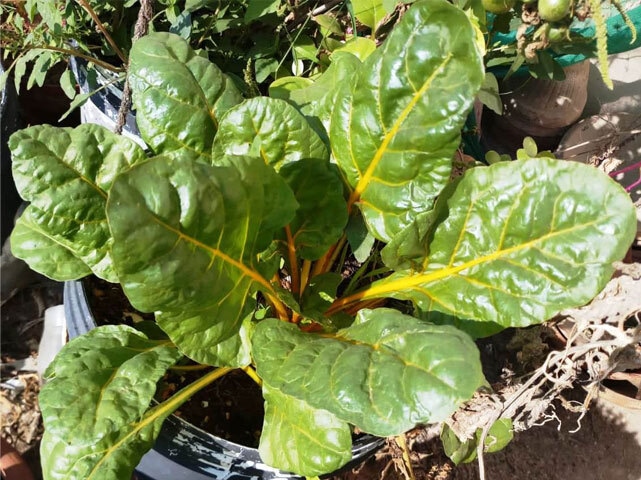
Swiss chard is one of the easiest-to-grow leafy green vegetables. Unlike other leafy green vegetables, Swiss chard has beautiful bright green-coloured leaves with white, yellow or maroon midribs and stem. No wonder that a few sub-varieties of the Swiss chard are referred to as rainbow chard!
It is also known as spinach beet and leaf beet, while other names reflect the colour of its stems. For instance, the ones with white midribs are referred to as silver beet and those with red or maroon stems are known as rhubarb chard. Its striking colour combinations make it attractive enough as an ornamental plant.
Scientifically known as Beta vulgaris L. var. cicla, Swiss chard belongs to the Amaranthaceae family, which was formerly known as the Chenopodiaceae family. While it is also considered a beet, its root is inedible. Due to its close resemblance to spinach and beet root, it is not recommended to grow Swiss chard near either of them. Pests and diseases affecting beet root and spinach will likely attack Swiss chard as well.
While many other types of saag dominate South Asian kitchens, Swiss chard — of Mediterranean origin — remains largely unknown here…
Contrary to its name, Swiss chard does not originate from Switzerland. The origin of the ‘Swiss’ prefix remains contentious. One theory is that it is widely grown in Switzerland. In fact, Swiss chard primarily originates from the Mediterranean region. However, it is extensively used in Swiss cuisine.
Another theory is that the botanist who first classified this vegetable was Swiss and used the prefix to create a distinction from other leafy vegetables. The most common theory is that the European seed merchants added Swiss to distinguish it from the closely related French chard. If that were not enough to confuse you all, the word ‘chard’ is of Latin origin, meaning thistle — a common gardening term referring to a flowering plant which has prickly bracts.
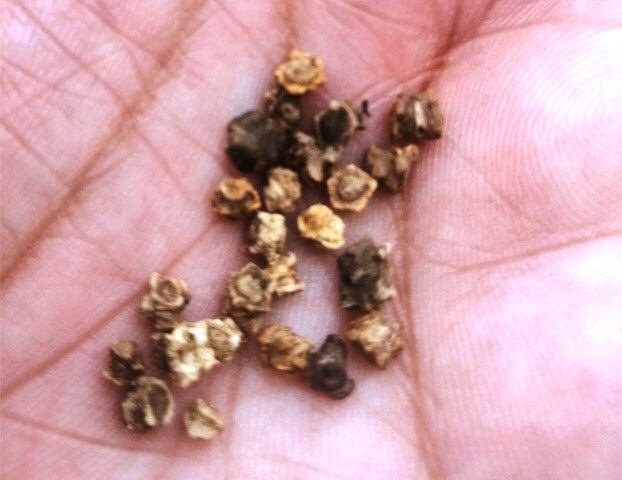
Swiss chard seeds are easily confused with those of spinach, due to their stark resemblance. The seeds of Swiss chard are faded brown to dark brown in colour. They have a dry, rough texture and are irregular in shape. The seeds are hard and are surprisingly light for their size. Like spinach, one seed of Swiss chard can result in three to four seedlings. For this reason, it is known as a seed ball, containing potentially three to four seeds.
Being hardy, Swiss chard has minimal requirements. One of the best aspects about sowing Swiss chard seeds is that they can be grown in almost any available space. You can grow it on a strip of land, small pots and even around other plants in the same pot. However, when sowing Swiss chard seeds for a full crop, certain aspects should be taken into account.
In climates similar to Karachi, the seeds can be sown from mid-October onwards or when the temperature falls to 20 degrees Celsius. The potting mix should be pre-moistened and clear of pebbles and stones. Seeds should be placed half an inch below the surface and covered with a layer of compost. The soil should remain moist, not wet.

Depending on the desired yield, any pot size can be used, since the roots are small. Pots should then be placed in a cool shade with indirect sunlight. If the Swiss chard plant is being grown in an open field or in raised beds, it should be shielded from direct sunlight exposure, to minimise evaporation.
Some gardeners prefer to soak the seeds in water for four to six hours to ensure better and quick germination. In favourable conditions, Swiss chard seeds are likely to sprout within one week to 10 days.
Please send your queries and emails to doctree101@hotmail.com. The writer is a physician and a host for the YouTube channel ‘DocTree Gardening’ promoting organic kitchen gardening
Published in Dawn, EOS, February 1st, 2026