Premier rolls out major incentives for industrialists


• Offers Rs4 cut in power tariff, cheaper export finance, blue passports
• Insists country must move towards sustainable, export-driven growth
• Warns of strict action against those evading indirect, withholding taxes
ISLAMABAD: Prime Minister Shehbaz Sharif on Friday announced a package of incentives for industrialists and exporters, including a reduction of Rs4.04 per unit in electricity tariffs, lower wheeling charges for industry, a cut in the export refinance scheme rate from 7.5 per cent to 4.5pc and the issuance of “blue passports” for leading exporters for two years.
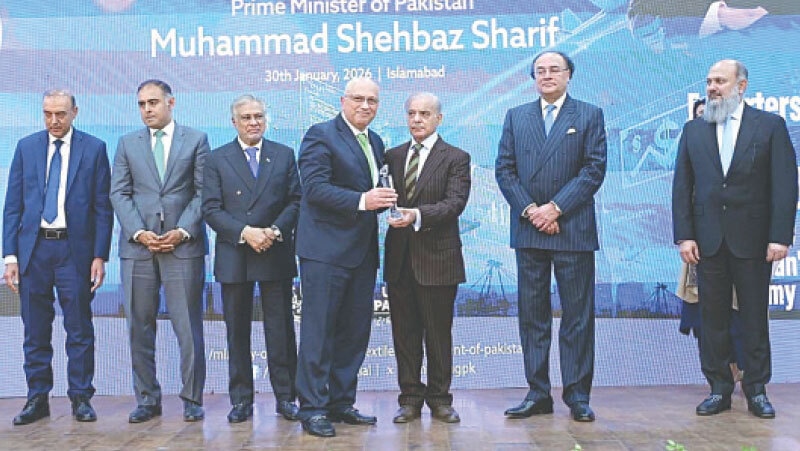
Addressing an awards ceremony for top exporters for 2024-25, the prime minister said Pakistan’s economic revival and long-term stability depended on export-led growth and foreign direct investment (FDI) in export-oriented projects.
“Stabilisation alone is not enough,” he said, adding that the country must move towards sustainable, competitive and export-driven growth.
He said the government had allocated Rs1.052 trillion for the export refinance scheme, of which Rs900 billion had already been utilised.
Exporters were previously availing a three-percentage-point relief against the State Bank of Pakistan’s policy rate, he said, adding that the scheme’s rate had now been further reduced to 4.5pc.
The prime minister said future FDI would be encouraged in export-led projects to generate foreign exchange and strengthen reserves. He also announced “blue passports” for the exporters recognised at the ceremony, for a period of two years, as part of efforts to facilitate and incentivise export-led growth.
Paying tribute to exporters, PM Shehbaz called them the backbone of the economy and credited their “resilience and commitment” for helping Pakistan navigate through severe economic challenges.
He recalled that Pakistan had faced severe economic stress in mid-2023, when inflation reached 32pc and the policy rate peaked at 22pc.
He said inflation had since come down to single digits, the policy rate had been reduced to 10.5pc and foreign exchange reserves had doubled compared to three years ago, though he acknowledged that part of the reserves included support from friendly countries.
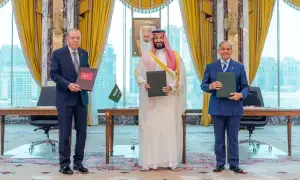
He cited assistance from China, Saudi Arabia, the United Arab Emirates and Qatar, and said the government had sought support abroad during the crisis. However, he reiterated the need to reduce reliance on external debt, saying there was “no respect for nations that beg for money”.
Warning that stabilisation without growth would not address structural problems, the prime minister said poverty and unemployment had increased and exports had not met targets. He urged the business community to raise investment and said their recommendations would be implemented.
Highlighting the importance of small and medium enterprises, PM Shehbaz called on banks to enhance lending to SMEs to promote entrepreneurship and diversify the economy. He said Pakistan must abandon the boom-and-bust economic model, which repeatedly creates balance-of-payments crises.
He also warned of strict action against those evading indirect taxes or withholding taxes collected from consumers and failing to deposit them in the national exchequer. He said action against sugar mills had yielded an additional Rs50bn in tax revenue over the past year and vowed continued enforcement.
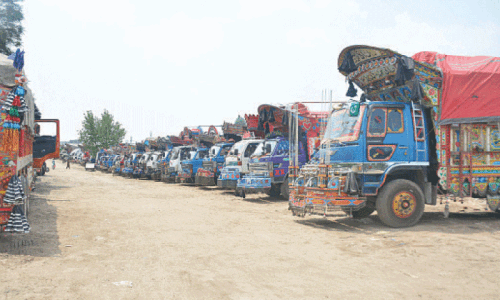
The premier said the government had also acted against the smuggling of petroleum products, which helped generate additional revenue of Rs125bn a year through the petroleum development levy.
He attributed the credit for improved enforcement in border areas to orders issued by the military leadership for strict action against smugglers and their backers.
On the digital economy, the prime minister said the government was prioritising IT exports and aimed to increase them to $30bn from about $3bn within five years.
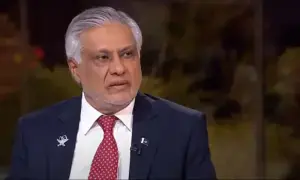
He also acknowledged the contributions of Deputy Prime Minister Ishaq Dar and cabinet members for their role in economic reforms, privatisation and export promotion.
Commerce Minister Jam Kamal Khan said Pakistan had emerged from a turbulent economic phase and was regaining international recognition.
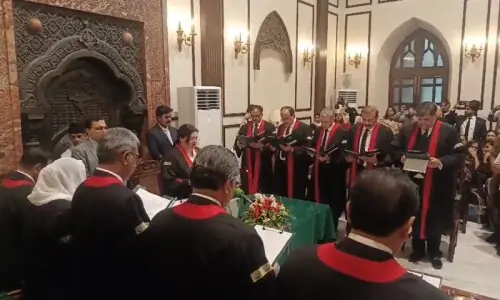
At the ceremony, the prime minister presented awards to the top 30 exporters and leading bankers for their contribution to the economy during the fiscal year 2024-25.
Published in Dawn, January 31st, 2026