Hours-long blockade of roads around Karachi Press Club amid protest against Imaan, Hadi’s conviction


 0
0
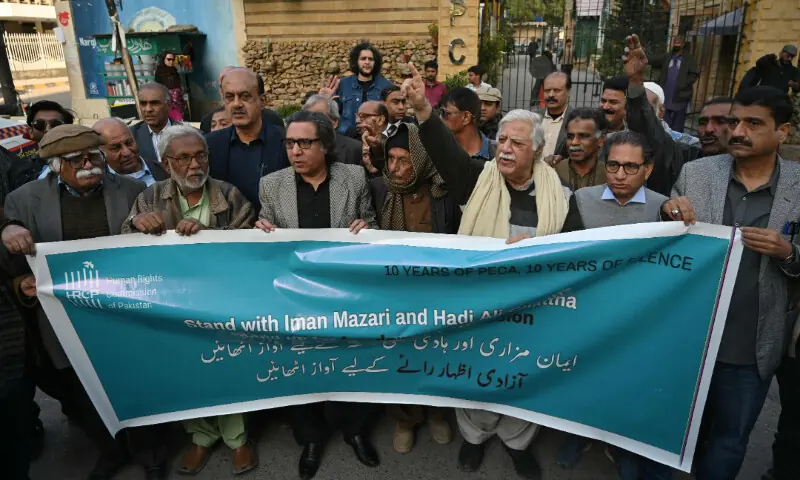
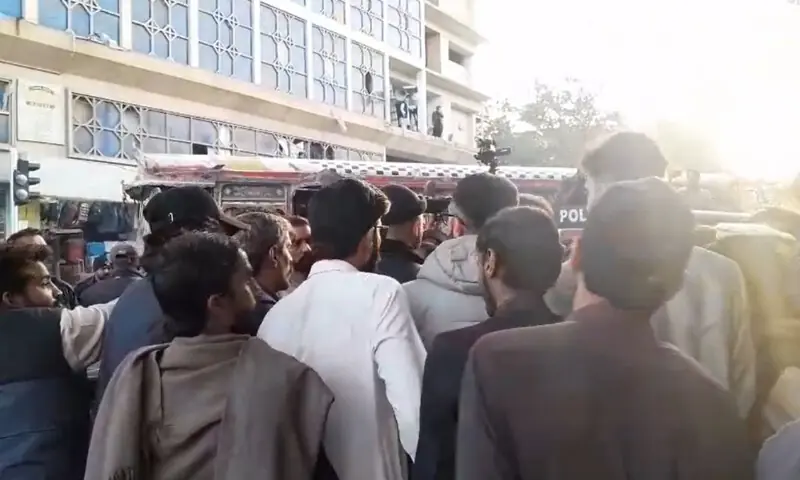
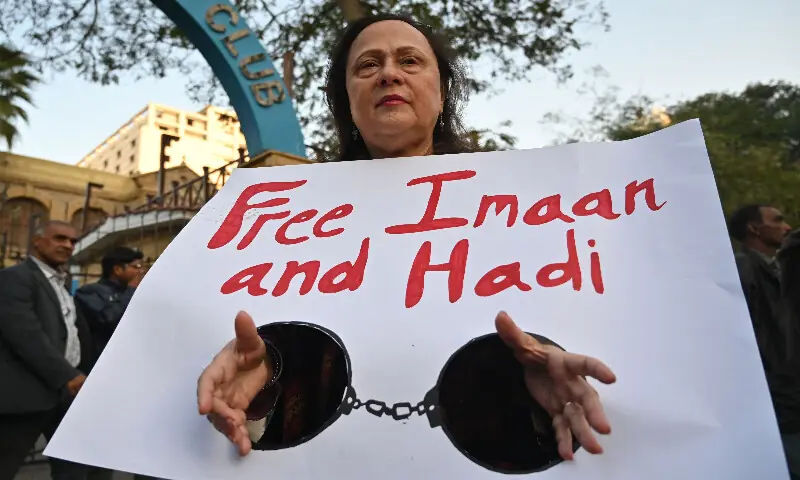

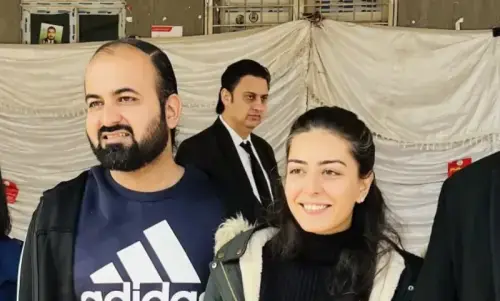
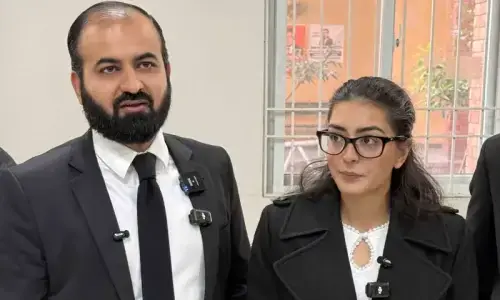
KARACHI: Roads leading to the Karachi Press Club (KPC) were blocked for hours on Monday as lawyers, human rights activists and civil society members staged a protest against the conviction of Imaan Zainab Hazir-Mazari and her husband, Hadi Ali Chatta.
The closure of roads slowed down the movement of traffic on several arteries affected by the move, causing inconvenience for commuters.
Police barred several protesters, including activist Zulfikar Ali Bhutto Junior, from reaching the press club — a move that KPC President and journalist Fazil Jamili called a violation of the fundamental right to peaceful assembly.
“The siege of the Karachi Press Club today is a blatant assault on democratic freedoms. By cordoning off the KPC and barring citizens, including Zulfiqar Bhutto Jr., from protesting the sentencing of Imaan Mazari, authorities are violating the fundamental right to peaceful assembly,” he posted on social media platform X.
Lawyer and human rights activist Jibran Nasir posted on social media platform X that “all roads leading to the KPC have been blocked by placing containers and parking buses. The state wants to deny journalists, advocates and civil society the right to protest and expose the sham trial and conviction of Advocates Imaan Mazaari and Hadi Ali Chattha”.
Journalist Sameer Mandhro, in a similar post, said “police [have] blocked all routes leading to the Karachi Press Club”.
“The Human Rights Commission of Pakistan, journalists, lawyers, and civil society activists are protesting against the Peca Act and the sentence awarded to Imaan Mazari,” he added.
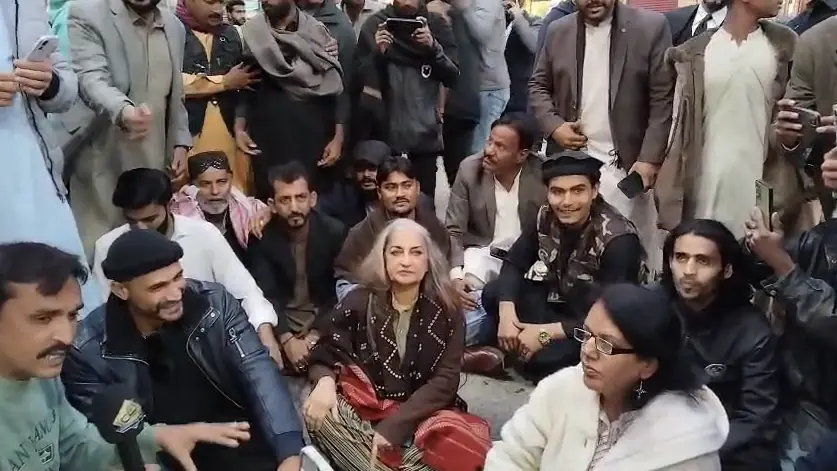
Meanwhile, Zulfikar Bhutto Junior, the son of late politician Murtaza Bhutto, staged a sit-in at the KPC Roundabout when he was stopped from reaching the press club.
Speaking to the media there, he said that police were not even allowing them to protest on the pavements.
“We are being deprived of fundamental human rights. I want to participate in the protest, but participation in the protest has become a crime,” he said.
On Mazari and Chattha’s sentencing, he said, “They were convicted over just a tweet. My father faced similar treatment by the police.”
Activist Sheema Kermani was also among the protesters staging a sit-in at the KPC Roundabout.
Meanwhile, roads around Zainab Market and the roundabout near the Arts Council of Pakistan remained blocked. Some of the routes were reopened and the sit-in ended at around 6:45pm when Zulfikar Bhutto Junior and others were allowed to go to the KPC. Later, all blocked routes were opened by around 9pm.
As for Zulfikar Bhutto Junior, he again spoke to the media at the KPC, saying that there were no restrictions on protest in a democracy.
“Only thieves are happy in this country, and I am talking about those thieves who hold posts and are sitting in Islamabad,” he commented.
Imaan and Hadi’s conviction
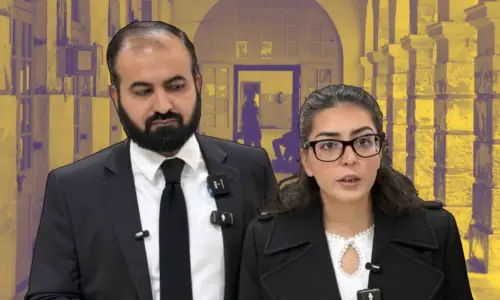
A sessions court sentenced lawyers Mazari and Chattha to a total of 17 years in prison on multiple charges in a case linked to social media posts on Saturday, sparking outrage among rights groups, opposition parties, and other segments of society.
They were sentenced a day after being arrested in Islamabad, which was also denounced by rights bodies, politicians, and journalists, who stressed their right to a fair trial.
Amnesty International noted the “lack of adherence to due process” and said these were “retaliatory cases aimed solely at silencing Mazari and Chattha for their human rights work and dissent”.
The Human Rights Commission of Pakistan also condemned the arrests, terming the case a “tool to harass, intimidate and ultimately muzzle dissent”.