Activists slam Indian ‘reign of terror’ in held Kashmir

MUZAFFARABAD: Kashmiri activists staged a symbolic sit-in to condemn the unrelenting reign of terror in India-held Jammu and Kashmir on Sunday, a day ahead of India’s so-called Republic Day.
The demonstration, staged outside Muzaffarabad Press Club under the aegis of Pasban-i-Hurriyat Jammu Kashmir (PHJK) — an organisation of post-1989 Kashmiri refugees — was aimed at drawing attention to the Indian occupation machinery’s brutal acts in the held territory and the enforcement of a slew of draconian laws.
Posters and banners depicting various forms of repression in occupied Jammu and Kashmir were displayed at the venue of the sit-in where participants raised slogans against India’s sham democracy and the continued subjugation of Kashmiris.
Right to self-determination
They demanded their internationally recognised right to self-determination, and also called on the United Nations (UN) to intervene.
Kashmiri refugees stage sit-in, urge international community to intervene
“Down with India’s farcical democracy” and “UNO, wake up and come to our rescue” were among the slogans chanted.
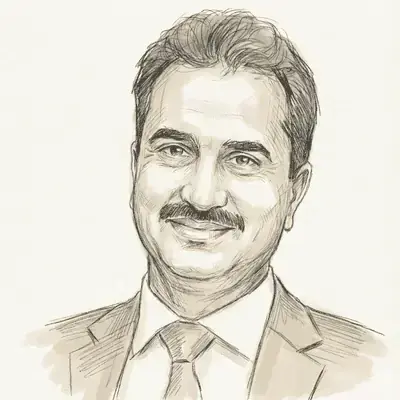
Addressing the gathering, PHJK chairman Uzair Ahmed Ghazali said India’s decision of August 5, 2019 had not only stripped Kashmiris of their political status but had also deprived them of their all human, social and democratic rights.
He said thousands of Kashmiris demanding the inalienable right to self-determination had been killed in extrajudicial actions, while youths continued to be targeted in staged encounters.
“While Muhammad Maqbool Butt and Muhammad Afzal Guru were sent to the gallows despite their innocence, several Hurriyat leaders died in custody due to systematic torture,” he said.
‘Serious war crimes’
“India is a terrorist state and its savage military apparatus is using black laws such as the Armed Forces Special Powers Act, Public Safety Act and Unlawful Activities (Prevention) Act with impunity to collectively punish Kashmiris,” he added.
Mr Ghazali pointed out that sexual violence against women was being used as a weapon of war by Indian forces, resulting in thousands of widows and orphans, and added that mass graves were evidence of ‘serious war crimes’.
Other speakers said demographic changes, land seizures, curbs on religious and cultural expression and a prolonged media blackout had turned occupied Kashmir into an open prison, where residents were living under curfews and security restrictions amid a heavy troop presence.
The organisers urged the UN and the international community to take notice of the situation in occupied Jammu and Kashmir, seek independent investigations into grave violations and facilitate the implementation of UN resolutions granting Kashmiris the right to self-determination.
Prominent among those who participated in the sit-in were Ghulam Mehdi Dar, Usman Ali Hashim, Faisal Farooq Sheikh, Iqbal Yaseen Awan, Muhammad Fayaz Khan, Khawaja Muhammad Sadiq, Muhammad Younis Mir, Muhammad Aslam Inqalabi, Muhammad Ashfaq Kashmiri, Imtiaz Khan and Syed Khalid Shah.
Published in Dawn, January 26th, 2026