‘Jobs, jobs, jobs’ the AI mantra in Davos as fears take back seat


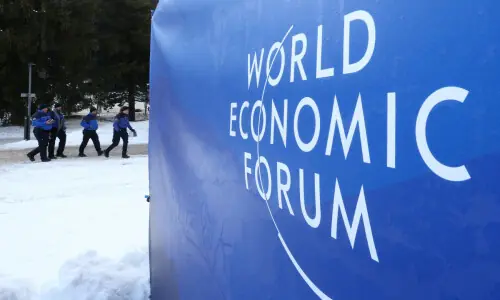
Biting cold, political tensions and doubts about artificial intelligence did nothing to curb the enthusiasm of business leaders in Davos over technology’s ability to create jobs.
Top executives at the World Economic Forum’s annual meeting said that while jobs would disappear, new ones would spring up, with two telling Reuters that AI would be used as an excuse by companies which were planning layoffs anyway.
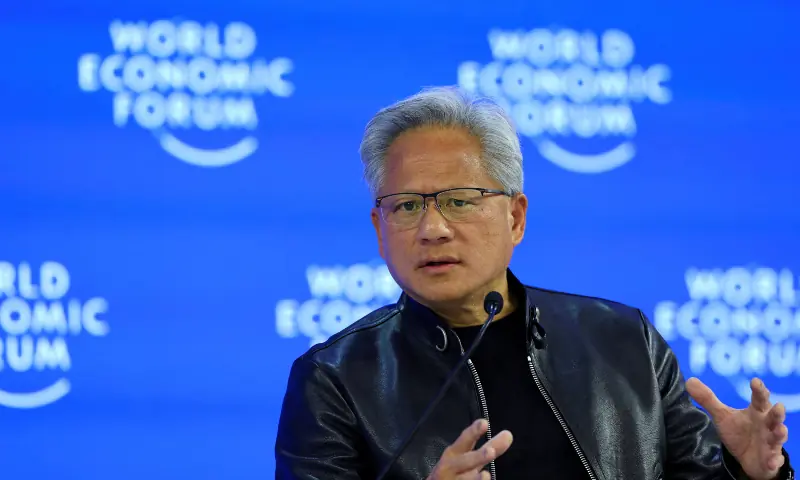
Flag bearers of AI’s trillion-dollar expansion, including chip titan Jensen Huang, said the technology heralded higher pay and more jobs for plumbers, electricians and steelworkers.
“Energy is creating jobs. Chips industry is creating jobs. The infrastructure layer is creating jobs,” the Nvidia CEO told the meeting in the Swiss mountain resort.
“Jobs, jobs, jobs,” added Huang.
That optimism contrasted with a potential trade row that had reverberated through Davos until US President Donald Trump struck a deal to call off tariffs and avert a security decoupling with Europe over Greenland.
But scepticism over AI simmered below the surface.
Delegates discussed how chatbots could lead consumers to psychosis and suicide, while labour union leaders questioned the cost of recent technology gains.
“AI is being sold as a productivity tool, which often means doing more with fewer workers,” said Christy Hoffman, general secretary of the 20-million-strong UNI Global Union.
Toward returns
Matthew Prince, CEO of internet security company Cloudflare , said during an interview with Reuters in a mountain restaurant above Davos that AI would keep advancing and that scrappy developers could overcome market or funding blips.
Prince, who said he sticks to six-minute chair-lift meetings rather than windowless conference rooms during Davos, warned that AI could become so dominant in the future that small businesses are eviscerated while autonomous agents handle consumers’ shopping requests.
In recent years, businesses have griped about how to go beyond ill-fated AI pilots and capitalise on an AI craze started by ChatGPT in 2022.
Rob Thomas, IBM’s chief commercial officer, said AI has reached a stage where there can be a return on investment. “You can truly start to automate tasks and business processes,” he told Reuters.
However, PwC said only one in eight CEOs recently surveyed by the advisory firm believed AI was lowering costs and delivering more elusive revenue. And questions remain about what business model can make up for AI’s enormous expenses.
Cathinka Wahlstrom, chief commercial officer at BNY, said AI has paid off by shortening the amount of research time for onboarding a new client from two days to 10 minutes.
And in the past month and a half, projects that networking company Cisco had viewed as too tedious to take on — requiring 19 man-years of work — were now getting done in a couple of weeks, its President Jeetu Patel said in an interview.
“The way in which we code actually was rethought,” said Patel, adding that software developers should embrace AI not just for productivity but to “be relevant” in the long run.
Headcount flat
Rob Goldstein, BlackRock’s chief operating officer, told a media roundtable that the world’s biggest asset manager had secured nearly $700 billion in net new client assets last year, viewing AI as a means to business expansion rather than to workforce reductions.
“We’re very focused on keeping our headcount flat as we continue to grow,” Goldstein said.
Meanwhile, Amazon.com is planning a second round of cuts next week as part of a broader goal of slashing some 30,000 corporate jobs, two people familiar with the matter told Reuters.
Part of the reason anxiety about jobs persists despite corporate assurances is if workers have little say in the rollout of AI, said Luc Triangle, general secretary of the International Trade Union Confederation.
In these conditions, workers see AI “as a threat”, he said.
For billionaire philanthropist and Microsoft co-founder Bill Gates, the world needs to “get ready for the opportunities and disruption that AI will bring”.
“Your economy gets more productive,” Gates told Reuters. “That’s typically a good thing.”

Gates cited taxing AI activities as one potential idea for assisting workers, while calling on politicians to get more familiar with the technology.
“There certainly are problems, but they’re all solvable problems,” Gates added about AI more generally.
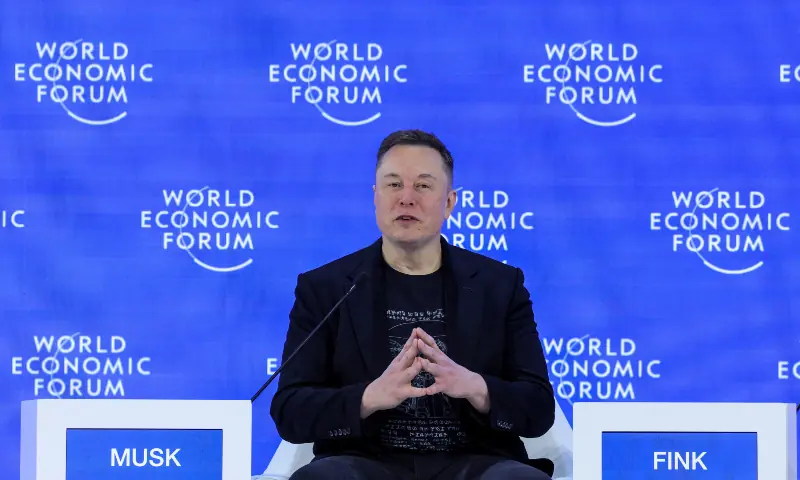
Davos largely wrapped up on Thursday with optimism from Elon Musk, founder of SpaceX and Tesla CEO, who talked about his goal to protect civilisation and make it interplanetary.
“For quality of life, it is actually better to err on the side of being an optimist and wrong, rather than a pessimist and right,” Musk told a packed congress hall, before he was escorted out via a kitchen, dodging waiting reporters.