Outrage after Trump claims Nato troops avoided Afghan front line


Britain said United States President Donald Trump was “wrong to diminish” the role of Nato troops in Afghanistan, as his claims that they did not fight on the front line sparked outrage.
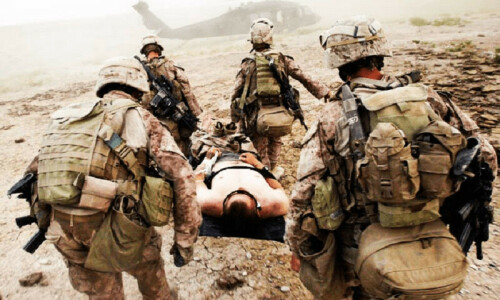
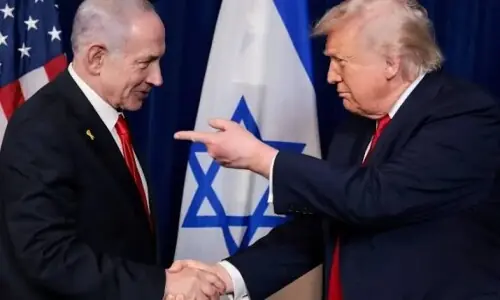
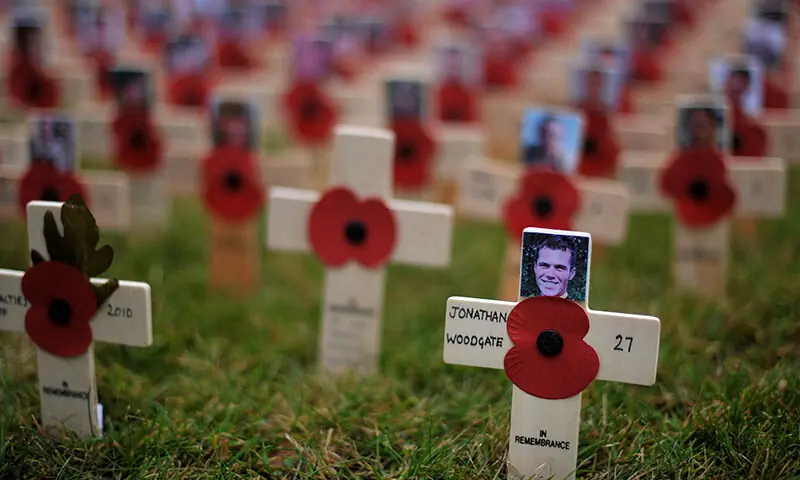
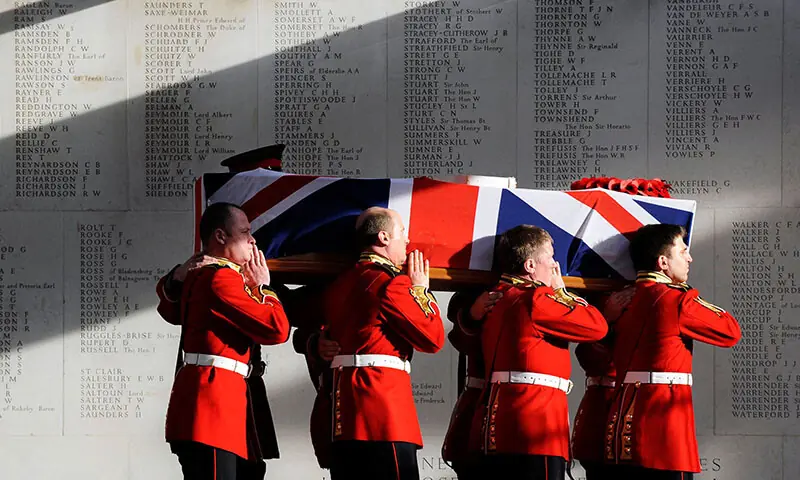
In an interview with Fox News aired on Thursday, Trump appeared unaware that 457 British soldiers died during the conflict, following the September 11 attacks on the United States.
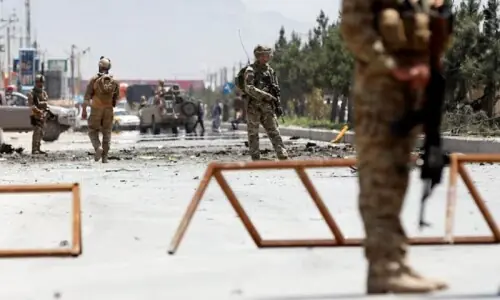
“They’ll say they sent some troops to Afghanistan,” Trump told the US outlet, referring to Nato allies. “And they did, they stayed a little back, a little off the front lines,” he added.
Trump also repeated his suggestion that Nato would not come to the aid of the United States if asked to do so.
In fact, following the 9/11 attacks, the UK and several other allies joined the US in Afghanistan from 2001 after it invoked Nato’s collective security clause, Article 5 of the North Atlantic Treaty, which treats an act of aggression against one or more members as an attack on all.
As well as British forces, troops from other Nato ally countries, including Canada, France, Germany, Italy, Denmark and others also died.
“Their sacrifice and that of other Nato forces was made in the service of collective security and in response to an attack on our ally,” Prime Minister Keir Starmer’s official spokesman said.
“We are incredibly proud of our armed forces and their service and sacrifice will never be forgotten.”
‘Heroes’
Care Minister Stephen Kinnock earlier said he expected Starmer would bring the issue up with Trump.
“I think he will, I’m sure, be raising this issue with the president … He’s incredibly proud of our armed forces, and he will make that clear to the president,” he told LBC Radio.
“It just doesn’t really add up what he said, because the fact of the matter is the only time that Article 5 has been invoked was to go to the aid of the United States after 9/11,” he added in an interview with Sky News.
Defence Minister John Healey said Nato’s Article 5 has only been triggered once.
“The UK and Nato allies answered the US call. And more than 450 British personnel lost their lives in Afghanistan,” he said. The troops who died were “heroes who gave their lives in service of our nation.”
Lucy Aldridge, whose son William died aged 18 in Afghanistan, told The Mirror newspaper that Trump’s remarks were “extremely upsetting”.
Emily Thornberry, chair of the British parliament’s Foreign Affairs Committee, denounced them as “so much more than a mistake”.
“It’s an absolute insult. It’s an insult to 457 families who lost someone in Afghanistan. How dare he say we weren’t on the front line?” the Labour Party politician said on the BBC’s Question Time programme on Thursday evening.
According to official UK figures, 405 of the 457 British casualties who died in Afghanistan were killed in hostile military action.
The US reportedly lost more than 2,400 soldiers.