Supreme Court approves late-hearing mechanism
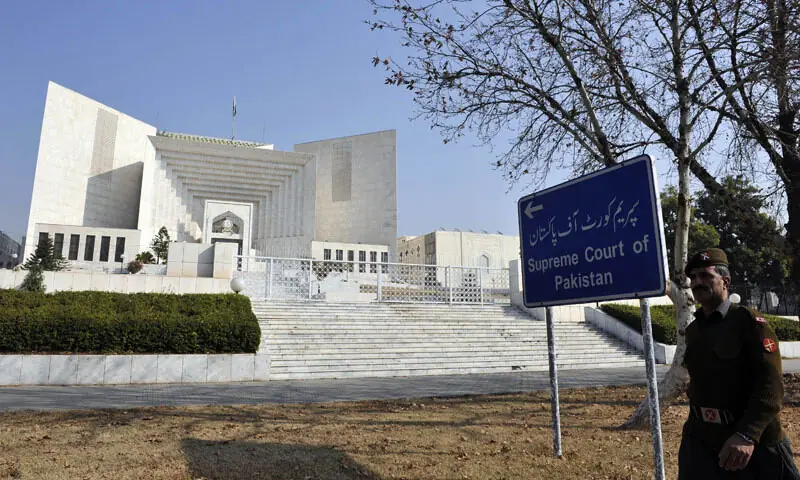

ISLAMABAD: In order to make the Supreme Court efficient and facilitate litigants and lawyers, the apex court has approved a late-hearing mechanism and the issuance of a monthly cause-list, among other measures, to enable transparency and improve service delivery.
The directives were issued pursuant to a meeting between Chief Justice of Pakistan Yahya Afridi and the advocates of the Supreme Court (ASCs), advocates-on-record (AORs), and office bearers of the Supreme Court Bar Association (SCBA).
According to a handout issued on Tuesday, the Supreme Court decided that the proposed monthly cause-list will be issued in advance and the weekly cause-list will be issued by Wednesday, subject to any subsequent changes arising from roster sittings or the non-availability of benches.
A late-hearing mechanism has also been approved, whereby, upon a joint application by advocates for both sides, cases may be fixed for hearing after the lunch break with the approval of the CJP before the notified bench. No adjournment on any ground will be entertained in such cases, the handout said.
Regarding delisting of cases, intimation will ordinarily be conveyed at least two days prior to the fixed date, and advocates will ensure timely communication to the parties. Where delisting occurs within 24 hours, the cases will—except on Fridays—be redistributed or re-fixed before other available benches. If this is not feasible, such cases will be fixed in the following week in accordance with the approved policy.
Criminal cases involving elderly convicts to be prioritised
The policy on early hearing will be strictly adhered to. Criminal cases in which a substantial portion of the sentence has been served, cases involving convicts aged eighty years and above, and cases settled through compromise will be included in the early-hearing category for priority fixation.
Likewise, judgements and orders, once signed by the bench, will be promptly uploaded and transmitted to the advocates via email, and strict compliance will be ensured by the officers.
Benches at branch registries will continue to be nominated keeping in view the pendency of cases at each registry. For redressal of grievances and facilitation on procedural matters, advocates and litigants may approach the Public Facilitation Centre, where the registrar of the Supreme Court of Pakistan, along with deputed officers, will remain available daily from 11am to 11:15am.
All officers have been directed to ensure effective implementation of these decisions in both letter and spirit to promote
efficiency, transparency, and improved service delivery.
Published in Dawn, January 21st, 2026