Russia-Pakistan relations ‘genuinely mutually beneficial’, says President Putin


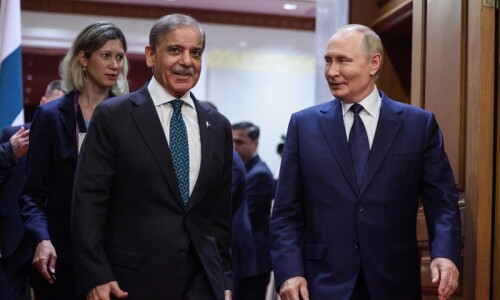
Russian President Vladimir Putin has said that his country’s relations with Pakistan are “genuinely mutually beneficial” and that Moscow maintains close relations with Islamabad.
“We maintain close cooperation with Pakistan, a full member of the Shanghai Cooperation Organisation, the largest regional organisation in terms of economic, technological, and human potential. Russia-Pakistan relations are genuinely mutually beneficial,” the Embassy of Russia in Pakistan quoted President Putin as saying on X.
The statement came as Pakistan’s Ambassador to Russia, Faisal Niaz Tirmizi, formally presented his credentials to President Putin during a ceremony held on Thursday at Moscow’s Grand Kremlin Palace, according to the Pakistani Embassy in Russia.
In recent years, Pakistan and Russia have significantly strengthened their economic ties, driven by mutual necessity. Following Western sanctions related to the Ukraine conflict, Moscow turned toward new energy outlets, while Islamabad simultaneously sought more affordable fuel sources to reduce national import expenses.
This diplomatic shift culminated in 2023, when Pakistan officially integrated Russian crude oil into its energy portfolio.
Last month, Finance Minister Muhammad Aurangzeb said Islamabad and Moscow were in talks regarding a new potential oil-sector agreement.
Pakistan, which imports 70 per cent of its crude oil, is mainly dependent on Russian crude exports. Despite this, Pakistan has enjoyed lower tariffs from Washington and close relations with its current administration, even as India recently saw a punitive 25pc tariff imposed on its goods.
In November last year — as Russian Energy Minister Sergei Tsivilev visited Islamabad to participate in the 10th Russia-Pakistan Intergovernmental Commission — the two countries reaffirmed their resolve to deepen bilateral cooperation in diversified trade, energy, business-to-business engagements and social sectors like health and education.