Peshawar Safe City project to be completed by end of this month


PESHAWAR: The Peshawar Safe City project will be completed by January 31, officials said on Tuesday.
During a high-level meeting chaired by Chief Minister Sohail Afridi here, the officials said “parallel work” was under way in Dera Ismail Khan, Bannu and Lakki Marwat to introduce surveillance networks and command and control systems in phases, according to an official statement.
The meeting was called to review the province-wide rollout of the Safe Cities Project, focusing on its operational progress, planned expansion, and the legal and institutional framework required to support it.
The participants examined how the initiative is being positioned as a core pillar of the province’s public safety and law-enforcement architecture.
CM says technology-driven initiative to lay groundwork for lasting peace
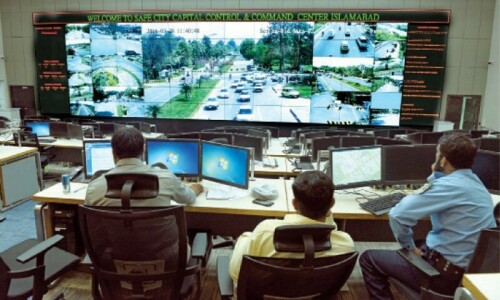
They reviewed progress on the Safe Cities Project in Peshawar, Dera Ismail Khan, Bannu and Lakki Marwat, covering surveillance infrastructure, phased system activation and the establishment of the integrated command, control and communication centres.
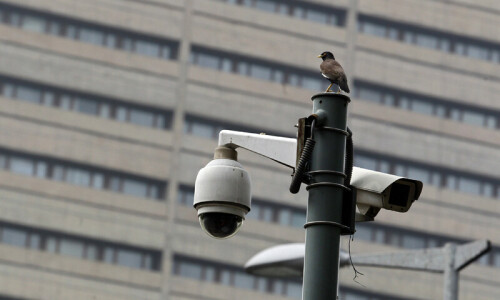
Officials said installation of cameras and supporting infrastructure was under way across major roads, intersections and key entry and exit points in the provincial capital.
They said under the project, 88 locations in Dera Ismail Khan, 76 in Bannu and 47 in Lakki Marwat were being brought under camera coverage, with those three districts set to go live by the end of January.
The officials said PC-I for the Safe Cities Project had been finalised for Karak, Tank and North Waziristan districts, while preparatory work, including site identification and security assessments, had already been completed.
They said a dedicated implementation framework for the merged districts was also discussed, taking into consideration the terrain, security conditions, infrastructure gaps and operational requirements.
The chief minister said following the completion of ongoing projects, the Safe Cities network should be expanded to the remaining divisional headquarters in a phased manner, guided by security priorities, population concentration and operational feasibility.
The meeting decided that in order to make full use of existing surveillance infrastructure, the CCTV cameras installed at hotels, commercial plazas, residential areas, housing societies and other private premises would be identified, mapped and integrated into the Safe City network in line with technical standards, legal requirements and privacy safeguards.
Cameras installed in educational institutions, particularly schools, will also be linked to the system wherever feasible. With the scope of the project expanding rapidly, the Chief Minister also directed that proposals be submitted for the establishment of a Safe Cities Authority, according to the statement.
The chief minister said the framework must address governance, lawful use of surveillance data, admissibility of digital evidence in investigations and court proceedings, data protection, citizens’ privacy, inter agency access and the recruitment and training of technical personnel so that the project rest on strong institutional foundations.
He ordered a 24-hour solar energy supply for Safe Cities infrastructure in the merged tribal districts, saying extending modern technology to remote and sensitive areas is a key priority of the provincial government.
Mr Afridi said the Safe Cities initiative would be rolled out across Khyber Pakhtunkhwa in phases, adding that maintaining law and order and protecting the lives and property of citizens remain the government’s foremost responsibility.
He said the technology-driven project would significantly enhance crime prevention, enable faster response and strengthen the operational capacity of law-enforcement agencies, laying the groundwork for lasting peace in the province.
Published in Dawn, January 14th, 2026