China rejects India’s claim over Shaksgam valley in Kashmir, asserts territory belongs to Beijing



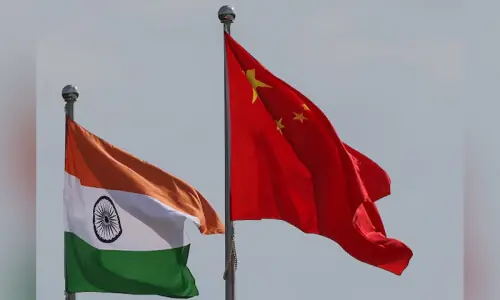
Beijing has rejected New Delhi’s claim over the Shaksgam valley in Kashmir and said that the territory “belongs to China”.
At a press conference on Monday, when asked by the Press Trust of India (PTI) for comment on the Indian criticism of China’s infrastructure development projects in the Shaksgam valley, China‘s Foreign Ministry Spokesperson Mao Ning said that it was “fully justified” for China to conduct infrastructure construction “on its own territory”.
“The territory you mentioned belongs to China,” she said.
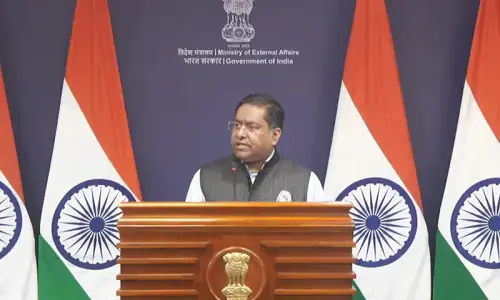
India’s foreign ministry spokesperson had on Friday said that it reserved the right to take necessary measures to safeguard its interests as the Shaksgam valley was “an Indian territory”.
“We have never recognised the so-called China-Pakistan boundary agreement that happened in 1963. We have consistently maintained that the agreement is illegal and invalid,” he said at a press conference in response to a question from India’s state-owned public television broadcaster Doordashan.
The Indian spokesperson added that New Delhi also does not “recognise the so-called China-Pakistan Economic Corridor”.
“The entire union territories of Jammu and Kashmir and Ladakh are an integral and inalienable part of India,” he maintained, adding, “This has been clearly conveyed to Pakistani and the Chinese authorities several times”.
He added that India had “consistently protested with the Chinese side against attempts to alter the ground reality in Shaksgam Valley”.
Mao Ning, in response to the Indian foreign ministry spokesperson’s comments, said that China and Pakistan had in the 1960s signed a boundary agreement and delimited the boundary between the two countries, terming it “the right of China and Pakistan as sovereign countries”.
“The China-Pakistan Economic Corridor (CPEC), as an economic cooperation initiative, aims at promoting local socio-economic development and improving people’s livelihood,” she said.
“The China-Pakistan boundary agreement and CPEC do not affect China’s position on the Kashmir issue and the position remains unchanged.”
India and China have long clashed over border disputes, but had reached a milestone pact in 2024 on lowering military tensions on their Himalayan border, which escalated after a military clash in 2020 in which 20 soldiers from India and four from China were killed.
Since the pact in 2024, the two countries have taken steps to improve relations, including a resumption of direct flights and enhanced investment and trade flows.
However, Beijing and New Delhi continue to spar over territory, including Arunachal Pradesh, which Beijing calls Zangnan and says is a part of South Tibet — a claim India has repeatedly dismissed.
Beijing has renamed places in the northeastern Himalayan state multiple times, prompting strong reactions from New Delhi.