0
0

IN Pakistan’s major cities, falling ill is no longer just a health concern — it is a financial gamble. Visiting a private or semi-private hospital has increasingly become an exercise in paying first and wondering later. Doctor consultation fees, diagnostic tests, and follow-up charges have climbed so high that medical care now feels less like a service and more like a revenue model designed to extract maxi-
mum payment from already distressed patients.
A single visit to a specialist in an urban private hospital routinely costs several thousand rupees. What follows is almost predictable: an avalanche of tests, blood work, scans, imaging, sometimes even full-body diagnostics, worth tens of thousands of rupees and even more. These tests are often prescribed after a consul- tation that lasts barely a few minutes. The justification? Rule out everything.
Then comes the most absurd part of the process: the ‘window’ to show reports. In some hospitals, patients are granted three to five days to return with test results, if you miss the deadline by even a day, the consultation fee must be paid again just to show reports that were ordered by the same doctor. In many other facilities, there is no clearly stated window at all, leaving patients at the mercy of reception desks and hospital policies that change depending on mood, management or money.
Let us be honest. This window is not designed for patients’ comfort or clinical necessity. It is uncomfortably short, inconsistently applied, and financially punitive. Illness does not run on appoint-
ment schedules, laboratory delays are common, and patients are often juggling work, family and transport. Yet, the system shows little flexibility.
Adding to this frustration is another widely shared patient experience: doctors often address only the first problem that is mentioned by the patients. Attempt to discuss a second health issue, and it is subtly, or sometimes bluntly, dismissed. The unspoken message is clear: new problem, new appointment, new fee. This transactional approach erodes trust and reinforces the larger perception that healthcare has become fragmented by design.
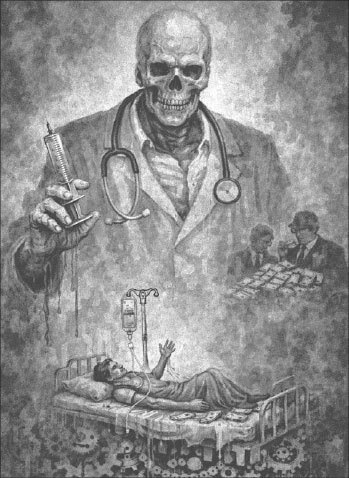
The cost implications are staggering. For someone earning a salary still considered comfortable by Pakistani standards, a single medical issue can seriously disrupt the annual budget. For households without employer health insurance, this is un-sustainable. For the poor, it is catastrophic. Many simply delay treatment, hoping symptoms would resolve on their own.
Public hospitals, unfortunately, offer little relief. Overcrowded facilities, un-available tests, broken equipment, and discouraging staff attitudes push patients towards private hospitals despite the costs. The choice is no longer between good and bad healthcare, it is between expensive and inadequate care.
So, where is the government? Provincial health commissions exist, but effective regulation of private consultation fees and diagnostic charges remains largely absent. We seem content to let the market decide, even when the market clearly exploits vulnerability.
Healthcare is not a luxury; it is a basic right. When patients are exploited, something is fundamentally broken. How much sicker and poorer must people become before the system is questioned?
Maryam Zahra
Karachi
Published in Dawn, January 12th, 2026