Religious ministry organises second training session for Haj 2026 pilgrims
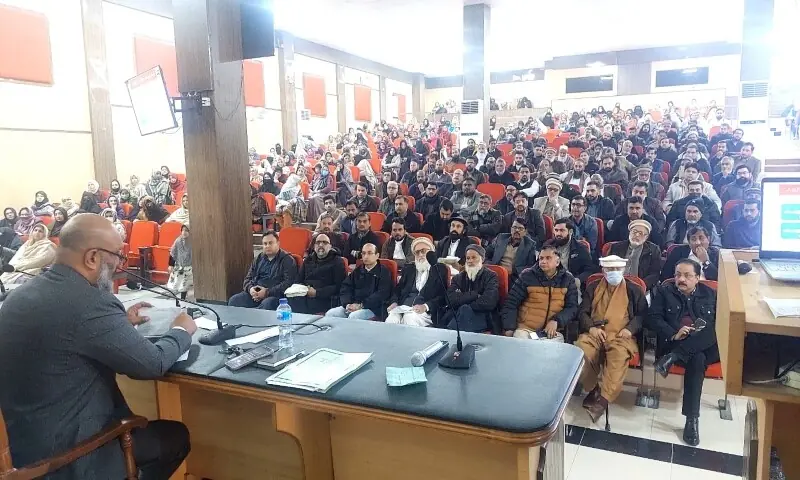

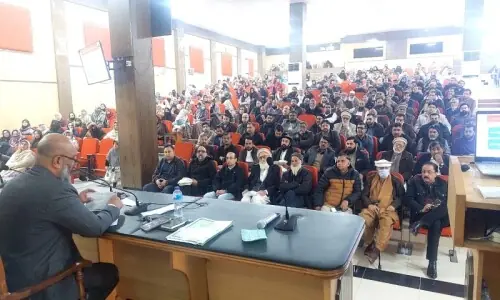
Ministry of Religious Affairs and Interfaith Harmony on Sunday organised the second phase of the training session for Haj 2026 pilgrims at the Haji Camp in Islamabad.
According to the ministry’s spokesperson, the primary objective of this programme was to “provide comprehensive awareness regarding the various stages of the pilgrimage, necessary precautionary measures, and the obligatory acts (Faraiz and Wajibat) of Haj and Umrah,” the state-run Associated Press of Pakistan (APP) reported.
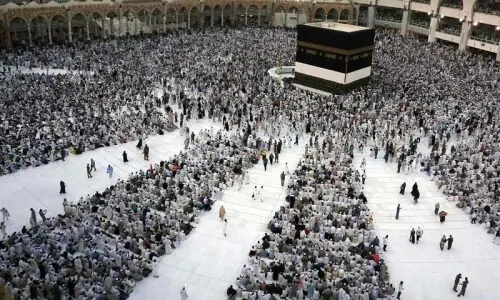
Haj, one of the fundamental pillars of Islam, is performed each year by millions of Muslims worldwide. Pakistan receives one of the highest Haj quotas from Saudi Arabia.
During the session, Deputy Director of the Ministry of Religious Affairs, Umar Butt, briefed the participants on administrative matters, departure procedures, and accommodation in Makkah and Madinah.
Master Trainer Tanveer Asghar provided technical training on the methods of performing Haj and Umrah, highlighting the religious obligations.
The event was attended by the Director of Haji Complex Islamabad, Qazi Sami-ur-Rehman, Deputy Director Hakim Khan Khattak, and other senior officials.
“Pilgrims were advised to improve their physical fitness by walking two to three kilometres daily. Essential travel documents, including the original passport, computer national identity card (CNIC), flight ticket, visa copies, and vaccination cards (for meningitis, flu, and polio) must be kept ready,” the report said.
A strict warning was issued against carrying prohibited items such as narcotics, naswar, cigarettes, and unverified medicines, it added.
The ministry has made the Pak Haj App” mandatory for all pilgrims to access flight schedules, accommodation details, and group information.
Furthermore, the procedure for remote biometric verification via the “Saudi Visa Bio” app was explained in detail, the APP said.
For those arriving directly in Madinah, the stay will range from three to eight days before proceeding to Makkah.
In Makkah, approximately 250 buildings have been arranged for accommodation, with a 24-hour free shuttle bus service available to transport pilgrims to the Haram Sharif.
The session covered the pillars of Umrah (Ihram, Niyyat, Tawaf, Sa’i, and Halq/Qasr) and the three Faraiz (obligatory acts) of Haj: Ihram, Wuquf-e-Arafat, and Tawaf-e-Ziyarat. The Wajibat (essential acts), such as the stay at Muzdalifah, Ramy al-Jamarat (stoning the devil), Qurbani (sacrifice), and the Tawaf-i-Wida were also explained.
Due to expected extreme weather, pilgrims were instructed to use umbrellas, spray bottles, and ORS to prevent heatstroke.
In case of emergencies, they were advised to contact the Saudi helpline 937 for medical assistance and 911 for security matters.
The Ministry of Religious Affairs urged the pilgrims to maintain discipline, patience, and compassion throughout the sacred journey, the report said.
The session concluded with a detailed Q&A segment, where officials and trainers addressed specific concerns regarding administrative and travel arrangements, ensuring the pilgrims are fully prepared for their journey.
In July 2025, the federal cabinet formally approved the Haj Policy 2026, outlining key procedural, financial, and logistical measures for the pilgrimage season. The following month, the government started accepting Haj applications.
The Kingdom has allocated a total quota of 179,210 pilgrims for Pakistan — 119,210 under the government scheme and 60,000 for private operators, according to the ministry.