Centre, provinces green light action plan to enrol out-of-school children
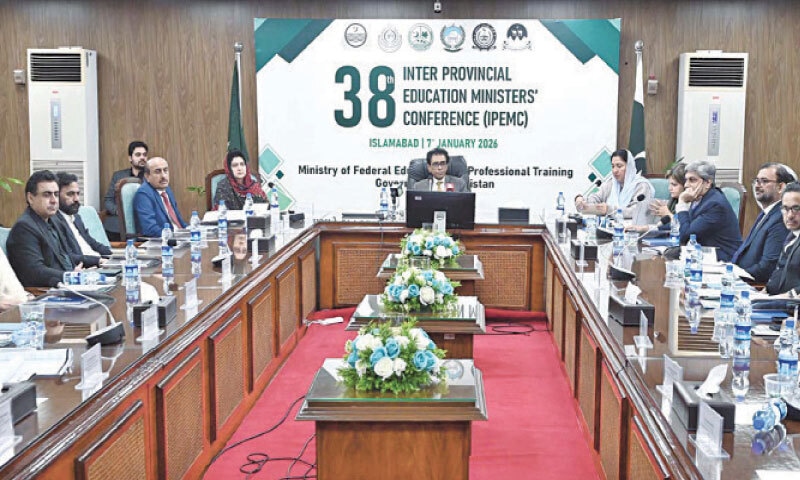

ISLAMABAD: In a show of unity, the federal government, provinces, Gilgit-Baltistan (GB) and Azad Jammu and Kashmir (AJK) have approved the ‘National Education Action Plan’ to tackle the issue of out-of-school children (OOSC) during the 38th Inter-Provincial Education Ministers Conference (IPEMC).
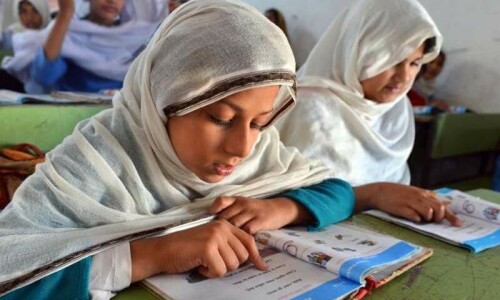
UN agencies, including Unicef, say that more than 25 million children are out of school in Pakistan, placing the country among those with the highest number globally. The situation is exacerbated by economic hardship, climate-related events and inadequate funding for education.
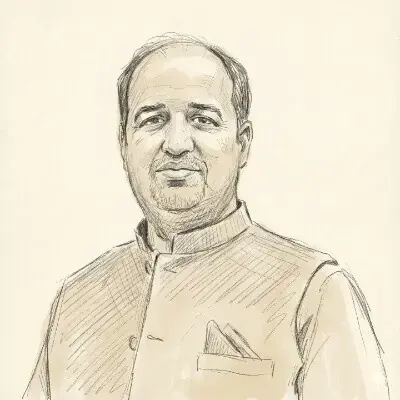
The meeting, chaired by Federal Minister for Education Dr Khalid Maqbool Siddiqui, unanimously endorsed and approved the plan along with its provincial components and other key education-related initiatives following extensive consultations. Sources said participants set targets to reduce the number of out-of-school children over the next five years.
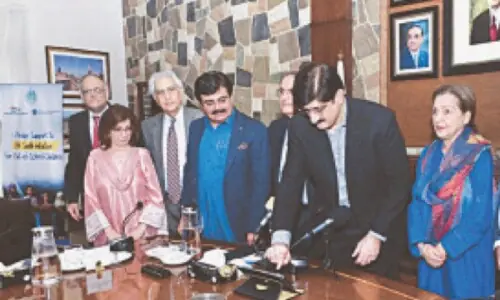
A press release issued by the Ministry of Education said that Minister of State for Education Wajiha Qamar, Federal Parliamentary Secretary Farah Naz Akbar, Federal Secretary Education Nadeem Mahbub and provincial ministers Rahila Hameed Durrani, Muhammad Ismail Rahoo, Rana Iqbal Sikandar and Arshad Ayub Khan attended the meeting.
UN agencies including Unicef say over 25 million children are out of school in Pakistan, placing the country among those with the highest number globally
Heads of federal education bodies, including the chairman of the Federal Board of Intermediate and Secodry Education and the executive director of IBCC, were also present.
During the session, participants were briefed on a special federal ‘Challenge Fund’ aimed at bringing out-of-school children back into the education system, with the federal government extending support to all provinces to address the issue.
The statement said that provincial representatives shared progress reports.
Punjab’s Education Minister Rana Sikandar announced the outsourcing of 10,000 schools.
Sindh’s Muhammad Ismail Rahoo confirmed the merit-based recruitment of 93,000 teachers, while Balochistan’s Rahila Hameed Durrani reported the restoration of 3,200 closed schools, bringing 140,000 children back to classrooms.
Khyber Pakhtunkhwa reported a six per cent increase in enrolment along with the recruitment of 10,000 teachers. AJK Minister Malik Zafar highlighted the allocation of Rs7 billion for 10,000 new classrooms. Gilgit-Baltistan also shared initiatives related to special funds for out-of-school children and the expansion of the ‘School Meal Programme’.
Federal Secretary Education Nadeem Mahbub said all endorsed and approved projects would receive final ratification from the Education Emergency Task Force chaired by the prime minister. He also invited provinces to benefit from the federal board’s reform programme and stressed the need to align matriculation and inter-tech programmes with global standards.
PIE DG Dr Muhammad Shahid Saroya informed the forum that the National Action Plan was developed over six months of stakeholder consultations to address the challenge of 25 million out-of-school children.
The conference concluded with the unanimous approval of several key agenda items, including technical education initiatives presented by DG FED Syed Junaid Akhlaq, the Education Emergency Task Force terms of reference, a data regime by PIE, modern curriculum reforms by Director NCC Tabassum Naz, and a character-building strategy presented by Chairman National Rahmatul-lil-Aalameen Authority Khurshid Ahmed Nadeem.
In his closing remarks, Dr Khalid Maqbool Siddiqui congratulated stakeholders on the successful conduct of the conference, calling it a milestone in national harmony. He said the participation of all federal units on one platform reflected a strong commitment to overcoming educational challenges.
He added that sustaining this coordination is essential to meeting evolving global standards, noting that informal education, outreach to remote areas and the mainstreaming of madrasa students remain key priorities.
Published in Dawn, January 8th, 2026