FCC questions gap between super tax collection, spending on IDPs

• Rs144bn collected, only Rs37bn spent on displaced persons, judge regrets
• AAG says 50pc of funds disbursed through provinces; collection reflects govt’s ambition
• Counsel questions inland revenue commissioner’s authority to file appeals
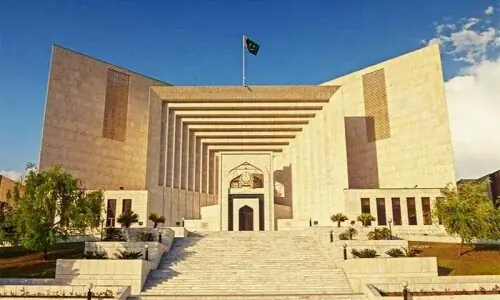
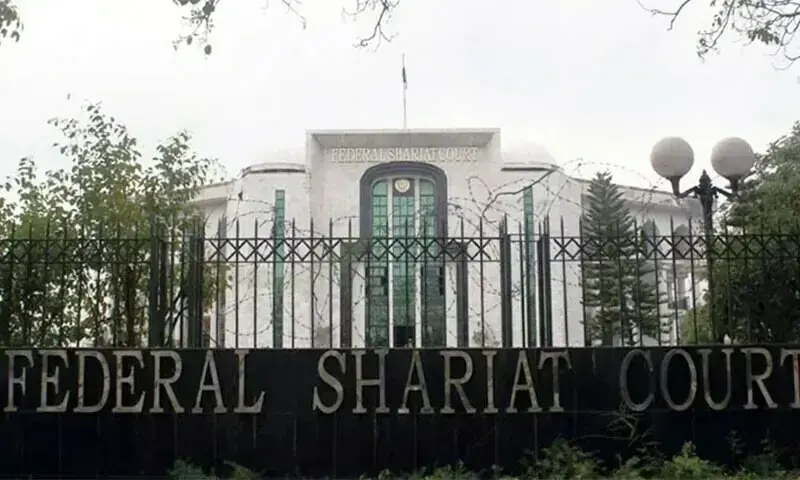
ISLAMABAD: Justice Syed Hassan Azhar Rizvi, a member of the three-judge Federal Constitutional Court (FCC), on Tuesday regretted that while Rs144 billion was collected under the super tax between 2015 and 2020, only Rs37bn was spent on the rehabilitation of internally displaced persons, observing that the disparity frustrated the very purpose of imposing the levy under Section 4B of the Income Tax Ordinance (ITO).
Additional Attorney General (AAG) Chaudhry Aamir Rehman, however, explained that 50 per cent of the super tax collection had been disbursed through the provinces, adding that the overall collection reflected the government’s ambition.
Headed by Chief Justice Aminuddin Khan, a three-judge FCC bench was hearing a set of appeals against judgements of the Sindh, Lahore and Islamabad high courts concerning the levy of super tax through Section 4B, inserted into the ITO 2001 via the Finance Act 2015.
The AAG emphasised that the sole purpose of tax collection was social welfare, citing the Benazir Income Support Programme (BISP) as a prime example, under which the federal government was spending around Rs400bn annually on public welfare.
Earlier, the opposing side argued that a tax imposed specifically for rehabilitation purposes related to social welfare, which had been part of the erstwhile Concurrent Legislative List and, after the abolition of the list, social welfare now fell within the legislative competence of the provinces.
The super tax was initially imposed in 2015 through a Money Bill, with the stated purpose of rehabilitating areas affected by the Zarb-i-Azb operation against terrorism. The levy was introduced by the PML-N government as a one-time measure, aimed at rebuilding areas devastated by the military operation. The super tax applies to wealthy individuals, associations of persons and companies earning over Rs500 million. It imposes a tax rate of 4pc on banking companies and 3pc on other sectors to fund the rehabilitation of temporarily displaced persons.
During the hearing, the AAG cited the 1991 Sohail Jute Ltd case, in which the levy of Iqra surcharge and customs duty was challenged.
He argued that the Supreme Court had held that mere nomenclature could not determine the vires of a levy. If, in pith and substance, the levy was a customs duty, it would remain so regardless of being labelled as an Iqra surcharge, he contended.
The opposing side maintained that since the super tax was imposed for the specific purpose of rehabilitating displaced persons, it could not be treated as a general tax and, therefore, did not qualify as a tax.
Senior counsel Makhdoom Ali Khan questioned the authority of the Inland Revenue Commissioner to approach the FCC in a case relating to the super tax.
“When the federal government as well as the Federal Board of Revenue (FBR) were not aggrieved by the judgements of the high courts, how could the Commissioner of Inland Revenue name both as respondents in the case?” he argued.
He further questioned how the commissioner could sue the federal government when it was not an appellant before the FCC despite having enacted the statute in question, remarking that the situation was akin to “the tail wagging the dog”.
Mr Khan contended that while passing the law, the legislature had recognised that the commissioner, on its own, did not have the right to file such appeals before the FCC.
Advocate Hafiz Ehsaan Ahmad Khokhar, representing the FBR, argued that taxation was a matter of legislative policy beyond judicial discretion. He said respecting parliamentary supremacy and exercising judicial restraint in fiscal matters were essential to uphold the rule of law and national fiscal sovereignty.
He urged the court to uphold the validity of Section 4C of ITO as a lawful and constitutionally sanctioned levy, consistent with Article 25 and international fiscal practice, and said there was no discrimination as alleged by taxpayers.
He also requested that the high courts’ judgements, which he said attempted to dilute or rewrite parliament’s express mandate, be set aside, reiterating that taxation was a matter of legislative policy beyond judicial discretion.
Published in Dawn, January 7th, 2026