1
1

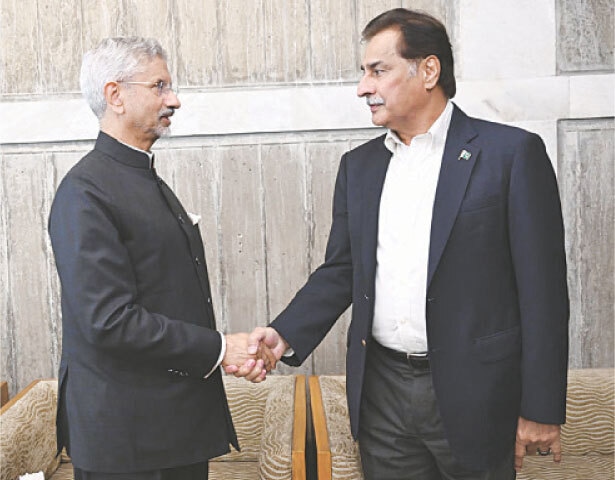
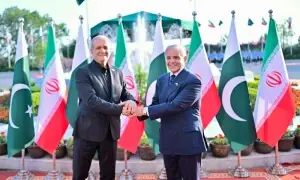
KARACHI: National Assembly Speaker Ayaz Sadiq and India’s External Affairs Minister Subrahmanyam Jaishankar shook hands in Dhaka on Wednesday, marking the first high-level contact between Pakistani and Indian officials since the military conflict in May.
According to a press release issued by the National Assembly Secretariat, Mr Sadiq was in Dhaka to attend the funeral of former Bangladeshi prime minister Khaleda Zia when Mr Jaishankar approached him and offered a handshake.
“Indian External Minister Dr S. Jaishankar approached the Speaker of the National Assembly and shook hands,” the statement said, adding that Mr Jaishankar introduced himself and said he recognised Mr Sadiq.
Relations between Islamabad and New Delhi reached their lowest point this year after an attack in Pahalgam in India-occupied Kashmir. India blamed Pakistan, which denied any involvement and called for an independent investigation.
The NA Secretariat statement said Pakistan had “consistently emphasised dialogue, restraint and cooperative measures, including proposals for peace talks and joint investigations into the alleged false flag Pahalgam incident, in order to prevent unprovoked aggression and escalation”.
Following the attack, India announced a series of unilateral measures against Pakistan, including steps to downgrade ties and closure of the main border transit point.
Among the measures, New Delhi’s move to suspend the Indus Waters Treaty (IWT) drew particular attention.
The 1960 World Bank-brokered agreement has endured through wars and decade of hostility, and any move to hold it in abeyance has been viewed in Islamabad as a serious escalation.
On May 7, India launched air strikes in Punjab and Azad Kashmir, triggering a four-day conflict that included retaliatory actions and exchanges targeting airbases. A ceasefire was reached on May 10.
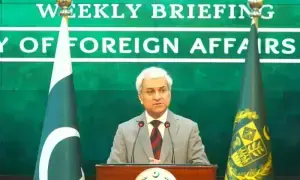
In June, the Permanent Court of Arbitration, an organisation that provides a framework for international disputes, issued a supplemental award on competence, stating that India could not unilaterally hold the IWT in abeyance. Earlier this month, Pakistan’s Foreign Office accused India of “weaponising water” after abrupt variations in the flow of the Chenab and Jhelum rivers, which officials said had raised concerns among farmers in Punjab.
Deputy Prime Minister and Foreign Minister Ishaq Dar has said the arbitration forum reaffirmed the treaty’s validity and its dispute-resolution mechanisms, and cited concerns raised by UN rapporteurs over India’s actions related to the pact.
Published in Dawn, January 1st, 2026