INDIA’S renewed push to fast-track several disputed hydropower projects on the Indus basin rivers controlled by Pakistan is not a coincidence.
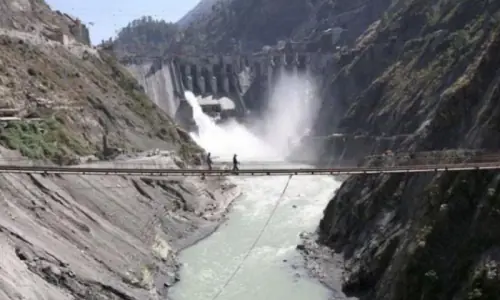
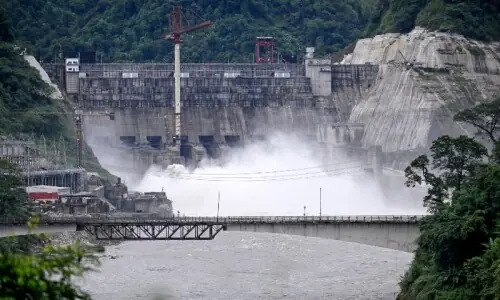
The move is less about New Delhi’s energy ambitions and more about its ulterior motives to deploy a shared water system as an instrument of coercion against Pakistan. The recent approval of the Dulhasti Stage-II hydropower project on the Chenab, following the revival of environmental clearances for the much larger, decades-old Sawalkote scheme, is a clear signal of a deliberate acceleration of dam-building on the river allocated to Pakistan under the Indus Waters Treaty.
That this push comes in the aftermath of India’s unilateral suspension of the water treaty following this year’s attack in Pahalgam in occupied Kashmir lends credence to reports that New Delhi is planning to build water storage on Pakistan’s rivers to control their flows downstream.
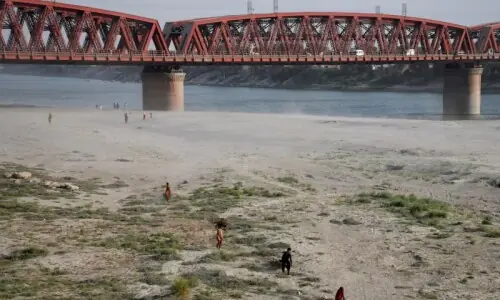
The recent disruptions in the Chenab flow show a clear pattern in which India has repeatedly manipulated its upstream position to exert pressure on Pakistan ever since its illegal suspension of the IWT. Before that, India’s failure to share data on water levels and discharge in a timely manner aggravated flood devastation in Punjab.
The threat of water weaponisation is why Pakistan has consistently opposed Indian plans to undertake projects on its rivers. Most such schemes violate IWT project designs that allow for more water storage than required for power generation, which can be used to disrupt river flows downstream.
Likewise, Pakistan has raised objections against their gated spillways to prevent the sudden stoppage or release of large volumes of water. Concerns that India can create water shortages by stopping flows in the sowing season and flood land by releasing water during the monsoons have already been confirmed.
However, India’s anti-Pakistan agenda is not the only reason why constructing hydropower and storage on Chenab is a bad idea. Experts have warned of the adverse environmental impact of these schemes. The Chenab basin is among the most climate-vulnerable in the region.
Studies show that the glaciers have lost roughly a third of their volume in just a few decades. For a river whose flows are heavily dependent on glacial melt, this foretells a long-term water security crisis in the making for both Pakistan and India. The Narendra Modi government is evidently not concerned by the fact that its actions threaten the fragile Himalayan ecosystem. By destabilising the headwaters through dam construction, India is only accelerating ecological collapse, which will not spare it either.
Former climate minister Sherry Rehman aptly summed up the potential consequences of Indian actions when she tweeted that “this weaponisation of water is neither sane nor acceptable in a region on the front line of climate change and environmental stress”. It will only worsen bilateral tensions.
Published in Dawn, December 31st, 2025