NYT says marijuana traces in boat wreckage dispute US ‘narco-terrorist’ claim
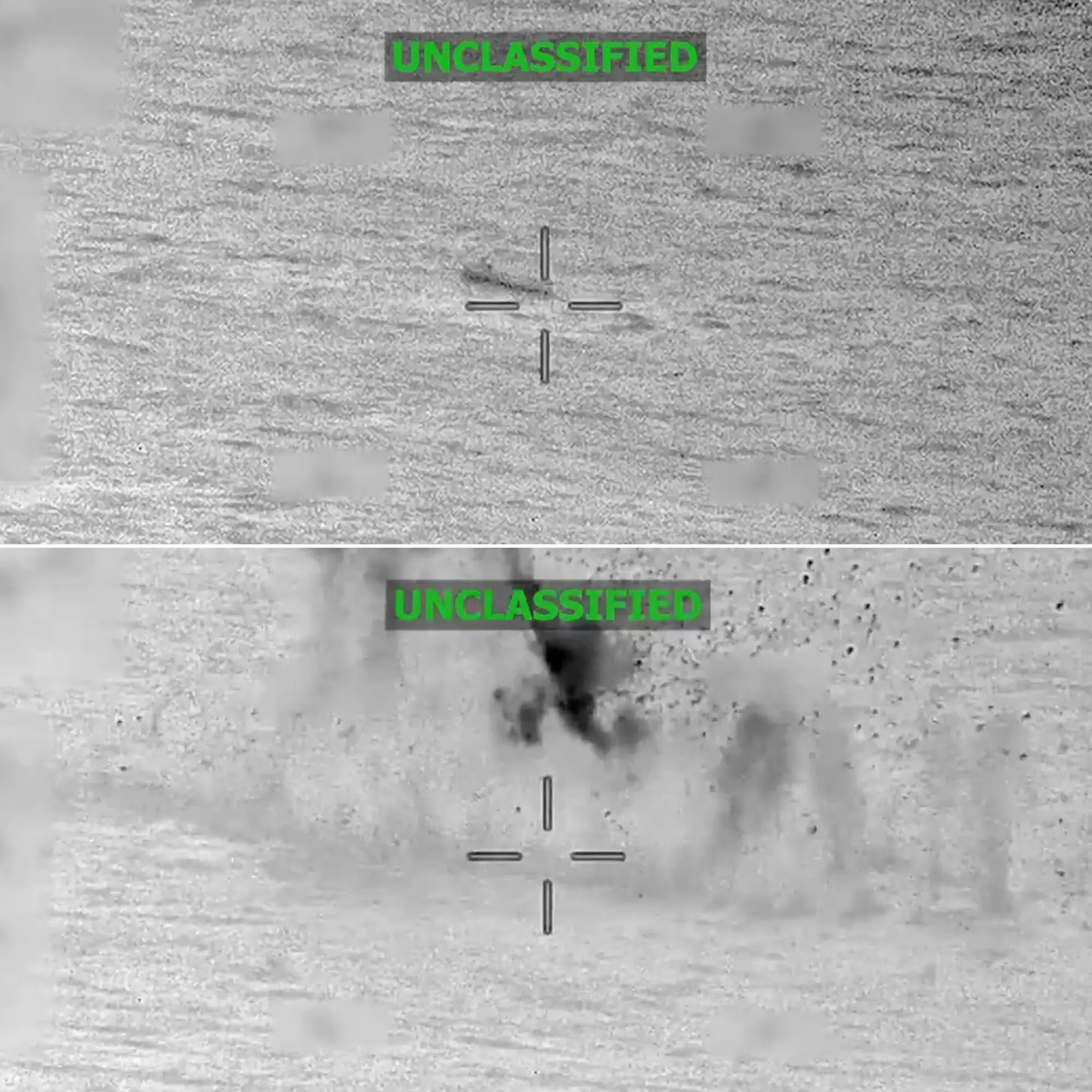

• Residue in debris indicates small-scale smuggling, not terrorism
• Physical evidence of airstrike matches vessel in Defence Dept video
• Analysis places blast in disputed border waters, contradicts Hegseth’s claim
DEBRIS recovered from a boat destroyed by a US airstrike in the Carribean contained traces of marijuana, suggesting the vessel was likely involved in low-level smuggling rather than the high-stakes “narco-terrorist” operations targeted by the Trump administration, according to a New York Times analysis.
The findings of wreckage that washed ashore on Colombia’s Guajira Peninsula, represent the first physical evidence from a military campaign that has destroyed 30 vessels and killed more than 100 people. Every other struck boat is presumed to have sunk with its crew.
Charred jerrycans, life jackets and dozens of packets were found on beaches days after residents reported hearing a thunderous explosion on Nov 6. While most packets were empty, NYT observed traces of a substance inside the lining of several that looked and smelled like marijuana.
The discovery challenges the official narrative promoted by the US defence secretary, Pete Hegseth, who posted footage of the strike hours after it occurred, describing the target as a vessel operated by an unnamed “designated terrorist organisation”.
Experts on the regional drug trade said the presence of marijuana, potentially mixed with other contraband, typically indicates smaller-scale operations rather than the powerful criminal networks cited by Washington.
“The cocaine and marijuana market in La Guajira is operated by small community-based ventures as much as it is by armed groups,” said Estefanía Ciro, who leads a Colombian research institute studying narcotics trafficking.
“This narrative of cartels, of Pablo Escobar, doesn’t allow us to see that in many places this is everyday life.”
Analysis of the wreckage — a slender speedboat design — matched the vessel shown in military footage. However, the strike appears to have occurred in the disputed Gulf of Venezuela rather than international waters as claimed by Hegseth.
Human cost
Legal experts have warned such strikes may be unlawful, as military forces are prohibited from deliberately targeting civilians unless they pose an immediate threat.
The human cost of the campaign has fallen heavily on the Wayuu Indigenous community. Erika Palacio Fernández first documented the aftermath, filming smoke rising from the sea on 6 November.
Two days later, a scorched 30-foot boat washed ashore, followed by two bodies discovered by local fishermen.
Aristótele Palmar García, a 31-year-old Wayuu police inspector, said authorities provided little assistance in dealing with the grim discovery.
“The boat itself smelled like burned meat,” Palmar recalled. “And the bodies — we had to bury them because the vultures and stray dogs were beginning to eat them.”
He described one body as reduced to skin and bones, while the other was bloated, sun-bleached and severely burned.
The bodies were transferred to Colombia’s forensic network, Medicina Legal, in December. An autopsy has yet to be performed.
The violence has devastated local fishing communities. Vicente Fernández, a fisherman and Palacio’s uncle, said he no longer ventures into deeper waters.
“In normal times we’d go out eight, 10, 12 miles for the tuna that fetches a better price,” Fernández said. “We’ve left our nets out there for weeks because we’re too afraid to retrieve them.”
He added that he now regularly sees drones circling above his boat.
“They look like avioncitos,” he said, using the Spanish diminutive for small aircraft. “They look like birds tracking down prey.”
The bodies recovered from the scene were transferred to Medicina Legal, Colombia’s forensic network, in December. An autopsy has not yet been performed.
Published in Dawn, December 31st, 2025