Trade rules often favour wealthy states, MNCs: WB

ISLAMABAD: Global standards have increasingly been used as tools in trade disputes since the turn of the century, reshaping trade flows and often favouring wealthy countries and large multinational companies over developing economies, according to a World Bank report.
“A proliferating set of international standards, covering everything from food labelling to specifications of 5G cellular networks, is steadily reshaping the global economic order, delivering hefty benefits to wealthy nations and large multinational companies that set them, while leaving many developing countries on the sidelines,” the bank’s World Development Report 2025 says.
The report says developing countries are not sufficiently represented when standards are written, largely because they lack the resources and expertise required to participate. On average, they sit on less than one-third of the technical committees that determine global standards at ISO, and even fewer in other bodies. Supporting broader and more strategic participation is key to ensuring standards are globally relevant and reflect diverse development needs and contexts, it adds.
Focusing on standards for development, the WB report says non-tariff measures, such as pesticide specifications or labelling requirements, now affect 90 per cent of global trade, up from just 15pc in the late 1990s.
Report says non-tariff standards now affect 90pc of global trade
It notes that the global appetite for standards has surged. More than half of the 20,000 standards issued over the last seven decades by the International Organisation for Standardisation (ISO) have been created since 2000. In 2024 alone, key global standard-setting bodies issued more than 7,000 standards.
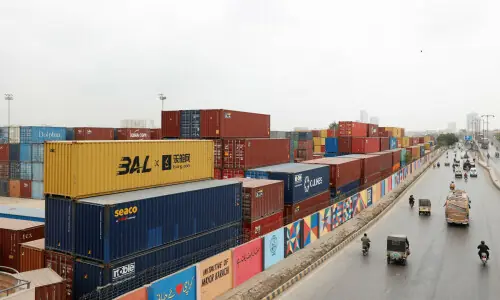
By making the transportation of goods seamless, the standardisation of the shipping container boosted global trade more than all trade agreements concluded over the last 60 years, the report notes.
Turning standards into a springboard for development requires a deliberate strategy. The report proposes an adapt-align-author framework for countries at different stages of development. At low levels of development, countries should adapt international standards to local realities so firms can learn and markets can grow. Blindly copying the most stringent global standards is unwise, as local ambitions should match local capacity.
As local capacity grows, countries can align with international standards, reducing duplication, easing market entry and helping firms compete abroad. At the same time, countries can shape international standards to reflect national priorities. Finally, as they grow wealthier, developing countries should author new standards or update existing ones.
Japan exemplifies how countries can use standards to accelerate development, the report says. In the immediate aftermath of World War II, Japanese consumer exports were widely considered low quality and unreliable. The country focused on becoming a high-quality manufacturer, initially copying and then improving upon ideas from abroad through the Japanese Standards Association and the widespread adoption of Total Quality Management, transforming Japan into a global benchmark for quality.
The report describes standards as the hidden foundations of prosperity. To make standards a springboard for development, it says, countries should create incentives for firms to upgrade export quality rather than impose unrealistic mandates; adapt and sequence standards in line with national enforcement capacity; participate actively in international standard-setting forums; and invest in and share quality infrastructure resources regionally.
Published in Dawn, December 27th, 2025