ISLAMABAD: The Special Committee of the National Assembly on Gender Mainstreaming on Tuesday raised serious concerns over the state’s response to violence against women, particularly in digital spaces, and warned that recent judicial interpretations could weaken legal protections for survivors of sexual violence.
The concerns were voiced during the committee meeting held at Parliament House, under the chairpersonship of MNA Dr Nafisa Shah.
Addressing the meeting, Dr Nafeesa Shah described digital violence as an “emerging and dangerous dimension of gender-based violence”, stressing the urgent need to assess its scale, identify gaps in law and policy, and strengthen enforcement and victim support mechanisms.
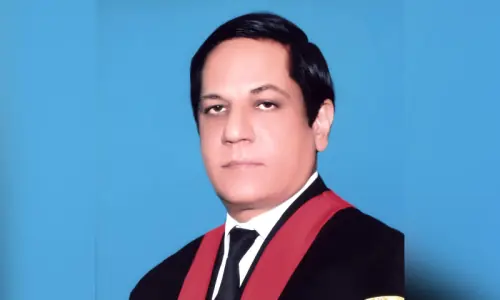
The committee took strong exception to recent judicial interpretations in which rape convictions were converted into convictions for fornication based on presumptions of consent and without separate charges or complaints.
Committee stresses rise in digital violence against women
Members observed that such interpretations risked undermining constitutional guarantees and statutory safeguards introduced through the Criminal Law (Amendment) Act, 2006, which had removed discriminatory and vague provisions from earlier laws.
Members warned that these rulings exposed complainants to stigma and potential criminal liability, creating a chilling effect on reporting sexual violence. It called on the government to ensure a judicial review so that both the Constitution and the intent of Parliament are upheld.
In a first-ever parliamentary hearing on “Digital Violence against Women in Pakistan: Safeguarding Rights in the Digital Age,” the committee heard briefings from key institutions.
The Director General of the National Cybercrime Investigation Agency (NCCIA) disclosed severe resource constraints, revealing that in 2025 the agency received 22,500 complaints, registered 620 cases, and secured only 26 convictions.
He noted that, on average, one officer was handling around 565 complaints, amid shortages of trained staff, female investigators, prosecutors, and budgetary support.
Committee members expressed deep dissatisfaction with NCCIA’s performance, pointing out that even complaints filed by parliamentarians had gone unattended, and called for urgent institutional strengthening and accountability.
The chairman of the Pakistan Telecommunication Authority (PTA), retired major general Hafeez ur Rehman, informed the committee that over 1.5 million URLs had been blocked this year, including thousands related to defamation, impersonation, and immoral content, along with 5,000 unauthorised SIMs.
Members emphasised stronger coordination with international digital platforms and clearer accountability mechanisms.
Representatives from UNDP, UNFPA, and UN Women advocated a coordinated, multi-agency approach, while civil society expert Usama Khilji highlighted the vague provisions of the Prevention of Electronic Crimes Act, warning of its misuse against journalists and activists. Prominent women journalists also shared concerns about cyber harassment and threats to press freedom.
The Ministry of Human Rights outlined policy gaps and referenced the National Gender Policy Framework 2022 as a guiding tool for addressing digital violence.
The meeting was attended by MNAs, senators, senior officials, journalists, and representatives of national and international organisations.
Published in Dawn, December 24th, 2025