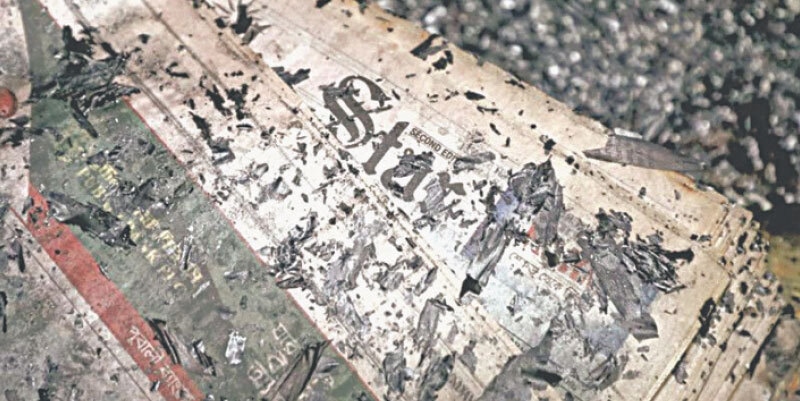
THE image of a burnt copy of The Daily Star, dated “Victory Day”, is difficult to shake off. It stays with you long after you scroll past it on your social media newsfeed — not because it is dramatic, but because of what it reveals.
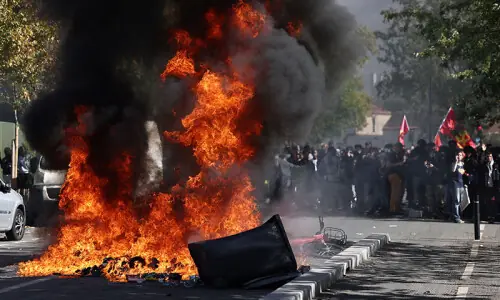
Bangladesh was born through fire and grit. “Liberation” came through sacrifice, endurance, and an extraordinary capacity to resist injustice. Today, that same fire appears to be consuming us from within. What once signified defiance now risks becoming a force of self-destruction.
Ours is not a society unfamiliar with rage. Years of political repression, shrinking civic space, and the erosion of trust in public institutions have created an environment where frustration runs deep. In such circumstances, arson and vandalism can feel like acts of defiance — providing momentary relief and a fleeting sense of power in a system that often feels tone deaf and unresponsive. But we must understand, that sense of power is only illusory.
Destruction and vandalism have never dismantled unjust systems. They have only made it easier for those systems to tighten their grip on the people, on the society, on the same very systems, often in the name of control and so-called stability. When anger is channelled through violence and destruction, the result is not reform but regression — sometimes to conditions worse than those we sought to escape.
The burning of The Daily Star and Prothom Alo buildings is particularly troubling because it goes beyond violence
Unfortunately, the press is almost always among the first to bear the brunt of any form of anger from any quarter. Politicians uncomfortable with too much scrutiny, criminals and corrupt activities exposed by investigative journalism, powerful lobbyists threatened by transparency — all have, at different times, undermined and attacked the fourth estate. Increasingly, however, the press is also being targeted by the public itself, accused of perceived bias, complicity, or failure.
Criticism of the media is not only legitimate; it is necessary. No newsroom should be above scrutiny. But there is a thin line between critique and silencing. Crossing that line weakens democratic rights rather than strengthening them.
The press exists as the fourth estate precisely because it questions power, documents history, and preserves public memory. As a photojournalist colleague grieved not only the loss of his workplace, but the loss of thousands of images — fragments of our collective history — consumed by the fire, it underscored the irreplaceable role of the press in preserving public memory.
In contexts where other accountability mechanisms are weak or compromised — as is often the case in our country — this role played by the press becomes even more crucial. Undermining the press does not return power to the powerless; it concentrates power further in the hands of those already powerful.
The burning of The Daily Star and Prothom Alo buildings is particularly troubling because it goes beyond violence. Acts like these risk destroying years of journalistic documentation — records of a nation’s history, political decisions, social struggles, and civil society debates that cannot simply be retrieved. When archives are lost, it is not a newspaper alone that suffers; society loses part of its collective memory.
The events of the early hours of December 19 should also force a reckoning with how public anger, particularly among the youth, is being directed. Young people in Bangladesh have shown indomitable courage, resilience, and a remarkable willingness to challenge entrenched power. That perseverance is necessary. But they must understand, anger — on its own — is not a political instrument for justice or democracy.
Violence against any institution — and especially those that serve as checks on power — risks entrenching the very conditions that generate the anger in the first place. It is worth asking whether such acts bring us any closer to accountability, or whether they simply leave us more exposed to the machinations of political systems that remain deeply flawed and corrupt.
The image of a Victory Day newspaper reduced to ash is deeply unsettling. Bangladesh’s independence was not achieved through blood and fire alone, but through a commitment to justice, equal rights, and democratic values. Turning that legacy inward, against platforms that seek to question power and record the truth, is not resistance. It is a self-defeating act driven by recklessness.
The Daily Star building may have been burnt — my old workstation perhaps charred. But the values on which it was built have not been erased. Journalism without fear or favour does not reside in walls, computers, or printing presses. It lives in professional norms, institutional practices, and a shared belief that truth matters.
The press in Bangladesh has endured pressure, intimidation, and attacks before. And for sure, it will face them again. But it will also regroup and reemerge — because there is no other mechanism capable of even partially equalising power in a deeply unequal society, such as ours.
Fire can destroy buildings. It cannot build a progressive future. As for The Daily Star, we will come back: stronger, bolder, and more united than ever.
Published in Dawn, December 22nd, 2025