Justice Jahangiri objects to IHC CJ-led division bench hearing fake degree case


 2
2
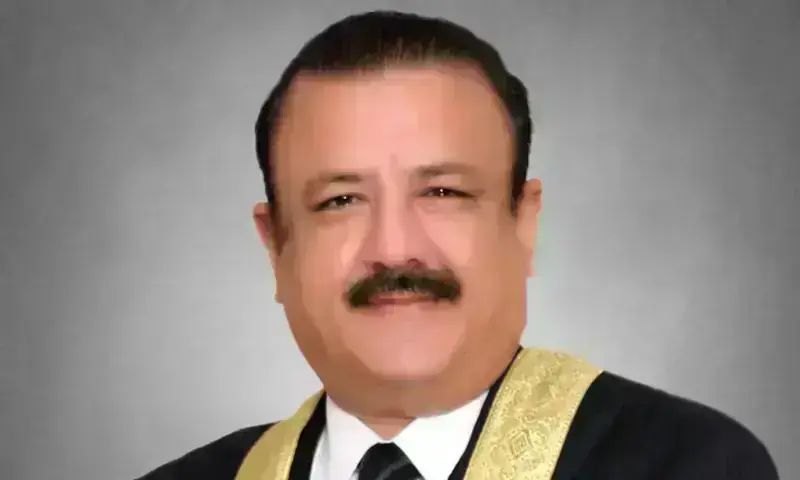

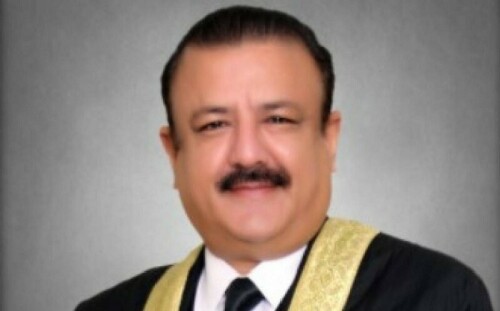
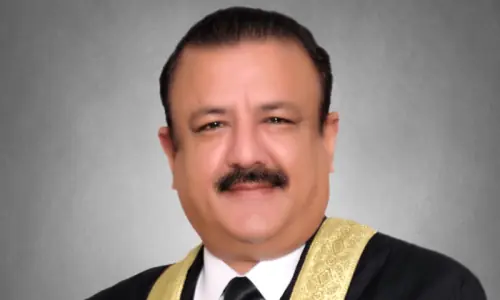
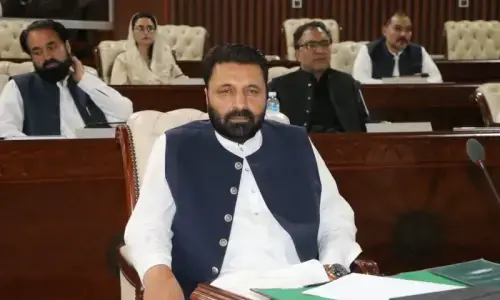
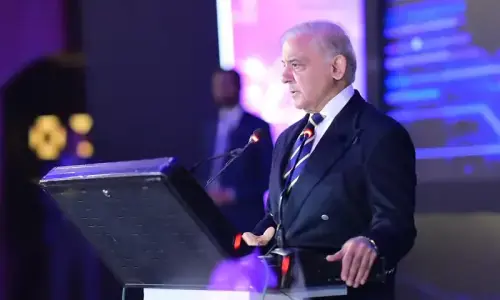
Justice Tariq Mehmood Jahangiri appeared before the Islamabad High Court (IHC) on Monday, presenting arguments in his defence against challenges to the legitimacy of his law degree and appointment as a judge while also raising objections over the division bench hearing the case.
The controversy surrounding the IHC judge’s law degree originated from a letter that began circulating last year on social media, purportedly from the University of Karachi’s (KU) controller of examinations.
Subsequently, a complaint pertaining to his allegedly fake degree was submitted to the Supreme Judicial Council — the top forum for judicial accountability that probes allegations of misconduct against judges — last year in July and a petition challenging his appointment was also filed in the IHC earlier this year by lawyer Mian Dawood.
A two-member IHC bench, led by Chief Justice Sardar Muhammad Sarfraz Dogar and also comprising Justice Muhammad Azam Khan, took up the matter on Monday in a packed courtroom.
The same bench had declared Dawood’s plea maintainable at the last hearing on December 9, issuing a verdict that was reserved in July last year. It had also barred Justice Jahangiri from judicial work in September, but the order was later set aside by the Supreme Court (SC).
Arguing his case, Justice Jahangiri raised the preliminary objection that the division bench was “inappropriate” to hear the case as a separate petition concerning its members was pending.
This, apparently, was a reference to challenges to Justice Dogar’s appointment as the IHC CJ.
“We have filed a petition against you. You cannot hear this case,” Justice Jahangiri asserted.
Moving on to defending his qualification, he contended that the case was based on a 34-year-old educational record.
“I am ready to take an oath on the Holy Quran that my degree is genuine,” he contended. The judge also argued that the KU never declared his degree fake.
He also took an exception to the “haste” in which proceedings were being held, arguing against the issuance of a three-day notice to address a decades-old matter.
At the last hearing, the CJ Dogar-led bench had granted Justice Jahangiri three days to respond to the facts unearthed in the case till date. The registrar’s office had served the notice at Justice Jahangiri’s chamber due to time constraints, and sources had told Dawn that court staff of the judge received the notice and submitted it to his chamber.
After raising objections in this regard on Monday, Justice Jahangiri also criticised the earlier IHC directive barring him from work.
“Never in the judicial history of Pakistan and India has such a thing happened […] Not even a patwari (revenue official) was stopped from work the way I was,” he remarked.
The judge sought an adjournment to be able to hire a lawyer for himself and acquire the complete case record, stating, “So little time has been given. I have to get a lawyer and prepare.”
On the other hand, petitioner Dawood requested the court to hear the case on a daily basis.
The court adjourned the hearing until December 18 (Thursday), summoning the KU registrar in person and seeking the record of Justice Jahangiri’s degree.
The IHC judge was also given time until then to engage a lawyer.
CJ Dogar assured Justice Jahangiri that he would receive justice.
Throughout the hearing, CJ Dogar also repeatedly instructed lawyers, who attended the hearing in large numbers, to return to their seats, emphasising, “Honourable Justice Jahangiri has come to me … I want to hear him.”
Protracted legal trajectory
The controversy around Justice Jahangiri’s law degree has followed a protracted legal trajectory since Sept 16, when the same IHC division bench first took up the petition and issued an interim order restraining Justice Jahangiri from performing judicial functions until the maintainability of the petition could be decided.
The decision, made without issuing prior notice to the judge, had sparked debate within the legal community over whether a high court could suspend a sitting judge through an interim order. On Sept 29, the SC intervened, setting aside the restraining order.
A five-member constitutional bench, headed by Justice Aminuddin Khan, held that a high court could not bar a judge from performing judicial functions while hearing a quo warranto petition.
The ruling clarified that it addressed only the legality of the interim order and not the merits of the allegations. The SC later directed the IHC to decide all preliminary objections and proceed with the matter in accordance with law.