US, Ukraine to discuss ceasefire in Berlin before European summit


Germany will host US and Ukrainian delegations over the weekend for talks on a ceasefire in Ukraine, before a summit with European leaders and President Volodymyr Zelenskiy in Berlin on Monday, a German official said.
A US official said President Donald Trump’s envoy Steve Witkoff and son-in-law Jared Kushner were travelling to Germany for talks involving Ukrainians and Europeans.
The choice to send Witkoff, who has led negotiations with Ukraine and Russia regarding a US peace proposal, appeared to be a signal that Washington saw a chance of progress after nearly four years of war since Russia’s 2022 invasion.
The White House had said on Thursday Trump would send an official to talks only if he felt there was enough progress to be made.
Show of support for Ukraine
“Talks on a possible ceasefire in Ukraine are taking place in Berlin this weekend between foreign policy advisers from, among others, the US and Ukraine,” a German government source said on Saturday when asked about the meetings.
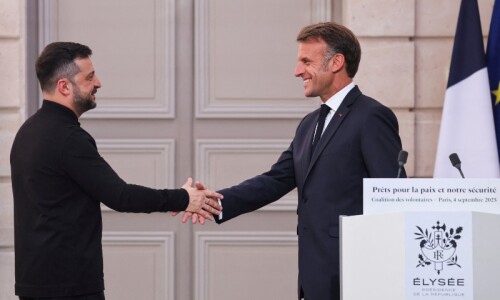
On Monday, Merz is hosting Zelenskiy and European leaders for a summit in Berlin, the latest in a series of public shows of support for the Ukrainian leader from allies across Europe as Kyiv faces pressure from Washington to sign up to a peace plan that initially backed Moscow’s main demands.
Britain, France and Germany have been working in the last few weeks to refine the US proposals, which, in a draft disclosed last month, called for Kyiv to cede more territory, abandon its ambition to join NATO and accept limits on its armed forces.
Merz said in a speech on Saturday that Europe had to brace for a fundamental shift in its relations with the US while facing a growing threat from Russia.
“The decades of Pax Americana are largely over for us in Europe, and for us in Germany as well. It no longer exists as we knew it. And nostalgia won’t change that,” he told a party congress in the southern city of Munich.
“The Americans are now very, very aggressively pursuing their own interests. And that can only mean one thing: that we, too, must now pursue our own interests.”
Attacks cause blackout in Odesa
The European Union has sought to shore up Ukraine’s position by leveraging frozen Russian central bank assets to fund Kyiv’s military and civilian budget.
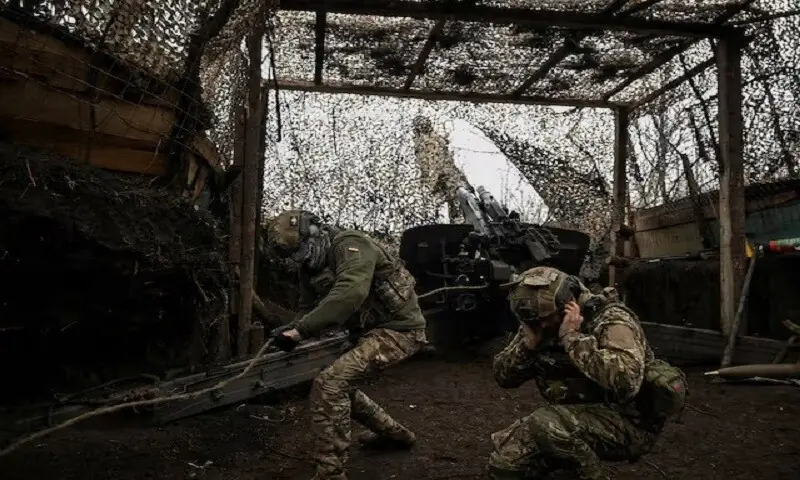
Ukraine meanwhile has battled to contain Russian advances on the battlefield and the frequent bombardment of its energy and water supplies going into winter.
The southern Black Sea port city of Odesa and the surrounding region suffered blackouts on Saturday after a large missile and drone attack on the electricity grid that left more than a million households without power, officials said.
Turkish President Tayyip Erdogan, after a meeting with Russian President Vladimir Putin on Friday, said “peace is not far away” and that he hoped to discuss a peace plan with Trump.
Erdogan had told Putin on Friday that a limited ceasefire in the war, focused on energy facilities and ports in particular, could be beneficial.
“The Black Sea should not be seen as a battleground. Such a situation would only harm Russia and Ukraine,” Erdogan said in comments released by his office on Saturday.
Russia attacked two Ukrainian ports on Friday, damaging three Turkish-owned vessels including a ship carrying food supplies, Ukrainian officials and one ship-owner said, days after Moscow threatened to cut Ukraine off from the sea.
Reporting by Friederike Heine, Steve Holland, Max Hunder, Tuvan Gumrukcu, writing by Matthias Williams, Editing by Peter Graff and Timothy Heritage