FCC move into Shariat Court building greenlit
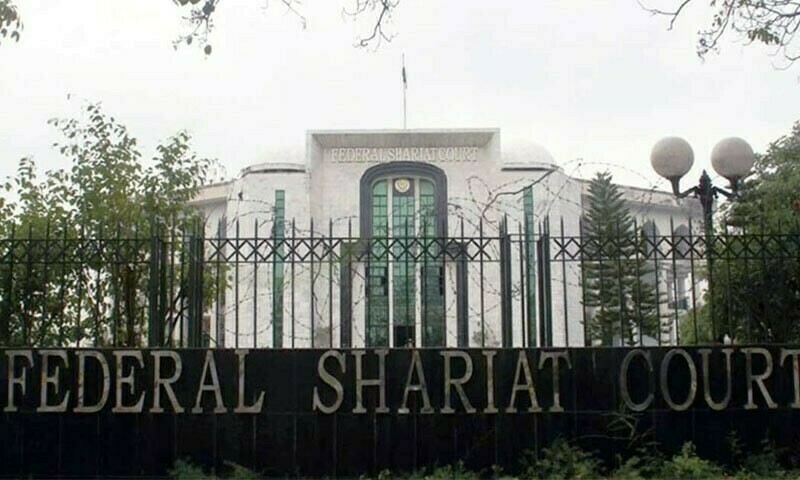
ISLAMABAD: The Federal Constitutional Court of Pakistan (FCC) will be housed in the Federal Shariat Court (FSC) building, while the latter will be shifted to the Islamabad High Court (IHC) premises.
Although the move is being described as temporary, it ends weeks of speculation about the relocation of the IHC to its former building in Sector G-10. It also dims the hopes of FSC judges to retain their coveted spot on Constitution Avenue, opposite the Supreme Court.
The decision to relocate the two courts was taken by the federal government, followed by the issuance of a notification on Thursday.
“In exercise of the powers conferred by Article 175B(2) of the Constitution, the President is pleased to temporarily house the Federal Constitutional Court in the Federal Shariat Court building situated on Constitution Avenue, Islamabad, and the Federal Shariat Court in the Islamabad High Court building,” reads government notification No. F.14(7)/2025-A.II.
Copies of the notification have also been sent to the Secretary to the President, Secretary to the Prime Minister, and the registrars of the FCC, Supreme Court, IHC, FSC, as well as to the Secretary to the Attorney General for Pakistan and the Deputy Secretary, Ministry of Law and Justice.
The displaced forum will be shifted into premises of Islamabad High Court
Last month, the government had decided to set up offices for FCC judges within the IHC despite space constraints, as FSC judges had reportedly refused to vacate their building for the newly established constitutional court.
Consequently, FCC was temporarily set up inside the IHC after the passage of the 27th Constitutional Amendment.
A senior FCC official, who requested anonymity, told Dawn that the shifting of the FCC to the FSC building would begin as soon as possible and could be completed by the end of the current week.
The present FSC building contains seven courtrooms with seven judges’ chambers. The FCC currently has seven judges, with the strength expected to gradually increase to 13 in due course.
While FCC judges have been holding court inside the IHC, some of them were using the spacious chambers designated for judges in the Supreme Court building.
Since the FCC’s administrative arrangements were incomplete at its inception, IHC courtroom No.2 was converted into the main courtroom of the FCC chief justice. Meanwhile, IHC Chief Justice Sardar Muhammad Sarfraz Dogar continues to sit in his original courtroom No. 1, located above the FCC’s main courtroom.
With the FSC reportedly unwilling to hand over its building and the FCC facing multiple teething problems while sharing space with the IHC, the FCC had effectively become the only court in the country without a proper building of its own.
Earlier, rumours were making rounds that the IHC might return to its old G-10 premises early next year may – possibly in January – given the difficulties faced by litigants entering the Red Zone.
Speculation dies
However, speculation started to die down when IHC Chief Justice Sardar Mohammad Sarfraz Dogar visited the G-10 building earlier this month to evaluate its suitability by inspecting several renovated sections, including the Chief Justice Block.
Published in Dawn, December 12th, 2025