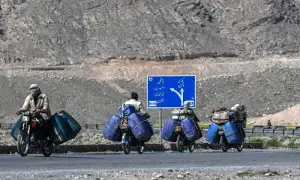
PAKISTAN is undergoing an extraordinary and largely unplanned energy transition. According to recent reports, Pakistan has become the world’s second-largest importer of solar panels this year. The numbers are staggering: between 2022 and 2024, annual imports of Chinese-made panels surged nearly fivefold to 16 gigawatts (GW).
In the first nine months of 2025 alone, Pakistan imported another 16GW. By the end of the year, the country’s cumulative imports will roughly match the installed capacity of the entire national grid.
This explosion in rooftop solar panels has already begun to transform how Pakistanis consume electricity. Since 2022, demand for grid power has fallen sharply as households, businesses and farmers have shifted to the less expensive solar energy.
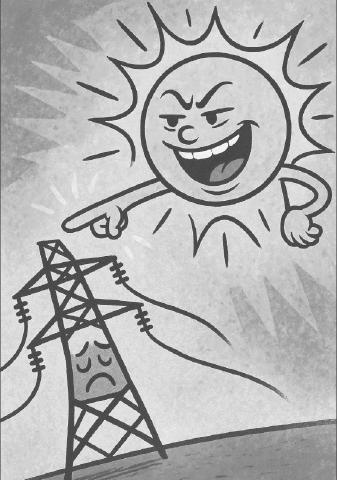
However, while solar consumers are benefiting, the national grid is approaching a crisis. Capacity payments to independent power producers (IPPs) — fixed charges that must be paid whether or not electricity is consumed — continue to rise.
As more customers leave the grid, these costs are being borne by a shrinking pool of consumers, pushing electricity prices even higher. Predictably, this drives even more people to abandon the system. Pakistan is now caught in a dangerous feedback loop that threatens to hollow out its power infrastructure.
The country’s surging solar revolution should have been a blessing. Instead, it risks becoming a destabilising force unless policymakers act decisively. The technical solution is clear: Pakistan needs a modern grid capable of absorbing intermittent solar power.
That means investing in large battery banks, pump-storage hydropower, and other balancing technologies deployed by countries that have successfully integrated renewables. These investments are expensive, but they are essential because without them, the grid will continue its slow-motion collapse.
Financially, Pakistan cannot sustain the burden of existing power purchase agreements. The government must consider invoking force majeure clauses and renegotiating contracts with the IPPs.
No reform package will work unless it addresses the runaway costs locked into these decades-long agreements. The solar option is here to stay, and no policy can reverse the momentum. The challenge now is to somehow ensure that the national grid evolves rather than disintegrates.
Muhammad Akram Khan
Lahore
Published in Dawn, December 10th, 2025