Three wounded in southern Syria after Israeli incursion
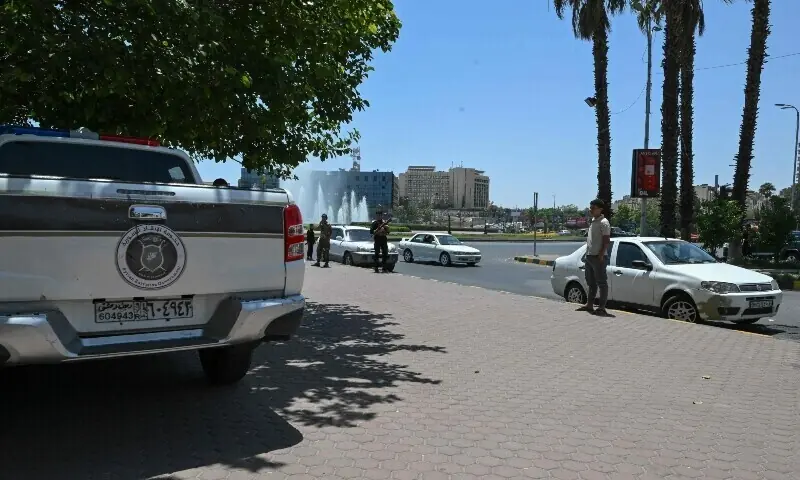

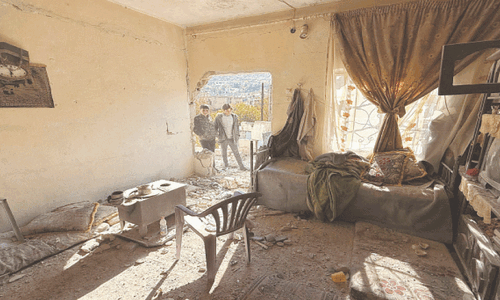
DAMASCUS/BEIRUT: Three people were wounded on Tuesday during an Israeli incursion into southern Syria, state media reported, as Israel’s army said soldiers had fired on suspects who “posed a threat.”
The violence came after Israeli forces late last month killed at least 13 people in an operation in southern Syria that Israel’s military said targeted an Islamist group and left six Israeli soldiers wounded.
Israel has carried out repeated incursions into Syrian territory since the toppling of longtime ruler Bashar al-Assad a year ago, as well as carrying out bombings, and has said it wants a demilitarised zone in the country’s south.
Syrian state television said “three people were wounded by Israeli occupation forces’ gunfire in the town of Khan Arnabah in Quneitra province.”
Tel Aviv strikes at Hezbollah sites in Lebanon
It said Israeli forces had used several military vehicles and troop carriers, and had also launched smoke grenades.
State news agency SANA said Israeli forces set up a checkpoint near Khan Arnabah “and are shooting at civilians”.
It published images appearing to show Israeli military vehicles and troops on a road as civilian vehicles passed.
The Israeli army said in a statement that during its “activity in the Quneitra area of southern Syria, a confrontation developed when several suspects approached the troops and posed a threat to them”.
Soldiers “fired warning shots into the air, and after the suspects failed to distance themselves, the troops responded and fired toward the lower bodies of two main inciters,” the statement said.
As Islamist forces toppled Assad late last year, Israel sent troops into a UN-patrolled buffer zone which had separated Israeli and Syrian forces on the Golan Heights since 1974.
Israel seized much of the Golan from Syria in 1967, annexing the area in 1981 in a move largely unrecognised internationally.
Syrian President Ahmed al-Sharaa warned on Saturday that Israel’s demand for a demilitarised zone in southern Syria would endanger his country and called for Israel to respect a 1974 disengagement agreement.
US President Donald Trump, who has been pushing for a security pact between Israel and Syria, told Israel last week to avoid destabilising Syria and its new leadership.
Israel launched a series of strikes on southern Lebanon on Tuesday, Lebanese state media reported, with the Israeli army saying it hit a Hezbollah training centre and other targets.
Despite a November 2024 ceasefire that was supposed to end more than a year of hostilities between Israel and the Iran-backed militant group, Israel has kept up strikes on Lebanon and maintains troops in five areas of the country’s south.
Lebanon’s state-run National News Agency (NNA) reported “a series of (Israeli) raids targeting the Iqlim al-Tuffah region” near the towns of Azza, Rumin, and Jbaa, about 40 kilometres (25 miles) north of the border with Israel.
“A number of houses were damaged” in JBaa, the NNA added.
The Israeli military said it had struck “infrastructure belonging to the Hezbollah terrorist organization in several areas in southern Lebanon”.
According to the military, “a training and qualification compound used by Hezbollah’s Radwan Force” was hit, as were “military structures and a launch site belonging to Hezbollah”.
Israel says its continued attacks on Lebanon are to prevent the group from rearming. Under heavy US pressure and fears of expanded Israeli strikes, Lebanon’s government has committed to disarming Hezbollah, and the army is set to dismantle the group’s military infrastructure near the border by year’s end before tackling the rest of the country.
In a meeting with French envoy Jean-Yves Le Drian on Monday, Lebanese President Joseph Aoun rejected “accusations claiming that the Lebanese army is not fully carrying out its role south of the Litani River”, about 30 kilometres (20 miles) north of Israel.
Lebanon “supports any audit conducted by the ceasefire monitoring committee regarding the procedures implemented south of the Litani”, Aoun added.
The five-member committee, which includes Lebanon, Israel, France, the US, and the UN peacekeeping force, is set to meet again with Lebanese and Israeli civilian representatives on December 19.
Published in Dawn, December 10th, 2025