Clear and credible evidence must for dismissal, SC rules
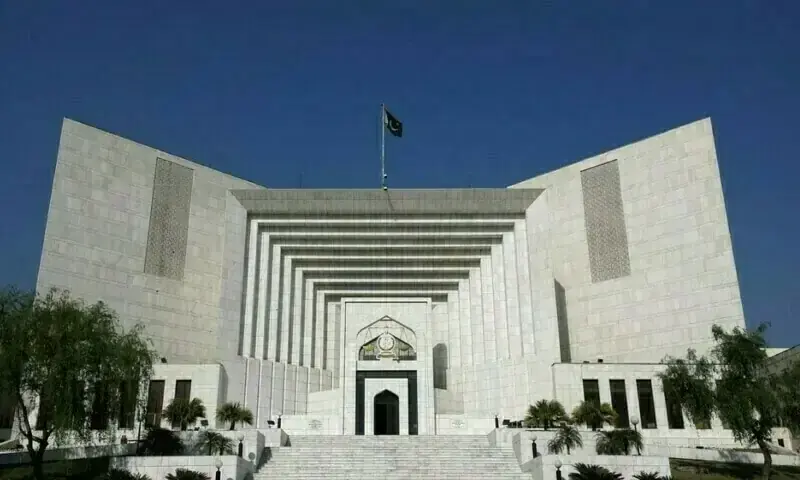
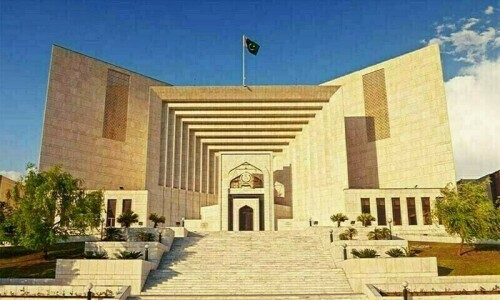
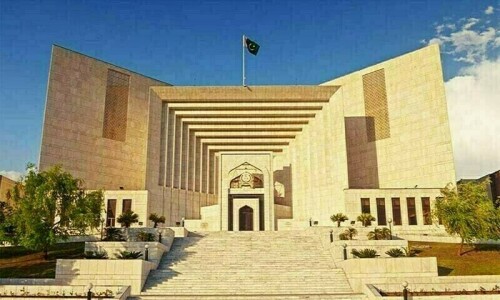
ISLAMABAD: The Supreme Court on Friday ruled that the responsibility lies squarely on the employer to establish the misconduct of an employee through clear, credible, and convincing evidence when initiating disciplinary proceedings under the Industrial Relations Laws.
“When any employee challenges his termination or dismissal from service, the burden often shifts upon the employer to establish that the action was based on independent, unbiased, and logical reasons,” Justice Muhammad Ali Mazhar observed while heading a three-judge SC bench.
The bench had taken up an appeal filed by Saeed Ahmed against the Oct 11, 2022 judgement of the Sindh High Court (SHC).
In a 12-page judgement, Justice Mazhar emphasised that during termination or dismissal proceedings, the principles of natural justice and due process must be strictly followed. He underscored that the employer must produce substantial evidence demonstrating that the dismissal was not motivated by revenge, bias, or any prejudicial intent.
Judgement says termination from service must not be motivated by revenge, bias or any prejudicial intent
The dispute stems from the SHC’s Oct 11, 2022 decision in a petition filed by Nestlé Pakistan Ltd, which had set aside a full bench ruling of the National Industrial Relations Commission (NIRC).
Saeed Ahmed, the petitioner, was a permanent workman under the Industrial and Commercial Employment (Standing Orders) Ordinance, 1968, and the Industrial Relations Act. On Sept 1, 2015, he visited a dental surgeon and was advised to undergo a Root Canal Treatment. After the procedure, he applied for reimbursement of the medical bill in accordance with company policy.
Instead of processing the claim, the company’s HR manager issued a show-cause notice on Dec 1, 2015, accusing him of submitting a bogus medical bill of Rs10,000.
The petitioner denied the allegation and participated in the internal inquiry. On Dec 4, 2015, he produced a verified bill along with a payment receipt for Rs10,000. Despite this, adverse findings were recorded against him, and he was dismissed from employment on March 8, 2016.
He challenged his dismissal before the NIRC through a grievance petition, which was dismissed. He then filed an appeal before the full bench of the NIRC, which overturned the single bench’s decision and ordered his reinstatement with back benefits.
Nestlé Pakistan challenged the reinstatement before the SHC, which set aside the full bench’s ruling and restored the single bench’s dismissal of the grievance.
Justice Mazhar observed that proving guilt on charges of misconduct is a serious matter, noting that the consequences for an employee are far more severe than for the employer. Therefore, he stressed, the inquiry process must reflect due diligence before declaring an employee guilty.
In this case, the SC noted that testimony from the representative of the dental clinic or treating doctor was essential to determine whether the petitioner had indeed submitted an inflated or fabricated bill. The court held that such a witness would have been a “star witness” yet the management failed to call them. This omission, the judgment stated, rendered the employer’s case weak, as no effort was made to confront or verify the medical bills through the key witness.
Thus, the burden could not be shifted onto the employee to produce the witness when the management itself avoided verifying the bill. This failure, the judgment noted, caused the evidence to lose its probative value, and nothing on record established which medical bill was genuine.
Justice Mazhar remarked that the doctrine of the presumption of innocence places the burden on the accusing party — in this case, the employer — to prove misconduct beyond reasonable doubt. He added that even in domestic inquiries under Industrial Relations Laws and Civil Servant Rules, inquiry officers are duty-bound to ensure a fair trial, due process, and objective evaluation of evidence.
Strict adherence to rules of evidence, he said, is indispensable to establishing culpability. Any lapses, procedural violations, or omissions undermine the truth-seeking purpose of disciplinary inquiries — an aspect that, according to the judgment, was not met in this case.Concluding the matter, the SC upheld the appellate judgement of the full bench of the NIRC, terming it rational, judicious, and correct in setting aside the SHC judgement.
Published in Dawn, December 6th, 2025