0
0

PESHAWAR, June 7: Women and children in the quake-hit areas of the Frontier province have been facing an uphill task of increased workload, mainly because of deaths of male members of their families and loss of sources of livelihood.
This was stated in a study conducted by the IUCN, according to which almost all respondents, including women and children, said their workload had greatly increased after the October 8 earthquake.
Even families which had their males were quoted in the study as saying that men often went to their destroyed houses in order to look after their animals and to protect the remaining assets and the women and children were required to cater to the workload.
“The absence or death of male members of the family means that women are left to cope alone in difficult circumstances,” said the study.
Even small children also share this pressure, it said.
“I bring water from the water supply tank in the camp. I also bring wood and do any relevant work as my mother and elder sisters can not go outside the tent due to purdah (veil) and the unfamiliar environment,” a small girl was quoted in the study as saying.
It said that most of the people in the earthquake area depend on agriculture and forestry for their livelihood.
According to the study, women worked for prolonged hours in the fields sowing, weeding and harvesting. Besides they were also involved in work like cooking, gardening, poultry farming, collecting firewood, making handicrafts and husbanding livestock.
The study said that the earthquake had destroyed all these sources of livelihood and in nearly all the earthquake-affected areas where the study was conducted it showed that economic life had come to almost a complete standstill.
The loss of employment and livelihoods, even for a short period of time, is likely to precipitate a fall into extreme poverty, it added. Apart from it, most of the jobs in the affected areas are in the agriculture and service sector, which had received a severe blow because the landslides and rockslides caused by the earthquake had resulted in a large number of deaths and injuries to farmers, their families and their livestock.
“We are not able to go back to cultivate the damaged lands. Even the areas where agricultural land has not been affected much there is an urgent need to obtain seeds, tools and fertilisers for the upcoming Rabi season; and to restore critical infrastructure such as irrigation systems, farm to market roads, and agro-processing facilities,” it quoted some families as saying.
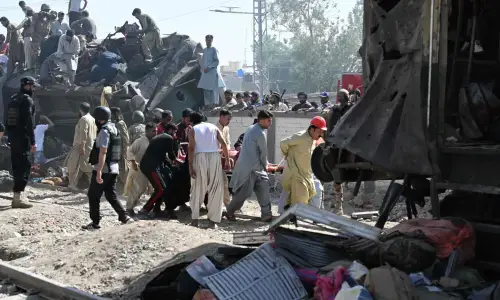
Due to the earthquake huge holes and gulfs have developed in the lands, it said, adding that heavy rocks rolling down from nearby mountains now cover the cultivatable land. There is no land now for cultivation and agriculture, it said.
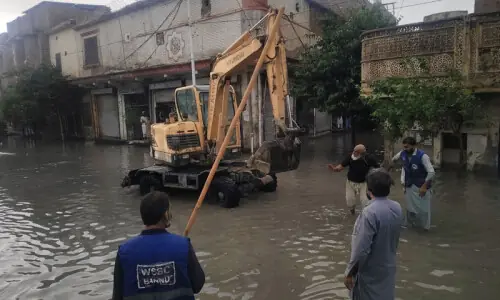
During the study, the respondents were also asked as to what could be done about the problem. They replied that heavy machinery was needed to remove the huge stones and without their removal their lands and irrigation system could not be restored and it would be impossible for them to cultivate their lands and begin normal lives once again.
Among the respondents were representatives of a few organisations which were engaged in relief and rehabilitation activities. The study found that no organisation was working to restore agricultural lands even in relatively safer places.
At the time the study was being conducted most of the organisations were still busy in carrying out relief work, distributing food and providing material for shelters.