Karachi ATC acquits Mahrang Baloch in terrorism, sedition case after a year


 0
0
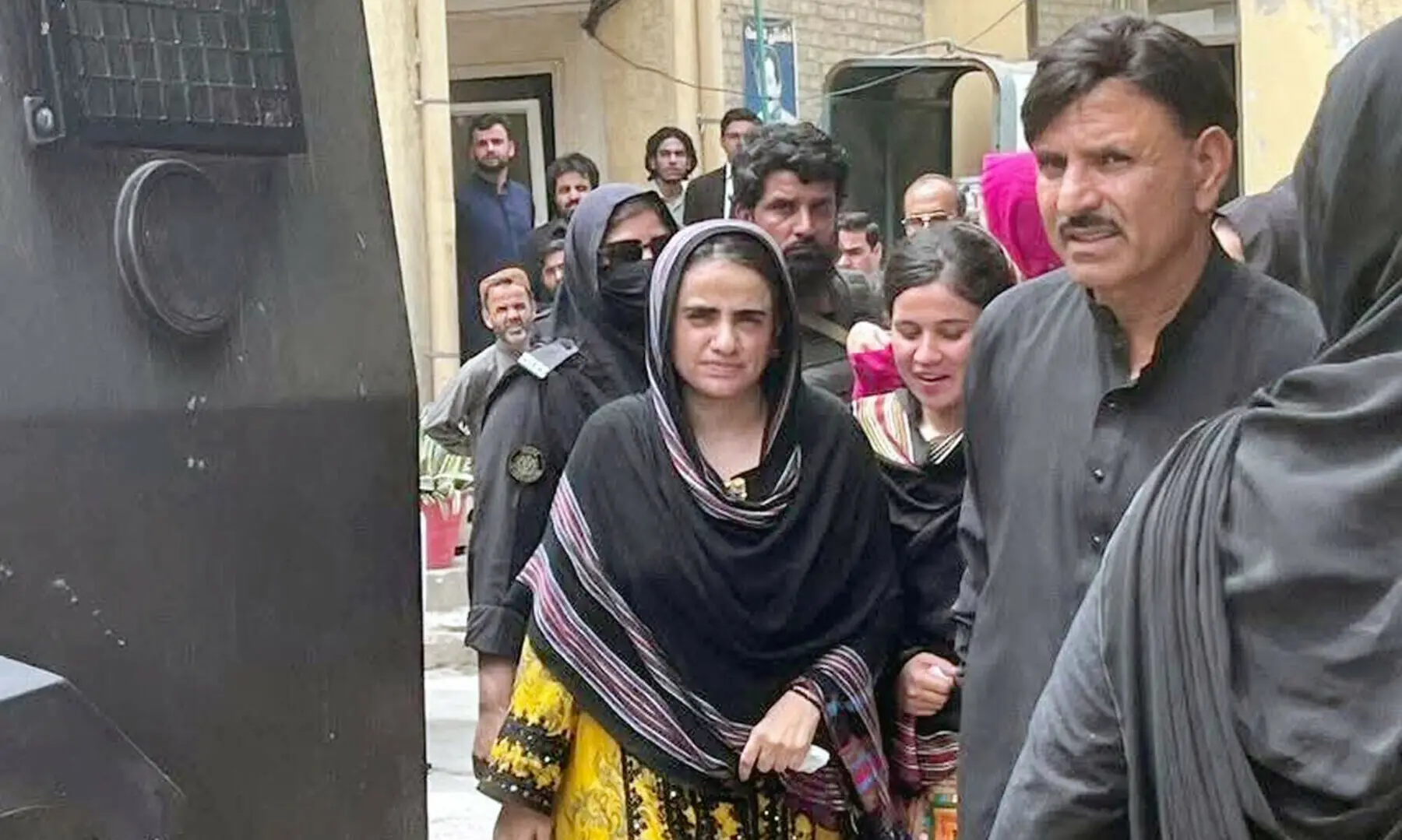

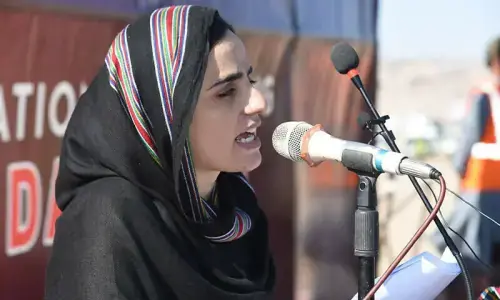
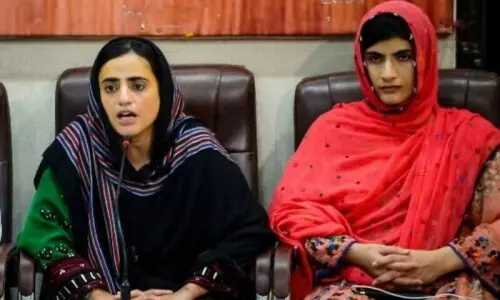
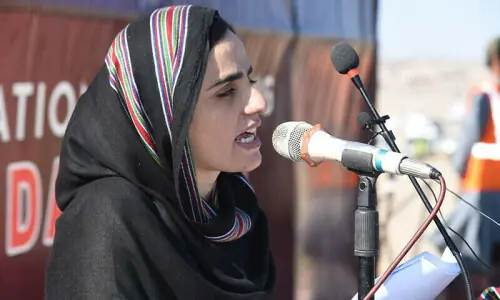
A Karachi anti-terrorism court (ATC) on Wednesday acquitted Baloch Yakjehti Committee (BYC) leader Dr Mahrang Baloch in a case of sedition and public mischief registered against her in October last year.
Mahrang had been booked in the terrorism case by Malir district’s Quaidabad police on Oct 11, 2024, for allegedly inciting people by levelling “allegations against security institutions”.
ATC Judge Ayaz Mustafa Jokhio announced the verdict today on Mahrang’s acquittal plea in the case, filed by Advocate Jibran Nasir.
“I am of the view that there is no probability of the accused being convicted of any offence. I hereby allow this application and acquit the accused, Mst. Mahrang Baloch, d/o Abdul Ghaffar,” the court order read.
The rights activist was cleared of charges under section 265-K (power of court to acquit accused at any stage) of the Code of Criminal Procedure (CrPC).
Mahrang, as per the court order, appeared via video link from Quetta Prison, where she has been incarcerated after her arrest in March. Despite her acquittal in the Karachi case, the activist cannot be released due to other pending cases against her.
In the order, a copy of which is available with Dawn, Judge Jokhio said he considered the arguments of Mahrang’s lawyer, the state counsel, and also reviewed the material on record.
“In this regard, the complainant has not produced any independent witnesses, which prove his contention,” the judge observed.
He noted that the investigation officer had cited five witnesses in the charge sheet, and besides the complainant, the “remaining [prosecution witnesses] are police officials who do not know about facts of alleged incident”.
The judge further said that in their statements under Section 161 of the Criminal Procedure Code, the witnesses had “not stated single word about the alleged incident, which shows they have no knowledge about the alleged incident”.
He noted that during the investigation, at the time of visitingthe place of the incident, “neither IO called any private/independent witness from locality nor made query from area people regarding alleged incident”.
The judge pointed out that the case was registered in October 2024, while the challan was submitted in August 2025, “after the delay of 10 months” without any reason provided by the IO for the delay.
Judge Jokhio observed that the “purpose of provisions of section 265-K, CrPC is very much clear, and it never prevents a court from acquitting an accused at any stage of the case”.
“It may be observed here that in view of [the] plethora of pending cases, instead of allowing the complainant/prosecution to produce weak, deficient, and inadmissible proposed evidence in the trial, it is high time for the trial courts to exercise such vast power vested therewith, to save precious public time.”
On the matter of the charge not being framed, the judge said it was a “well-settled law that court can exercise power under section 265-K CrPC even before framing of charge”.
The judge also noted that the complainant failed to appear in court despite the police being ordered to produce him.
Fabricated case: Mahrang
Mahrang had termed the case “fabricated”, saying it showed “how the state had grown increasingly uncomfortable” with her activism.
The first information report (FIR) was registered on the complaint of a resident named Asad Ali Shams, who claimed that Mahrang was inciting violence in his area.
Accusing her of instigating the people against the state and its institutions, the complainant had also alleged Mahrang had links to terrorist groups operating in Balochistan.
The FIR invoked Section 7 (punishment for acts of terrorism) of the Anti-Terrorism Act (ATA) 1997 as well as Sections 124-A (‘sedition law’), 148 (rioting, armed with deadly weapon), 149 (every member of unlawful assembly guilty of offence committed in prosecution of common object), 153-A (promotion of enmity between groups), 500 (punishment for defamation) and 505 (statement conducing to public mischief) of the Pakistan Penal Code.