Global airlines race to fix jets as Airbus apologises after A320 recall
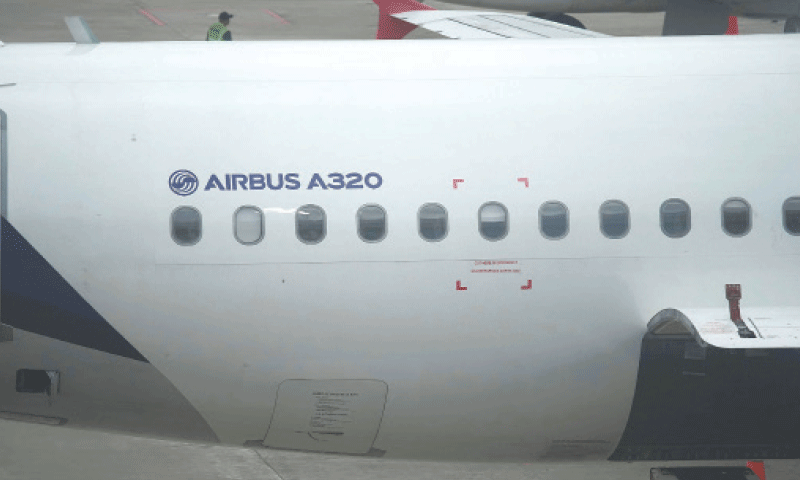

TOKYO: More airlines around the world announced delayed or cancelled flights on Saturday, following an Airbus alert that up to 6,000 A320 jets may require upgrades after evaluating a technical malfunction on board a JetBlue flight in October.
Global airlines scrambled to fix the glitch as Airbus CEO Guillaume Faury apologised to airlines and passengers after the surprise recall of 6,000 planes or more than half of the global A320-family fleet, which recently overtook the Boeing 737 as the industry’s most-delivered model.
“I want to sincerely apologise to our airline customers and passengers who are impacted now,” Faury posted on LinkedIn.
The alert followed an unintended loss of altitude on an October 30 JetBlue flight from Cancun, Mexico, to Newark, New Jersey, which injured 10 passengers, according to France’s BEA accident agency, which is probing the incident.
Airlines worked through the night after global regulators told them to remedy the problem before resuming flights.
That appeared to help head off the worst-case scenario and capped the number of flight delays in Asia and Europe. The U.S. will face high demand after the Thanksgiving holiday period.
“It’s not as chaotic as some people might think,” said Asia-based aviation analyst Brendan Sobie. “But it does create some short-term headaches for operations.”
Airbus recall lucky for some
The alert landed at a time of day when many European airlines and Asian airlines are winding down their schedules, which mostly do not require the short- to medium-haul jets like the A320 to be flying at night, leaving time for repairs.
In the United States, however, it came during the day ahead of the busy Thanksgiving holiday travel weekend.
Steven Greenway, CEO of Saudi carrier Flyadeal, said that the recall had hit late in the evening, which had avoided more serious disruption. The airline said it had fixed all 13 affected jets and would resume normal operations by midnight.
“It was a great team effort but our luck also held up in the timing,” Greenway told Reuters.
Airlines must revert to a previous version of software in a computer that helps determine the nose angle of the affected jets and in some cases must also change the hardware itself, mainly on older planes in service.
By Saturday, Airbus was telling airlines that repairs to some of the A320 jets affected may be less burdensome than first thought, industry sources said, with fewer than the original estimate of 1,000 needing the hardware changes.
Even so, industry executives said the abrupt action was a rare and potentially costly headache at a time when maintenance is under pressure worldwide from labour and parts shortages.
There were also unresolved questions about the impact of solar flare radiation blamed for the JetBlue incident, which is being treated by French investigators as an “incident,” the lowest of three categories of potential safety emergency.
“Any operational challenges that comes at short notice and affecting a large part of your operation is tough to deal with,” said UK-based aviation consultant John Strickland.
Fix is simple but necessary
The fix must be completed before the planes can fly again with passengers, a process needing two to three hours per jet.
Globally, there are about 11,300 of the single-aisle jets in service, including 6,440 of the core A320 model. Those include some of the largest and busiest low-cost carriers.
Tracker data from Cirium and FlightAware showed most global airports operating with good-to-moderate levels of delays.
Wizz Air said updates had been implemented overnight on all its affected jets. The European low-fare airline had already been hit hard by groundings caused by long waiting times for engine repairs rather than safety concerns.
AirAsia, one of the world’s largest A320 customers, said it aimed to complete fixes in 48 hours.
US carriers Delta Air Lines, JetBlue and United Airlines are also among the biggest A320-family operators. Although Thanksgiving is critical for airlines in the US, Strickland said financial impact for European carriers would be cushioned by the fact that the recall happened during a lull before end-year holidays and the ski season.
Published in Dawn, November 30th, 2025