PTI decides to establish ‘chain of command’ within party amid criticism from leaders

While the PTI issued an internal memo to establish a chain of command, some of the party leaders criticised the move as an effort to run the party like an “army unit” and argued that differences of opinion are the “beauty and plus point” of the organisation.
The leaders believe that the internal memo is undemocratic and ensures one-man rule instead of decentralisation. They also claimed that the original constitution of PTI had a core committee and nothing like a political one.
PTI Information Secretary Sheikh Waqas Akram stated that “the internal memo was the need of the hour and was issued by Additional Secretary General PTI Firdous Shamim Naqvi to streamline recent issues faced by the party.”
The memo, available with Dawn, states that in the centre, provincial presidents and general secretaries or equivalent office bearers will report to the party’s secretary general.
Similarly, at the provincial level, the regional president and general secretary will report to the secretary general of the party on organisational matters. District and tehsil presidents will report to the general secretary of the region and district.
“To clarify further, no tier can break this chain of command. For the party to function properly, the office bearers must recognise their domain,” the memo, signed by party leader Firdous Shamim Naqvi, stated.
“At each tier, their many functions which are the purview of the tier as per the general directions called out above. The functional duties of the office bearer will be decided by the [secretary general] with the approval of the cabinet of the tier.”
The memo added that all provincial or regional heads’ complaints would be addressed to the centre and to the respective office bearer, as the case may be.
A leader of the party, wishing not to be quoted, said that the PTI was going under “one-man rule” with this move.
“Now, no decision can be taken without getting the approval from the secretary general. However, it is a fact that currently there is no secretary general in the PTI, and that is why Additional Secretary General Mr Naqvi has signed the internal memo,” he explained.
Another leader said that the PTI had a core committee, and there was no mention of the political committee in the party’s constitution.
“Now, there is no room for dissent or difference with the secretary general,” he said. “Once, PTI leaders had their own opinion, and Imran Khan used to say that the difference of opinion was the beauty of the political party.
“Unfortunately, now the political party will be run like an army unit in which there will be a ‘chain of command’. I can foresee that the differences within the party will further increase,” he said.
Information Secretary Akram, while talking to Dawn, said that the chain of command was already defined in the constitution of the PTI.
“The internal memo is basically related to block code, which is related to Election Management and Assessment Cell (EMAC),” he explained.
“We had to issue the internal memo as at different places, appointments for EMAC were not being understood by party wings. So Mr Naqvi has given just a clarification to streamline the issues related to appointments regarding EMAC.”
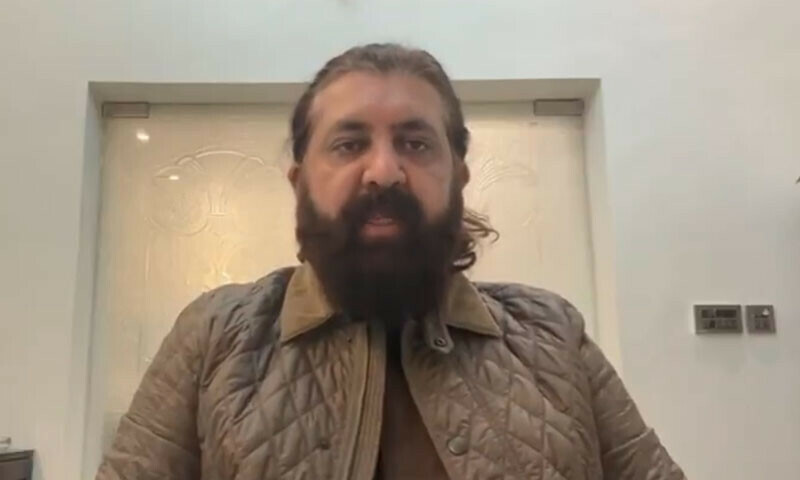
Akram emphasised that the hierarchy of the PTI was arranged according to the party constitution was submitted to the Election Commission of Pakistan in 2019, further stating that all have to perform their roles as per the constitution.
“Chain of command has to be recognised to run any party smoothly. Parties cannot be run without a chain of command. Otherwise, there is a structure including Centre, Province, Region, District, Tehsil and then Unions,” the PTI Information Secretary said.