UN experts sound alarm on rights violations in occupied Kashmir after Pahalgam attack

United Nations experts on Monday sounded the alarm over “serious human rights violations” in Indian-occupied Kashmir by the Indian government, issuing the warning in the aftermath of the Pahalgam attack.
Pahalgam is the site where gunmen on April 22 killed 26 mostly Hindu tourists. New Delhi blamed the attack on Pakistan, which strongly denied the allegations while calling for a neutral investigation, triggering a series of tit-for-tat diplomatic measures that escalated into a four-day conflict.
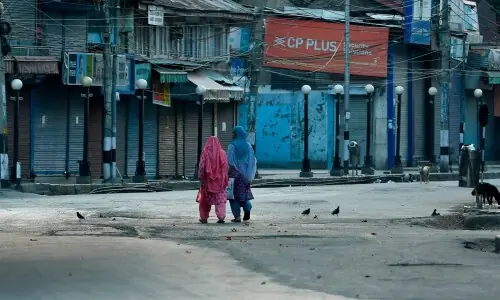
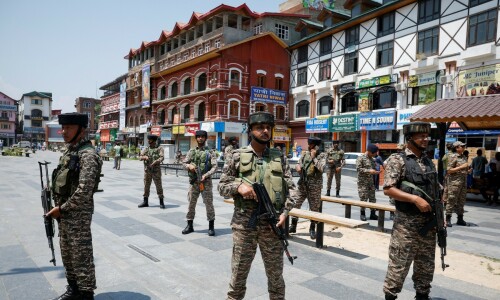
In the aftermath of the Pahalgam attack, Indian forces arrested more than 2,000 Kashmiris and demolished several homes in a sweeping crackdown.
The arrests were carried out across multiple districts, including Srinagar, Ganderbal, Bandipora, Kupwara, Baramulla, Budgam, Islamabad, Pulwama, Shopian and Kulgam.
“We unequivocally condemn the brutal terrorist attack on a tourist area and extend our condolences to the victims, their families, and the Government of India. However, all governments must respect international human rights law while combating terrorism,” the experts said in a press release issued today on India’s response to the attack.
They noted that Indian authorities launched sweeping operations across the territory in the attack’s wake, resulting in the arrest and detention of around 2,800 individuals, including journalists and human rights defenders.
They pointed out that some were detained and charged under the Public Safety Act or the Unlawful Activities (Prevention) Act, which permitted prolonged detention without charge or trial and contained “vague and overbroad definitions of terrorism”.
The experts noted that some detainees were allegedly tortured, held incommunicado, and denied access to lawyers and family members.
“We condemn reports of arbitrary arrests and detentions, suspicious deaths in custody, torture and other ill-treatment, lynchings, and discriminatory treatment of Kashmiri and Muslim communities,” the experts said.
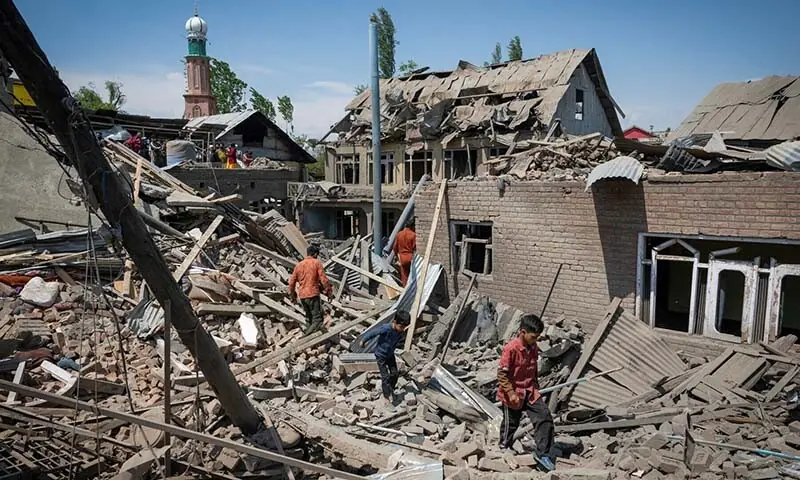
They further highlighted reports of punitive house demolitions and forced evictions and arbitrary displacement, targeting families of individuals perceived as supporting freedom fighters, and carried out without court orders or due process.
“Such actions constitute collective punishment and defy the 2024 ruling by India’s Supreme Court, which found that such demolitions are unconstitutional and violate the rights to life and human dignity, which includes the right to protection against arbitrary displacement,” the experts said.
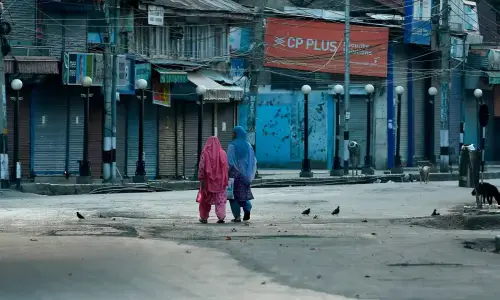
They also expressed concern at communication blackouts and restrictions on press freedom, saying that authorities reportedly suspended mobile internet services and blocked around 8,000 social media accounts, including those of journalists and independent media outlets.
“These measures are disproportionate restrictions on freedoms of expression, association and peaceful assembly,” the experts noted.
They remarked that India’s response to the attacks was “also felt elsewhere in India”, with Kashmiri students subjected to surveillance and harassment, following government directives requiring universities to collect their personal data.
“Hate speech and incitement to violence increased against Muslims, inflamed by political figures in the ruling party. Demolitions were reported in Gujarat and Assam, where thousands of Muslim homes, mosques, and businesses were destroyed.”
“Nearly 1,900 Muslims and Rohingya refugees were also expelled to Bangladesh and Myanmar, often without due process,” the press release said.
The experts stressed that such expulsions violated the international obligation of non-refoulement, which prohibited returning individuals to countries where they risked persecution, arbitrary deprivation of life, torture, or other serious harm.
They further highlighted what they said was the “persistent nature of violations” in the territory with several human rights defenders, including Irfan Mehraj and Khurram Parvez, being arbitrarily detained for years under draconian security laws.
“We urge the immediate unconditional release of all individuals arbitrarily detained in Jammu and Kashmir.”
The experts also urged India to bring its counter-terrorism laws and practices “in line with international human rights obligations and independently investigate all alleged violations” and ensure accountability, including through prosecutions.
“Excessive counter-terrorism measures not only violate human dignity, the Indian constitution and international law but counter-productively fuel social division and grievances that can spiral into further violence,” the experts warned.
They lastly asked Pakistan and India to peacefully resolve the Kashmir dispute, which they said had “fuelled human rights violations and the destructive cycle of cross-border violence”.