Pakistan urges urgent grant-based climate finance at COP30


Pakistan has called for rapid, grant-based, and predictable financing for climate-vulnerable developing countries, warning that recurring climate disasters are exacerbating debt distress and undermining development gains in nations that have contributed the least to global emissions.
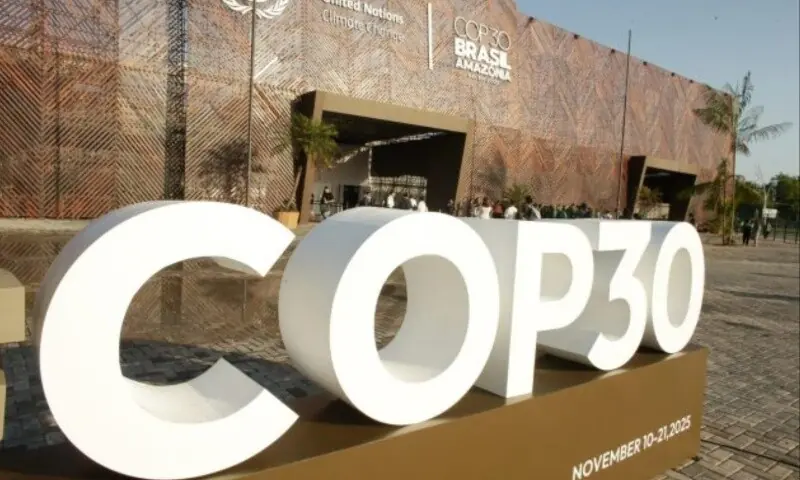
The appeal was made at a high-level side event titled “Operationalising Loss and Damage: Financing Resilience and Recovery in Vulnerable Countries”, organised jointly by the Ministry of Climate Change and Environmental Coordination and Unicef at the Pakistan Pavilion during the UN climate summit (COP30) in Belém, Brazil.
Secretary for Climate Change and Environmental Coordination Aisha Humera Moriani, in her keynote address, stated that Pakistan was investing heavily in strengthening national resilience despite contributing less than one per cent to global greenhouse gas emissions.
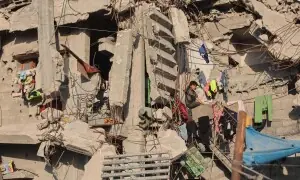
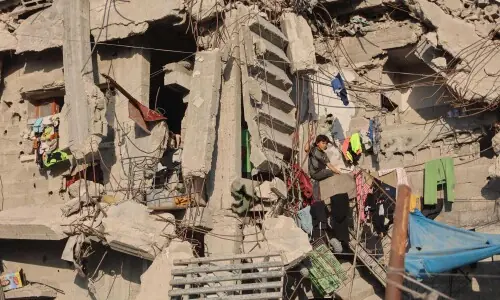
She recalled the catastrophic floods of 2022 and 2025 that displaced millions, damaged infrastructure and caused multi-billion-dollar economic losses. “The scale and frequency of such disasters in developing countries underscore the disproportionate climate burden placed on nations that played almost no role in heating the planet,” she said.
Representatives of the newly established Fund for Responding to Loss and Damage (FRLD), government officials, development partners and experts attended the event to discuss ways of operationalising the global Loss and Damage mechanism.
Panellists noted that repeated climate shocks had pushed several vulnerable economies into what they described as a “debt emergency,” forcing them to borrow for reconstruction in the absence of adequate grant-based support.
They stressed that new, additional and concessional financing was essential if Loss and Damage assistance was to be transformative rather than short-lived.
Speakers also highlighted that children were bearing the greatest burden of climate stress, with Pakistan having nearly half its population under 18.
Recurring disasters, they said, were severely affecting nutrition, health, education and mental wellbeing. “Climate disasters are not only destroying infrastructure, they are also robbing a generation of its right to safety and opportunity,” Moriani added.
The discussion further underscored the need to prioritise the Barbados Implementation Modalities (BIM), which call for simplified application procedures, faster disbursement and flexible financial windows to support countries with constrained fiscal space.
Participants also emphasised the importance of financing mechanisms that can address slow-onset events such as glacial melt, desertification and sea level rise.
Ministry spokesperson Muhammad Saleem Shaikh told APP that a significant part of the dialogue focused on support for vulnerable groups, particularly children and young people.
He pointed out that non-economic losses — including trauma, cultural disruption, displacement and community breakdown — remained insufficiently recognised in global policy frameworks.
He added that Pakistan had announced its readiness to submit two proposals under the FRLD’s initial funding cycle, aimed at rebuilding critical social infrastructure and strengthening resilience in key sectors, including agriculture, community systems and water resources.
While domestic resources were being mobilised, he said, the scale of climate-related loss far exceeded national capacity.
Calling Loss and Damage financing a matter of national survival, the ministry reiterated Pakistan’s position that climate justice and the principles of Common but Differentiated Responsibilities and Respective Capabilities (CBDR-RC) must guide international action. “Climate justice demands immediate access. Our people cannot wait,” the ministry stated, urging developed countries and multilateral institutions to translate commitments into tangible financial delivery.
Moriani reaffirmed Pakistan’s commitment to working with the UN, international partners and global climate finance bodies to shape an equitable framework for climate recovery.
The goal, she said, was to ensure that vulnerable countries receive the resources needed to recover, rebuild and adapt to accelerating climate impacts.