Equities eke out modest gains amid dearth of triggers


 0
0
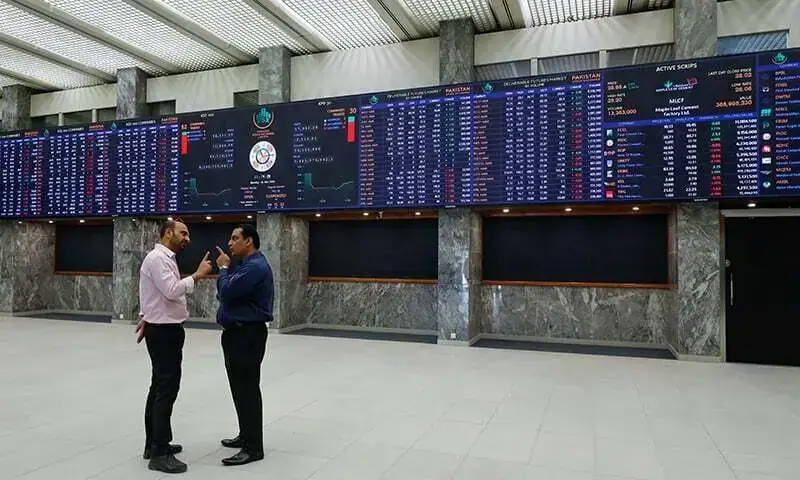

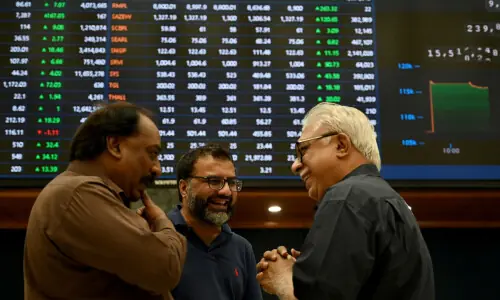
KARACHI: The Pakistan Stock Exchange (PSX) managed modest gains in the outgoing week, reflecting investor caution amid a lack of significant news flow and persistent macroeconomic uncertainties.
The week was marked by mixed economic indicators: a widening current account deficit and stable foreign exchange reserves, while key sectors such as Large-Scale Manufacturing (LSM) and technology exports posted positive growth.
The most notable development was the current account deficit (CAD) for October, which stood at $112 million, reversing from a surplus of $83m in September. The trade deficit for the month reached $3.28 billion, with a cumulative gap of $12.6bn for the first four months of the 2025-26, widening by 38.9pc year-on-year.
Foreign direct investment (FDI) fell by 26 per cent to $747.7m in 4MFY26, compared with $1.01bn in the same period of the previous fiscal year. However, the FDI showed some resilience, with October’s inflows reaching $179m, up 23pc YoY despite a slight month-on-month decline.
Investors remain cautious on mixed economic data
In other positive news, Pakistan’s technology exports hit a record high of $386m in October, up 17pc year-on-year and 5pc month-on-month, reflecting the growing significance of the tech sector in Pakistan’s export landscape.
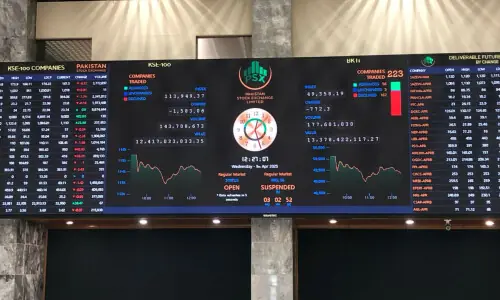
As a result, the KSE 100 index closed at 162,102.92 points, gaining a meagre 168 points. Arif Habib Ltd (AHL) attributed the rise to sector-specific catalysts, particularly the performance of Fauji Fertiliser Company, which benefited from its inclusion in the KMI-30 Index, and Pakistan Petroleum Ltd, which saw increased investor interest due to offshore activities. Pioneer Cement also rallied, buoyed by speculation around potential mergers and acquisitions.
The average daily trading volume for the week stood at 1.05 billion shares, with the average value of Rs37.8bn. Despite these figures, market participation remained relatively subdued, with investors preferring to stay on the sidelines amid broader economic challenges.
Pakistan’s banking sector also saw mixed performance. Deposits rose by 13pc year-on-year to Rs35.2 trillion in October, but advances declined by 3.6pc to Rs13.3tr, reflecting a tightening of credit amid economic uncertainty. Meanwhile, the country’s power generation declined by 3.7pc year-on-year to 9,886 GWh in October, although costs dropped by 6pc to Rs8.51 per kWh, partly due to falling global crude prices.
In the energy sector, crude oil imports rose by 28.5pc year-on-year to 691,479 tonnes, while petroleum, oil and lubricants imports increased by 30.6pc. Conversely, regasified liquefied natural gas arrivals fell by 11pc year-on-year, and exports of furnace oil surged to 214,000 tonnes.
Looking ahead, market sentiment remains cautiously optimistic. AHL suggests that the KSE 100 index is likely to maintain its positive momentum, particularly if geopolitical tensions ease. The benchmark is currently trading at a price-to-earnings ratio (PER) of 8.18x, slightly below its 15-year average of 8.59x, offering an attractive dividend yield of around 5.9pc.
Analysts at AKD Securities believe investor sentiment is being boosted by expectations of foreign portfolio and direct investment, especially amid improved relations with key international players such as the United States and Saudi Arabia. Furthermore, the most anticipated approval of the country’s second review under the Extended Fund Facility and Resilience and Sustainability Fund by the IMF’s executive board early next month, which would pave the way for the release of $1.2bn, may provide additional stability.
Challenges persist as the deadlock in peace talks with Afghanistan continues to weigh on market sentiment. Additionally, concerns about governance and corruption remain after the release of the IMF’s Governance and Corruption Diagnostic Assessment Report.
Despite ongoing uncertainties, AKD Securities believes the index remains an attractive opportunity for investors due to its relatively low valuations and promising dividend yield. However, the outlook largely hinges on resolving geopolitical issues and effectively implementing economic reforms. As the market processes both positive and negative macroeconomic data, it is expected to remain volatile, although with a generally positive trend in the near term.
Published in Dawn, November 23rd, 2025