HEC’s budget stagnant since 2018, NA told
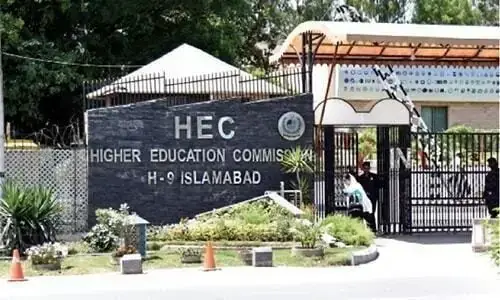
ISLAMABAD: The Higher Education Commission (HEC) has been facing financial challenges because of the stagnant budget allocation which impedes universities’ progress towards financial self-sustainability.
The situation may force the universities to increase tuition fees, leading to reduced enrolment and greater barriers for underprivileged students.
According to the education ministry’s reply submitted to the National Assembly to a question regarding the HEC’s scholarship budget, the federal annual recurring allocations for universities were stagnant since 2018-19, whereas there was a manifold increase in their students’ enrolment, faculty and staff.
“This prolonged stagnation not only impedes universities’ progress towards financial self-sustainability but may also force them to increase tuition fees, leading to reduced enrolment and greater barriers for underprivileged students,” read the HEC’s reply.
It said 35pc cut in development grants [from Rs61.116 billion in FY 2024-25 to Rs39.5 billion in 2025-26) had impacted award of scholarships to a larger segment of deserving students on merit.
The HEC’s reply was presented before the National Assembly by Education Minister Dr
Khalid Maqbool Siddiqui in response to a question asked by MNA Anjum Aqeel.
The minister said at present besides local scholarships 27 foreign scholarship programmes were being offered in collaboration with international universities and research institutions, enabling Pakistani students to pursue studies abroad at the Bachelor, Master, MS/MPhil, PhD and postdoctoral levels.
Meanwhile, MNA Aqeel also asked another question about the low literacy rate compared to the annual population growth.
In reply, the minister stated: “According to Pakistan’s 2023 Population and Housing Census, the total population stands at 241.49 million, showing an annualized population growth rate of 2.55% (2017- 2023). During the same period, the literacy rate increased from 58,9% in 2017 to 60.7% in 2023, reflecting an average rise of 1.8%.
Thus, while literacy levels have shown gradual improvement, the rate of population growth remains higher, posing significant challenges in achieving national literacy and education targets.”
Through its attached departments and autonomous bodies, the ministry has been implementing several initiatives to promote literacy and expand Non-Formal Education (NFE), with a focus on out-of-school children, marginalised populations and adult literacy, it added.
Top appointments at HEC
Currently, HEC is being run through ad hoc arrangements under the interim chairman and the executive director. However, the process of appointment of the executive director was near completion as commission had selected Prof Dr Ziaul Haq, Vice Chancellor Khyber Medical University, as the new ED.
He is set to take charge in the next few days. For the post of the chairman HEC, the search committee and education ministry have already planned interviews of around 30 shortlisted candidates next week.
Published in Dawn, November 22nd, 2025