Trump signs bill for release of Epstein files
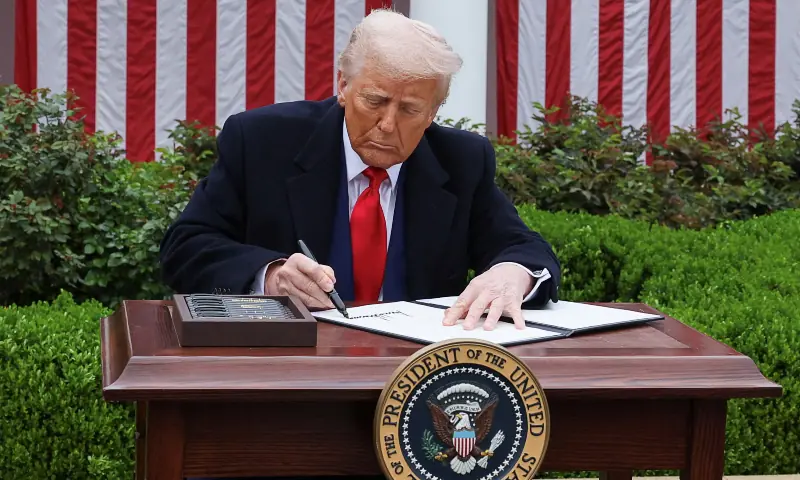
Donald Trump signed into law on Wednesday legislation requiring the release of government records on convicted sex offender Jeffrey Epstein, spurring a showdown over whether the US president will allow full disclosure — or return to trying to bury the case.
Trump stunned Washington over the weekend, reversing his months-long opposition to the Epstein Files Transparency Act, and ensuring that it sailed through Congress on Tuesday in a rare show of bipartisan unity.
The Republican president, a former friend of the late sex offender, announced on social media late on Wednesday that he had signed the bill, forgoing any media spectacle of the event.
Insiders warn that even with the president’s signature, his administration could lean on redactions, procedural delays or lingering federal investigations to keep explosive details out of the public eye.
“Once the president signs the bill, he must apply and execute it faithfully. There must be no funny business from Donald Trump,” top Democrat Chuck Schumer warned in a speech on the Senate floor.
“He must not use the excuse of frivolous investigations to release some Epstein documents, while intentionally hiding others that deserve to be seen by the American public.”
Epstein, a wealthy financier, moved in elite circles for years, cultivating close ties with business tycoons, politicians, academics and celebrities to whom he was accused of trafficking girls and young women for sex.
Trump and his allies spent years pushing theories about powerful Democrats being protected over involvement with Epstein, framing the case as a potent symbol of how powerful men can hide behind lawyers, money and connections.
But Trump himself was a longtime associate of Epstein, raising questions over what he knew about the notorious figure.
Far beyond Trump’s conspiracy-minded voter base, the saga dented public trust in the US justice system and raised suspicion among voters who believe important pieces of the story were either hidden or ignored.
Epstein’s 2019 arrest fueled a storm of outrage and pressure for a full accounting of his network, his finances and the people who helped him evade. Conspiracy theories about a cover-up only deepened after his death — ruled a suicide — in a New York jail soon after.
‘Smoke screen’?
Passage of the Epstein Files Transparency Act in Congress marked a moment of deep emotional resonance, with abuse survivors filling the House gallery as the vote was called, hugging and cheering when it passed.
It was a sharp rebuke of Trump and his ally, House Speaker Mike Johnson, who had led efforts to prevent disclosure.
Johnson had said he would “cross that bridge” when asked if he’d push Trump to veto the bill.
The president had warned House Republicans off the action but reversed course, fearing humiliation as he faced the largest rebellion of his presidency.
Under the law, the Justice Department has a month to dump its unclassified files online — in a searchable trove of transcripts, flight logs and communications that could unearth unseen names and connections.
The text makes only narrow exceptions for personal data and genuine legal and security concerns.
But analysts question whether officials will comply, or argue that sensitive material cannot be released because related probes remain active — including a new investigation ordered by Trump last week into Epstein’s ties with Democrats.
“(This) might be a big smoke screen, these investigations, to open a bunch of them as a last-ditch effort to prevent the release of the Epstein files,” Thomas Massie, the Kentucky Republican who pushed the House vote, told ABC News.
The Justice Department and FBI said in July they had uncovered no evidence in a review of the files that would support further action, and it was not clear if the new probe ordered by Trump on Friday would hamper disclosure.
Attorney General Pam Bondi was pressed on the justification for further investigation and said there was “new information, additional information”.
“If there are any victims, we encourage all victims to come forward,” she told reporters. “And we will continue to provide maximum transparency under the law.”