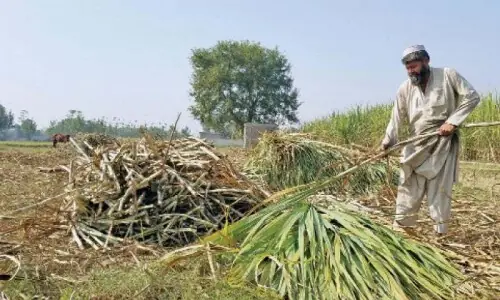
Sugarcane footprint on the rise in cotton belt
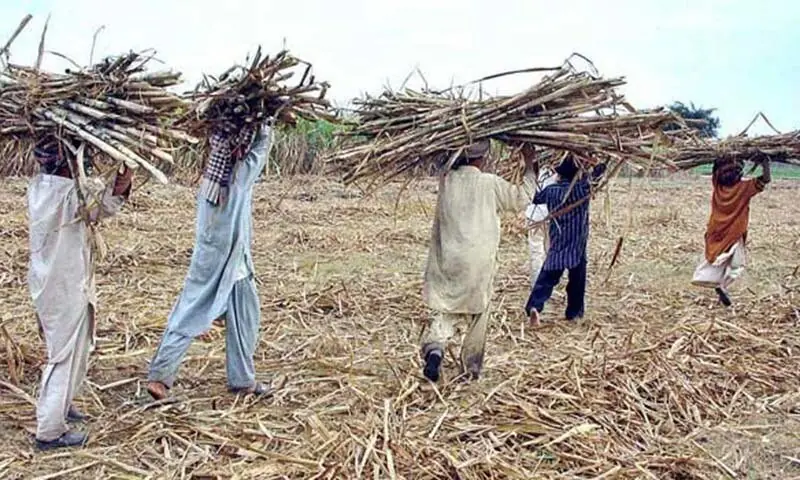

• Nearly 40pc of Pakistan’s sugar-milling capacity now concentrated in former top cotton district Rahim Yar Khan and its border belt
• Shift from cotton to sugarcane blamed for water depletion, soil degradation, and rising water table
LAHORE: Persistent violations of crop-zoning rules for sugarcane and the unchecked establishment of new sugar mills have drastically reshaped Rahim Yar Khan — once Pakistan’s largest cotton-producing district — where sugar-milling capacity is rapidly expanding both within the district and along the Punjab — Sindh border.
Sources say almost 40 per cent of the country’s total sugar-milling capacity is now concentrated in Rahim Yar Khan and its border belt alone — a shift that experts fear is accelerating the decline of cotton, straining water resources, and degrading soil.
Six sugar mills currently operate in Rahim Yar Khan with a combined crushing capacity of 135,000 tonnes per day, the highest for any single district in the country. One of these mills is reportedly adding another 10,000 tonnes per day to its capacity this season.
The sources added that two powerful industrial groups, after being denied permission for additional mills within the district, have set up new units just across the Punjab–Sindh border — one with a capacity of 16,000 tonnes per day and the other 19,000 tonnes.
A Sindh-based political family already operates a 16,000-tonne unit there, while another influential group is said to be relocating a major mill from interior Sindh to the same border belt. This relocated mill, sources claim, will become operational during the current crushing season, potentially triggering a further shift from cotton to sugarcane.
Pakistan, which until a few years ago ranked as the world’s fourth-largest cotton producer, has seen its output collapse from around 15 million bales in 2014-15 to barely 5.5m bales in 2024-25, largely due to the unchecked spread of sugarcane in designated cotton zones.
The extraordinary expansion in sugarcane cultivation is not only responsible for a massive drawdown of irrigation resources — with millions of acre-feet of water wasted — but is also raising the water table to levels that threaten to render vast tracts barren.
Concurrently, pollution from sugarcane processing is harming fibre quality, pushing textile mills to import high-grade cotton to meet export commitments, Cotton Ginners Forum Chairman Ihsanul Haq tells Dawn.
Recalling the “crop transformation”, he says that until a few years ago, Rahim Yar Khan was Pakistan’s single largest cotton-producing district, cultivating the crop on 800,000 acres and yielding 1.3–1.4m bales annually. Across Bahawalpur division’s three districts, cotton output exceeded 4m bales.
During the 2024-25 cotton year, however, the same region produced just 1.5m bales, with expectations of an even lower harvest this season.
Sindh outperforms Punjab
He notes that for the first time in the country’s history, Sindh outperformed Punjab in cotton output during 2024-25 — 2.8m bales in Sindh versus 2.7m in Punjab. This marks a stark reversal from 2014-15, when national output peaked at 15m bales, with Punjab contributing 11m bales compared Sindh’s 4m.
“The ratio has steadily eroded,” he says, adding that preliminary assessments suggest Sindh will again surpass Punjab this year, despite Punjab having planted cotton on 1.4m hectares, more than double Sindh’s 630,000 hectares.
Published in Dawn, November 17th, 2025